





As Libra season approaches, many of us naturally begin reflecting on our relationships: Where do I feel balanced? Where am I over-giving? Which connections feel reciprocal, and which ones leave me emotionally depleted?
These questions are not about becoming distant or uncaring. They are invitations to create relationships where love and self-respect can exist together.
Boundaries are one of the most practical forms of self-care we have. They help us communicate our needs, protect our mental health, and stay connected to others without abandoning ourselves. Through the lens of psychology, boundaries support emotional safety and nervous system regulation. Through spirituality and Psychoastrology®, they can also become sacred agreements with ourselves about how we want to use our energy.
As a therapist, I believe boundaries are not walls. They are living, flexible containers that help us decide what we can welcome, what we need to release, and what we are no longer willing to carry.
What Are Boundaries, Really?
A boundary is a clear statement about what you will and will not participate in. It can involve your time, body, emotions, energy, privacy, relationships, work, or communication.
A boundary might sound like:
- “I’m not available to talk about this tonight.”
- “I need more notice before making plans.”
- “I care about you, and I cannot be the person who solves this for you.”
- “I’m going to leave the conversation if I’m being yelled at.”
- “I need time to think before I give you an answer.”
- “That topic is private, and I’m not comfortable discussing it.”
Boundaries are often confused with rejection. But a healthy boundary does not necessarily mean “I do not love you.” It may mean, “I want to stay in this relationship in a way that is emotionally sustainable for both of us.”
Psychologically, boundaries clarify responsibility. They help us distinguish between what belongs to us and what belongs to someone else. This can reduce resentment, emotional exhaustion, and the anxiety that comes from constantly monitoring other people’s moods.
You can learn more about the relationship between boundaries and self-care in this Psychology Today article.

The Libra Season Invitation: Balance Without Self-Abandonment
Libra is associated with partnership, fairness, harmony, beauty, and the desire to create peace. These qualities can help us become more thoughtful and compassionate in our relationships.
But every archetype has a shadow side. The desire for harmony can sometimes become people-pleasing. We may avoid difficult conversations, say yes when we mean no, or minimize our feelings because we are afraid of disappointing someone.
This is where boundaries become especially important.
True harmony is not the absence of conflict. It is the presence of honesty, respect, and repair. A relationship that requires you to stay silent, over-function, or constantly adjust yourself to keep another person comfortable is not necessarily peaceful. It may simply be imbalanced.
Libra season can encourage us to ask:
- Am I confusing peace with avoidance?
- Do I feel free to be honest in this relationship?
- Is there room for both people’s needs?
- Am I seeking approval at the expense of my well-being?
- What would mutual respect look like here?
Healthy relationships do not require identical needs. They require the willingness to acknowledge differences and create agreements that honor both people.
Psychoastrology® and the Patterns Beneath Our Boundaries
Psychoastrology® offers a reflective way to explore the emotional patterns that influence how we relate, protect ourselves, and respond to vulnerability. Rather than using astrology to predict your life, it can be used as a symbolic language for self-understanding.
For example, you might notice that you:
- Over-give because receiving feels uncomfortable.
- Avoid saying no because rejection feels frightening.
- Become overly independent because relying on others once felt unsafe.
- Try to manage everyone’s emotions to prevent conflict.
- Feel guilty whenever you prioritize rest or personal space.
- Repeat relationships in which your needs remain secondary.
These patterns often have psychological roots. They may be connected to attachment experiences, family roles, trauma, cultural expectations, or earlier relationships. Psychoastrology® can provide another doorway into the exploration by helping you reflect on themes of wounding, protection, responsibility, intimacy, and self-worth.
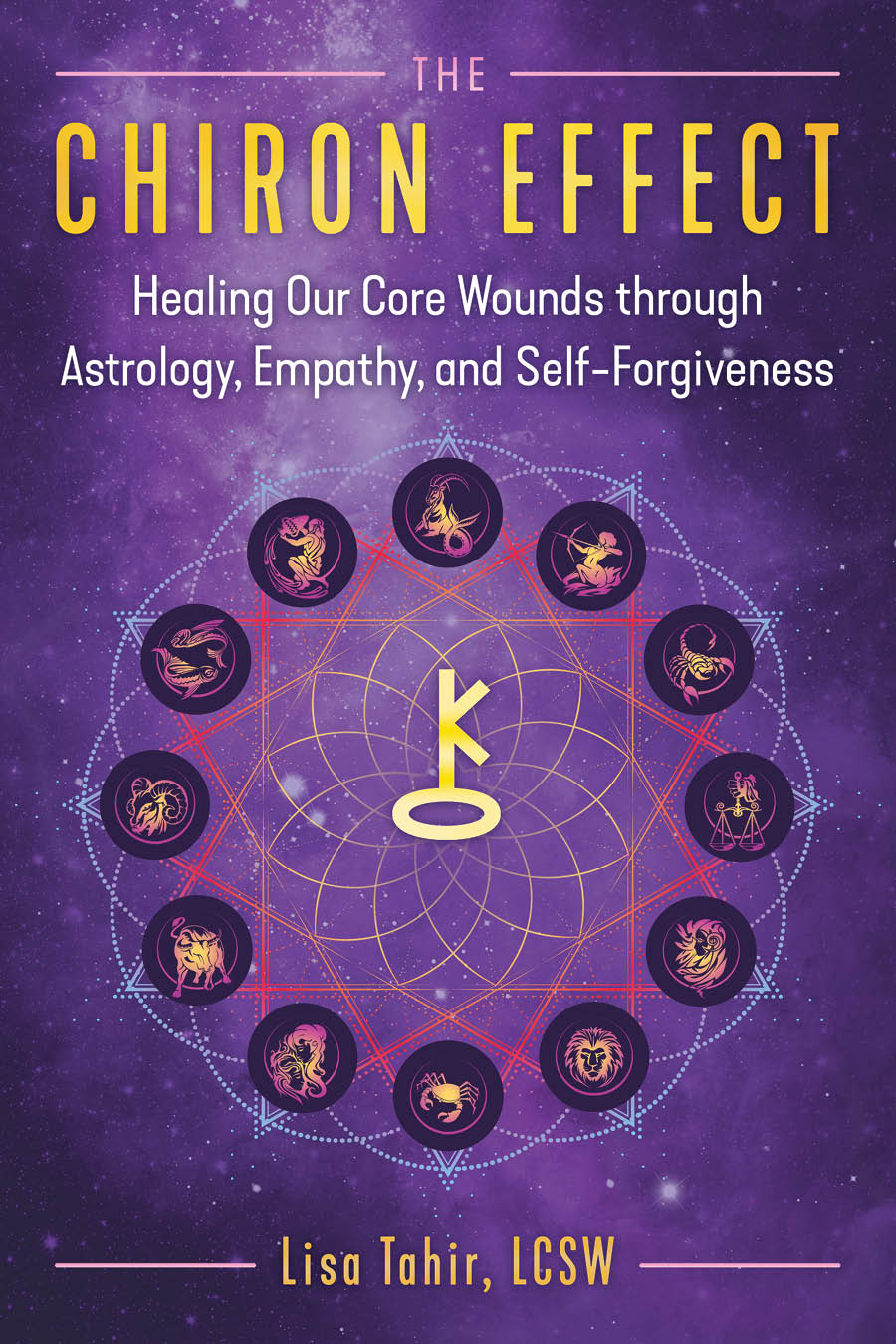
In my book, The Chiron Effect: Healing Our Core Wounds through Astrology, Empathy and Self-Forgiveness, I explore Chiron as an archetype connected to core wounds and the unconscious patterns we may repeat. The goal is not to label yourself or become fixed in a story. The goal is to bring compassion and awareness to the places where you have learned to protect yourself.
When we understand the wound beneath a pattern, we gain more choice.
A person who has learned to over-give may begin asking, “What am I afraid will happen if I stop?” A person who avoids conflict may ask, “What did I learn about disagreement?” Someone who constantly rescues others may wonder, “Can I care without taking over?”
This is where personal transformation begins: not with judgment, but with compassionate curiosity.
A Four-Step Practice for Setting a Sacred Boundary
1. Pause Before You Automatically Say Yes
If you tend to people-please, your first boundary may be giving yourself time to respond.
Try saying:
“Let me check my schedule and get back to you.”
Or:
“I need some time to think about that.”
This pause gives your body a chance to provide information. Notice whether you feel open, tense, resentful, pressured, or fatigued. Your body may be communicating something your mind has learned to override.
A pause is not rude. It is a form of self-trust.
2. Name the Need Beneath the Boundary
A boundary is easier to communicate when you know what it is protecting.
Are you needing:
- Rest?
- Privacy?
- Emotional safety?
- More predictability?
- Respectful communication?
- Time with yourself?
- Space to make your own decisions?
- Relief from work and caregiving demands?
Try completing this sentence:
“I am setting this boundary because I need more ________.”
This can be especially helpful when anxiety makes your needs feel unclear. In the intersection of anxiety and spirituality, the practice is to listen inwardly without treating every fear as a command. You can honor your feelings while still choosing a grounded, values-based response.
3. Communicate Clearly and Kindly
A healthy boundary is usually specific and focused on your own actions. It is not an attempt to control another person.
Instead of:
“You need to stop being so demanding.”
Try:
“I’m not able to respond to multiple messages during the workday. I’ll get back to you in the evening.”
Instead of:
“You never listen to me.”
Try:
“I’m willing to continue this conversation when we can both speak respectfully.”
You do not have to provide a long explanation to make your boundary valid. Over-explaining can sometimes become another way of asking for permission.

4. Practice the Aftercare of Saying No
Even a healthy boundary can activate anxiety, guilt, or sadness, especially if you were taught that being “good” meant being endlessly available.
After setting a boundary, try a grounding practice:
- Place both feet on the floor.
- Take three slow breaths.
- Put a hand over your heart.
- Remind yourself: “Discomfort does not mean I have done something wrong.”
- Journal what you felt before, during, and after the conversation.
- Do something regulating, such as walking, stretching, resting, or spending time in nature.
Spiritual practices can also support integration. You might meditate, pray, visualize a gentle protective light, or imagine yourself standing inside a calm and permeable circle. The purpose is not to become closed off. It is to remember that your energy deserves care.
Boundaries at Work and in Daily Life
Boundaries are not only for romantic or family relationships. They matter at work, in friendships, online spaces, and within your relationship with yourself.
Work-life balance often requires boundaries such as:
- Ending work at a consistent time.
- Turning off notifications during personal hours.
- Taking a real lunch break.
- Declining responsibilities that exceed your role.
- Asking for clarity rather than silently absorbing confusion.
- Allowing yourself to rest before reaching burnout.
You may also need digital boundaries. Unfollowing accounts that increase comparison, muting conversations that feel dysregulating, or taking intentional breaks from social media can support your mental health.
A boundary with yourself might be just as meaningful:
“I will not use self-criticism as motivation.”
Or:
“I will not make major decisions when I am exhausted and emotionally flooded.”
When Boundaries Feel Unsafe
Not everyone responds well when you begin setting limits. Someone who has benefited from your over-availability may become angry, dismissive, or manipulative.
If you are dealing with emotional abuse, coercion, threats, stalking, or physical danger, boundary-setting may require additional support and safety planning. You do not have to confront someone directly in order to prove your strength. Your safety comes first.
Therapy can help you identify relational patterns, build communication skills, and develop boundaries that are appropriate for your circumstances. Lisa offers individual therapy and counseling services, as well as couples therapy and virtual therapy sessions by phone, FaceTime, or Zoom.
A Healing Relationship with Yourself
The deepest boundary may be the one you create between your authentic self and the old beliefs that tell you to earn love through sacrifice.
You are allowed to evolve beyond the role you were assigned.
You are allowed to need more rest, honesty, space, tenderness, or support than you once did. You are allowed to disappoint someone and still be a caring person. You are allowed to change your mind.
Boundaries are sacred because they help you return to yourself. They make room for relationships rooted in choice rather than fear, reciprocity rather than depletion, and truth rather than performance.
As Libra season invites reflection on balance and partnership, consider this question:
What boundary would help me remain loving without abandoning myself?
You do not need to set every boundary at once. Begin with one honest pause. One clear sentence. One decision to listen to your own inner wisdom.
That small act may be the beginning of a much larger personal transformation.
Explore The Chiron Effect
For a deeper exploration of healing, recurring patterns, empathy, and self-forgiveness, read Lisa Tahir’s book, The Chiron Effect. The book brings together psychology, spirituality, personal responsibility, and Psychoastrology® to help readers understand core wounds and create new possibilities for growth.
If you are ready to explore your patterns and relationships with compassionate support, schedule a session or contact Lisa. You do not have to navigate your healing journey alone.