





Personal transformation rarely happens in one dramatic moment. More often, it begins quietly: noticing a familiar reaction, questioning an old belief, or finally admitting that the way you have been coping is no longer helping you feel well.
Mental health and spirituality can meet in that space of honest reflection. Psychology helps us understand emotions, behaviors, relationships, trauma, and thought patterns. Spiritual practices can help us reconnect with meaning, intuition, compassion, and a sense of something larger than our immediate circumstances.
Psychoastrology® offers another reflective lens for this inner work. Developed by Lisa Tahir, LCSW, Psychoastrology® brings psychology and astrology together to explore emotional patterns and areas of vulnerability. In particular, Lisa’s work focuses on Chiron, the “wounded healer” archetype, as a way to understand the places where we may feel especially sensitive, protective, or stuck.
This approach is not about predicting your future or labeling you. It is an invitation to become more curious about yourself, and to use that awareness to create meaningful change.
What Is Psychoastrology®?
Psychoastrology® is a complementary approach that uses astrology as a starting point for psychological and spiritual self-reflection. In Lisa’s work, the placement of Chiron in a birth chart can point toward recurring themes connected to self-worth, belonging, communication, relationships, safety, creativity, identity, or personal power.
The purpose is not to say, “This is who you are, and you cannot change.” The purpose is to ask:
- What emotional themes keep repeating in my life?
- Where do I tend to criticize, abandon, or distrust myself?
- What situations cause me to become guarded or reactive?
- What need might be underneath my current coping strategy?
- How could empathy help me respond differently?
Many psychological theories explore the ways early experiences influence adult relationships and behaviors. We may repeat familiar patterns because they once helped us survive, belong, or feel safe. Over time, however, a strategy that was protective in childhood may become limiting in adulthood.
Psychoastrology® can help make those patterns more visible. Therapy, personal responsibility, self-forgiveness, and intentional action help us begin to change them.
Your Wounds Are Not Your Identity
When we are hurting, it is easy to define ourselves by the wound.
You might think:
- “I am too anxious.”
- “I always choose unavailable people.”
- “I am bad at setting boundaries.”
- “I am not confident enough to pursue what I want.”
- “Something is wrong with me.”
These statements can feel like facts, but they are often interpretations shaped by painful experiences. A more compassionate perspective might be:
- “A part of me learned to expect danger.”
- “I learned to over-function in relationships.”
- “I am practicing boundaries because they were not modeled for me.”
- “My confidence is developing through experience.”
- “I am carrying pain, and I am learning how to care for it.”
This shift does not deny what happened. It simply separates your identity from your history.
Chiron’s symbolism can be helpful here because it holds two truths at once: we can be wounded, and we can still heal. We can have tender places without being permanently broken. We can acknowledge what shaped us without allowing it to dictate every future decision.

The Connection Between Mental Health and Personal Transformation
Mental health is not only the absence of crisis. It also includes the ability to understand your emotions, care for your needs, maintain meaningful relationships, make values-based choices, and recover from difficulty.
Personal transformation often begins when we move from automatic living to conscious participation. Instead of reacting from an old fear, we pause. Instead of repeating a familiar relationship dynamic, we notice our choices. Instead of ignoring exhaustion, we listen to what our body may be communicating.
This is especially important for work/life balance. Many people have learned to measure their worth by productivity, achievement, or how much they can do for others. Over time, this can create anxiety, resentment, burnout, or disconnection from the self.
A psychologically and spiritually informed approach may invite questions such as:
- Am I working from purpose or from fear?
- Do I believe rest must be earned?
- What am I afraid would happen if I disappointed someone?
- Which commitments reflect my values?
- Where am I saying yes when my body and spirit are saying no?
These questions are not meant to create more self-judgment. They are meant to help you return to yourself.
Three Practices for Emotional Well-Being
You do not have to overhaul your entire life to begin healing. Small, consistent practices can help you build awareness and emotional safety.
1. Identify the Pattern Beneath the Problem
When you feel upset, pause before immediately trying to fix the situation. Write down:
- What happened?
- What did I feel?
- What did I believe the situation meant about me?
- What did I want or need?
- How did I respond?
For example, a delayed text from a partner may trigger anxiety. The deeper belief may be, “I am being abandoned.” The underlying need may be reassurance, communication, or a sense of security.
This process helps you distinguish the present moment from the history it may be activating.
2. Practice Self-Forgiveness Without Avoiding Responsibility
Self-forgiveness is not the same as excusing harmful behavior. It means recognizing that you acted with the awareness, resources, and coping skills available to you at the time.
You can take responsibility while also offering yourself compassion:
“I can acknowledge that this choice hurt me or someone else. I can learn from it without using shame as my permanent identity.”
Shame tends to keep us stuck. Accountability creates an opportunity to repair, make different choices, and move forward.
3. Create a Daily Pause
A pause can be five minutes of meditation, a few slow breaths, a walk outdoors, prayer, journaling, or simply placing your hand over your heart and noticing what is present.
Ask yourself:
- What am I feeling right now?
- Where do I feel it in my body?
- What does this part of me need?
- What is one supportive action I can take today?
The goal is not to empty your mind or achieve perfect calm. The goal is to build a relationship with your inner experience. When you can listen to yourself with less judgment, you become better able to make choices aligned with your well-being.
Using Astrology as a Reflective Tool
If you are curious about your Chiron placement, Lisa’s Psychoastrology® and book page offers information about The Chiron Effect: Healing Our Core Wounds through Astrology, Empathy, and Self-Forgiveness, along with a link to find your Chiron sign and house.
As you explore your chart, remember to hold the information gently. A chart should not be used to diagnose a mental health condition, determine your worth, or limit your possibilities. Let it inspire questions rather than deliver conclusions.
You might reflect on:
- Does this theme feel familiar in my life?
- How might this vulnerability have influenced my relationships or career?
- What strengths have developed because of what I have lived through?
- What would it look like to meet this part of myself with empathy?
- What support would help me create a new pattern?
If exploring your chart brings up grief, trauma, or intense emotions, you do not have to process those feelings alone. A licensed mental health professional can help you work through them safely and at your own pace.
Healing Is Both Practical and Personal
Transformation is not only about having insight. It is also about what you do with that insight.
You may understand that you struggle with people-pleasing, but healing may require practicing a clear “no.” You may recognize that anxiety influences your work habits, but change may involve taking a lunch break, delegating a task, or asking for support. You may understand that an old relationship pattern comes from fear of abandonment, but growth may involve choosing consistency over chemistry that feels familiar.
The spiritual side of healing can remind us that we are more than our symptoms, mistakes, roles, or circumstances. The psychological side helps us develop the skills to live that truth in daily life.
Together, these perspectives can support a deeper form of self-understanding: one that is compassionate, grounded, and focused on possibility.
Explore The Chiron Effect
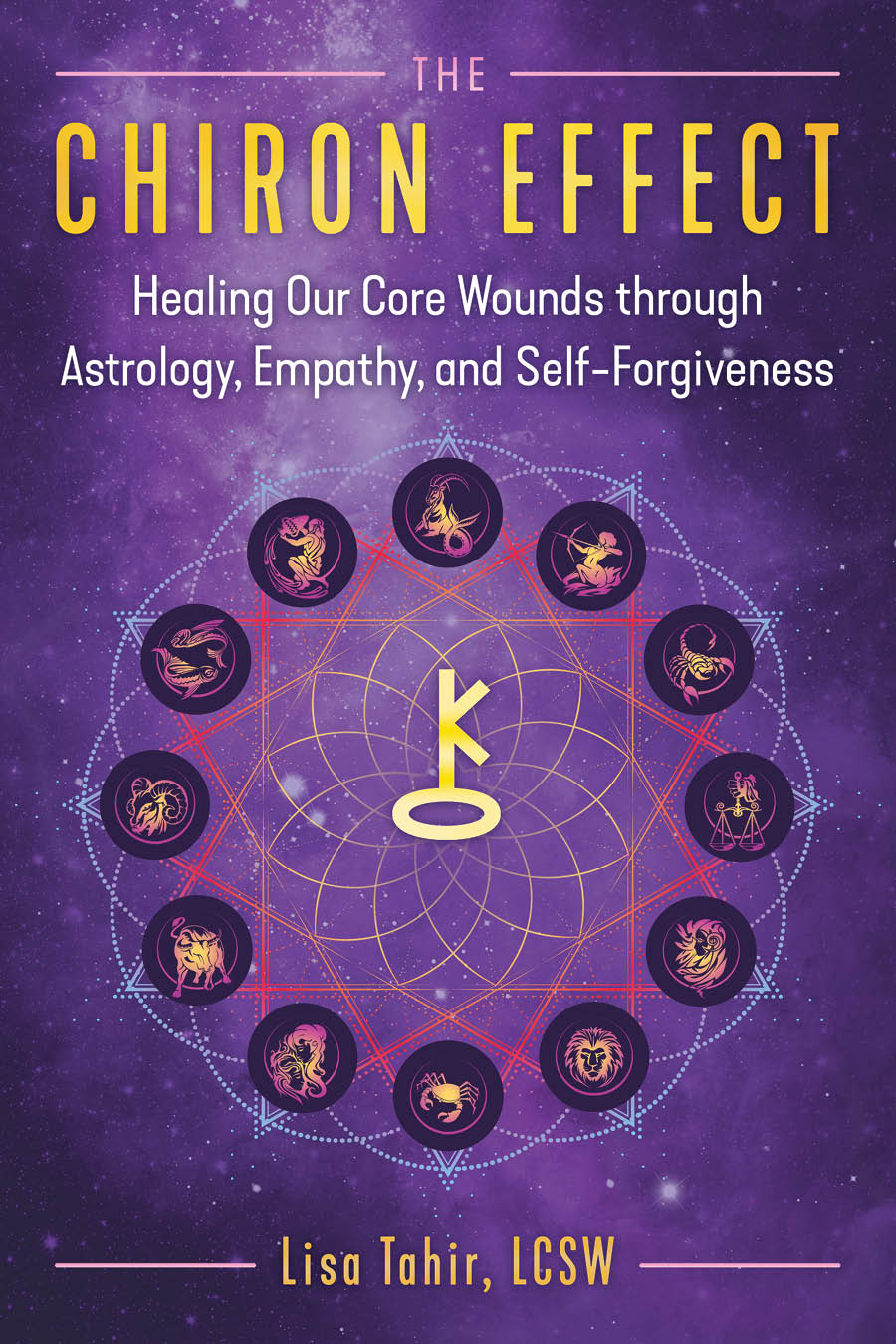
Lisa Tahir’s book, The Chiron Effect: Healing Our Core Wounds through Astrology, Empathy, and Self-Forgiveness, provides a framework for exploring twelve areas of vulnerability associated with Chiron’s placement in the birth chart. It includes reflective insights, practical takeaways, affirmations, and invitations to approach your healing with greater self-empathy.
The book has also been endorsed by His Holiness the 14th Dalai Lama, who shared that it could greatly benefit readers.
You can order the book through Barnes & Noble, Amazon, or Inner Traditions.
If you are seeking personalized support, Lisa offers therapy for adolescents, adults, and couples through phone, FaceTime, and Zoom sessions. Her work integrates traditional psychotherapy with meditation, mindset practices, spirituality, energy principles, and intuitive techniques based on each client’s needs.
You can learn more about therapeutic services or contact Lisa to schedule a session.
You are not required to heal everything at once. Begin with one honest question, one compassionate thought, or one small choice that supports the person you are becoming. Your wounds may be part of your story: but they do not have to be the end of it.