





Anxiety can feel like an interruption. It may arrive as racing thoughts, a tight chest, restless sleep, irritability, overthinking, or a sense that something is about to go wrong. When anxiety takes over, it is natural to want to silence it as quickly as possible.
But what if anxiety is not only a problem to eliminate?
What if it is also information?
This does not mean anxiety is something you should simply accept without support. Clinical anxiety can be painful and disruptive, and professional care may be essential. Still, anxiety can sometimes reveal where you are ready for greater honesty, healing, self-trust, and personal transformation.
In this sense, anxiety may become a portal: an opening into the parts of yourself that need attention, compassion, and a new way forward.
Anxiety Often Appears at the Edge of Change
Anxiety frequently increases when something important feels uncertain. You may be changing careers, redefining a relationship, becoming more visible, setting a boundary, questioning an old belief, or realizing that a familiar way of living no longer fits.
Even positive change can activate fear.
The mind often prefers what is familiar over what is healthy. A job may exhaust you, but it is predictable. A relationship may feel limiting, but leaving or renegotiating it brings uncertainty. An old identity may no longer represent who you are becoming, but releasing it can feel like losing security.
Anxiety can arise at this developmental edge because your internal world is asking:
- What am I afraid of losing?
- What am I being invited to become?
- Where have I been choosing familiarity over alignment?
- What truth have I been postponing?
These questions are not meant to create more pressure. They are invitations to slow down and listen with curiosity.
Psychological approaches such as acceptance-based therapy encourage us to notice anxious thoughts and sensations without automatically obeying them. Instead of asking, “How do I get rid of this feeling?” you might ask, “What is this feeling trying to show me, and what matters most right now?”
That shift can transform anxiety from a judgment into a conversation.

The Difference Between Listening to Anxiety and Letting It Lead
There is an important distinction between honoring anxiety as information and allowing it to make every decision.
Anxiety may tell you that you need rest, support, a boundary, or a more honest conversation. It may also produce catastrophic predictions that are not facts. The goal is not to treat every anxious thought as a prophecy. The goal is to develop enough inner steadiness to discern what is useful.
Try separating the experience into three parts:
- The sensation: What is happening in your body?
- The story: What are you telling yourself about what it means?
- The need: What might help you feel safer, clearer, or more supported?
For example:
- Sensation: “My heart is racing.”
- Story: “I am going to fail.”
- Need: “I need to prepare, breathe, and remember that one outcome does not define me.”
This practice creates space between you and the anxious response. You are not denying what you feel. You are learning that a feeling can be real without being the whole truth.
If anxiety is connected to trauma, panic, addiction, or severe impairment, exploring it should happen with appropriate professional support. You do not have to force yourself to “go deeper” when your nervous system is overwhelmed. Safety comes first.
A Psychoastrology® Perspective on Anxiety
Psychoastrology® offers a symbolic way to reflect on emotional patterns through the language of astrology and psychology. It is not a replacement for evidence-based mental health treatment, diagnosis, or medication. Instead, it can serve as a reflective map, a way to explore themes, meaning, and recurring patterns in your life.
In astrology, certain placements or cycles may symbolically highlight themes such as responsibility, belonging, trust, identity, control, grief, or self-worth. You might recognize that your anxiety tends to gather around one of these areas.
For example, anxiety about work may be connected to deeper fears of failure or not being enough. Anxiety in relationships may touch an old wound around abandonment or rejection. Anxiety about the future may be less about the future itself and more about your relationship with uncertainty.
This symbolic lens can help you move from shame to self-understanding.
Rather than thinking, “Something is wrong with me,” you might begin asking:
“What pattern is asking to become conscious?”
Lisa Tahir’s work with Chiron centers on this idea of core wounding and the patterns that can form around it. In The Chiron Effect, Chiron is presented as a “wounded healer” archetype, one that points toward places of vulnerability while also revealing opportunities for empathy, self-forgiveness, and healing.
The purpose is not to label yourself or use your birth chart as a fixed explanation for your life. It is to become more aware of the emotional orbit you may be repeating, so you can begin choosing a different response.
Anxiety and Spirituality: Making Meaning Without Bypassing Reality
Spirituality can provide comfort during anxious seasons. Meditation, prayer, time in nature, breathwork, and meaningful rituals can help you reconnect with a larger sense of perspective.
However, spiritual growth should not require you to bypass your emotions.
You do not have to pretend that everything is happening for a reason when you are hurting. You do not have to force gratitude over grief. You do not have to call anxiety a “lesson” before you have had the chance to feel supported.
A grounded approach to anxiety and spirituality makes room for both mystery and practical care.
You can believe in personal transformation while also attending therapy. You can explore astrology while also working with a physician or psychiatrist. You can meditate while learning nervous-system regulation skills. You can trust your intuition while checking your assumptions.
Holistic therapy online can support this kind of integration by honoring the whole person: thoughts, emotions, body, relationships, values, spirituality, and lived experience.
A Five-Minute Portal Practice
The next time anxiety appears, try this brief reflection. Set a timer for five minutes and write without editing yourself.
1. Name what is happening
Say or write: “I am noticing anxiety.”
This simple language reminds you that anxiety is an experience you are having, not your identity.
2. Locate it in your body
Where do you feel it? Your throat, chest, stomach, shoulders, or jaw?
Breathe slowly and place a hand over that area if it feels supportive. You are practicing presence, not trying to force the sensation away.
3. Identify the fear beneath the fear
Complete this sentence:
“If this situation goes badly, I am afraid that…”
You may discover fears about rejection, financial security, disappointing someone, losing control, being misunderstood, or having to start over.
4. Connect the fear to a value
Ask:
“What does this fear reveal that I care about?”
Perhaps you care about integrity, belonging, freedom, stability, creativity, love, or meaningful work. Anxiety often becomes clearer when you identify the value it is trying to protect.
5. Choose one aligned action
Do something small and realistic. Send the email. Take a walk. Ask for clarification. Schedule an appointment. Turn off your phone for thirty minutes. Rest without earning it first.
Transformation rarely happens through one dramatic decision. More often, it happens through repeated choices that bring you into closer relationship with your values.

Reimagining Work/Life Balance Through the Lens of Anxiety
Anxiety may also reveal that your life has become overly divided. You may be physically present at home while mentally living inside your inbox. You may be giving care to everyone else while ignoring your own emotional needs. You may be treating exhaustion as evidence of commitment.
Ask yourself:
- What am I saying yes to that my body experiences as a no?
- Where does my work identity overshadow the rest of me?
- What would a sustainable day look like?
- Which boundary would create more room for health?
In mental health and astrology conversations, it can be tempting to focus on timing, when a transit will end or when circumstances will improve. Timing can be meaningful, but your daily choices matter too.
You are not powerless within a season of uncertainty. You can seek support, practice boundaries, repair relationships, change routines, and develop a kinder inner voice.
You Do Not Have to Transform Alone
Anxiety may point toward growth, but you do not have to interpret or manage it by yourself. Therapy can help you distinguish intuition from fear, process past wounds, develop coping skills, and make values-based decisions.
Lisa Tahir offers personalized sessions for adolescents, adults, and couples by phone, FaceTime, and Zoom. Her integrative approach brings together psychology, spirituality, meditation, mindset work, energy principles, intuition, and Psychoastrology® based on each client’s needs. Learn more about therapeutic services or schedule a session.
If anxiety is interfering with sleep, work, relationships, substance use, or your ability to function, please reach out to a qualified mental health professional. If you are in immediate danger or thinking about harming yourself, contact emergency services or call or text 988 in the United States and Canada.
Anxiety is not proof that you are failing. Sometimes, it is a sign that an old way of living is asking to be examined. With compassion, discernment, and support, the places that hurt can become places where wisdom grows.

Continue the Journey with The Chiron Effect
For a deeper exploration of core wounds, repeating patterns, empathy, self-forgiveness, and healing through the symbolic language of astrology, discover Lisa Tahir’s book, The Chiron Effect: Healing Our Core Wounds through Astrology, Empathy, and Self-Forgiveness.
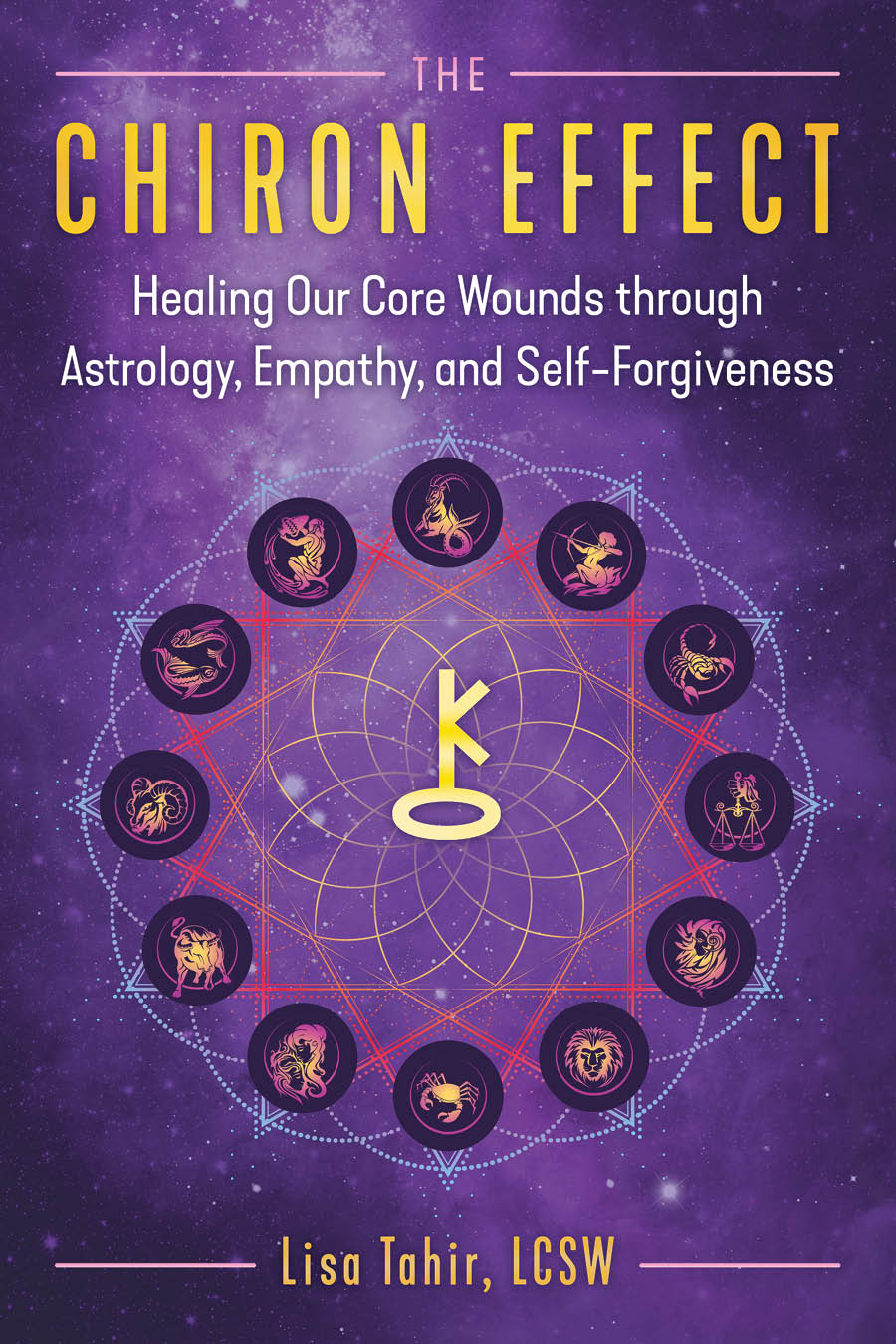
The Chiron Effect invites you to look at your wounds not as evidence that you are broken, but as places calling for understanding and conscious care. Your anxiety may be part of that invitation: a doorway into greater self-awareness, deeper compassion, and a life that feels more authentically your own.