





Interviews and Publications

Saturn and Neptune Retrograde in Aries: A Psychoastrology® + Psychology Path to Grounded Hope
It’s Tuesday morning. You have a vision for your life that feels expansive and true: meaningful work, more room to breathe, a creative project finally taking shape. Then the ordinary details arrive. Messages need replies. The laundry is waiting. You have a meeting, an appointment, and a list that seems to reproduce while you sleep.
The distance between what you imagine and what you can manage today can feel discouraging. But it can also become a place to begin. Hope does not require you to leap over the practical parts of life. Sometimes hope is what helps you take the next small step through them.
As of Saturday, October 10, 2026, five planets are retrograde overall, including Saturn and Neptune in Aries. In astrology, a retrograde is an apparent backward motion from our view on Earth, not a planet literally reversing direction. You can use this moment as an invitation to reflect, not a prediction of what must happen. An October 10 ephemeris offers a reference for the day’s planetary placements.
Dreams need a shape, and a little room to breathe
In symbolic astrology, Saturn is associated with structure, boundaries, limits, maturity, and the slow practice of self-discipline. Retrograde Saturn can invite an inward review: Where do you need more support or accountability? Where are you holding yourself to a standard that does not fit your actual life? And where might you be abandoning yourself to prove something?
Neptune is associated with imagination, ideals, compassion, spirituality, and the longing to connect with something larger than the self. In retrograde, Neptune can symbolize a chance to look again at what you hope for and what you may be avoiding or idealizing. Its foggier side can resemble anxious uncertainty, numbing, or spiritual bypassing, when spiritual language is used to step around feelings or practical needs rather than meet them with care.
Together in Aries, Saturn and Neptune bring up a useful question: How can your vision become something you can live? Neptune offers the dream; Saturn asks what time, boundaries, resources, and steady effort would help it take form. Neither planet has to be a villain. Too much structure can leave little room for possibility. A vision without any connection to reality can leave you waiting for a change that needs your participation.

In the language of Psychoastrology®, Saturn retrograde in Aries can be a prompt to take back authority over your own life. You might notice where you are waiting for permission, then choose one commitment that is genuinely yours. Neptune retrograde in Aries asks how compassion and intuition might become practical rather than abstract. What would it look like to listen inward and still make the phone call, ask for support, or set aside fifteen minutes for the project?
Astrology is a reflective, symbolic language for inner work. It does not determine your choices, explain away real-life circumstances, or replace mental health care. The potential value is in the question it opens up, not a promise about what will happen next.
Reality testing can be compassionate
When anxiety is high, the mind may jump from “I have a lot to do” to “I’ll never manage.” Reality testing means slowing down enough to check what is known, what is feared, and what you can do next. You might ask: What are the facts I have right now? What is one other explanation? Is there one action I can take, or is this a moment when my body needs a pause first? The APA Dictionary of Psychology describes reality testing as assessing perceptions and interpretations against external reality.
This is not about dismissing your feelings. A feeling can matter without giving you the full story. If you are flooded or shut down, it may be hard to think clearly. A brief grounding practice or a supportive conversation can help you feel more present before you try to problem-solve.
That is one reason self-compassion matters. Psychologist Kristin Neff describes it through self-kindness, a sense of shared humanity, and mindful awareness of difficult feelings. Compassion is not pretending everything is fine, and it is not letting yourself off the hook. It means being honest without using cruelty as motivation. You might say, “I’m overwhelmed, and I can take one step,” rather than, “I’m failing because I can’t do everything today.” You can read Neff’s overview of self-compassion.
Rest and avoidance can look similar from the outside, but they often feel different inside. Rest tends to help you replenish, even if you still have responsibilities afterward. Avoidance may bring brief relief while making the feared task feel larger over time. You do not need to judge yourself to notice the difference. You can ask, “What would genuinely restore me, and what am I hoping not to feel or face?”
Spirituality can offer comfort, meaning, and connection. It can also be tempting to use spiritual ideas to dismiss anxiety, bypass a painful conversation, or wait for a sign instead of attending to an urgent need. If spiritual language leaves no space for your human feelings, consider whether it is helping you stay present or helping you move away from what needs care. Anxiety and spirituality do not have to be in conflict. A grounded spiritual practice can make room for both inner listening and practical support.

Four small ways to practice grounded hope
Try one or two of these. You do not need to turn them into another demanding checklist.
-
Keep one small promise to yourself. Choose something you can do even on a busy day: drink water before your second coffee, step outside for five minutes, or write one sentence toward a project. Keeping a promise is not about proving your worth. It is a way to practice being someone you can count on.
-
Give one goal a reality audit. Write down a goal that matters to you. Note the time, support, and resources it may need. Then identify the next physical step, something specific enough to do: open the document, look up one course, send one email, or put an appointment on the calendar. Smaller steps do not make your vision less important. They give it somewhere to land.
-
Take ten minutes to come back to the present. Sit with your feet on the floor or take a slow walk. Notice five things you can see, feel the contact of your feet, and let your exhale lengthen if that feels comfortable. You do not have to become perfectly calm. The aim is simply to give your attention a steady place to rest.
-
Name what you may be avoiding, without judgment. Try saying, “I notice I’m putting off ___ because I’m worried that ___.” Then ask what support, boundary, or next step would make it more manageable. If you need to decline something, a simple script might be: “I can’t take that on this week. I can revisit it on ___.”
For a journal prompt, finish this sentence: “If I did not have to prove anything, one honest next step toward my vision would be…”
Questions to sit with
- Where am I waiting for permission to make a choice that is mine to make?
- Which part of my vision needs practical structure, and which part needs more space?
- What would rest look like today, and what am I avoiding because it feels uncomfortable?
- What promise to myself can I keep without asking perfection of myself?

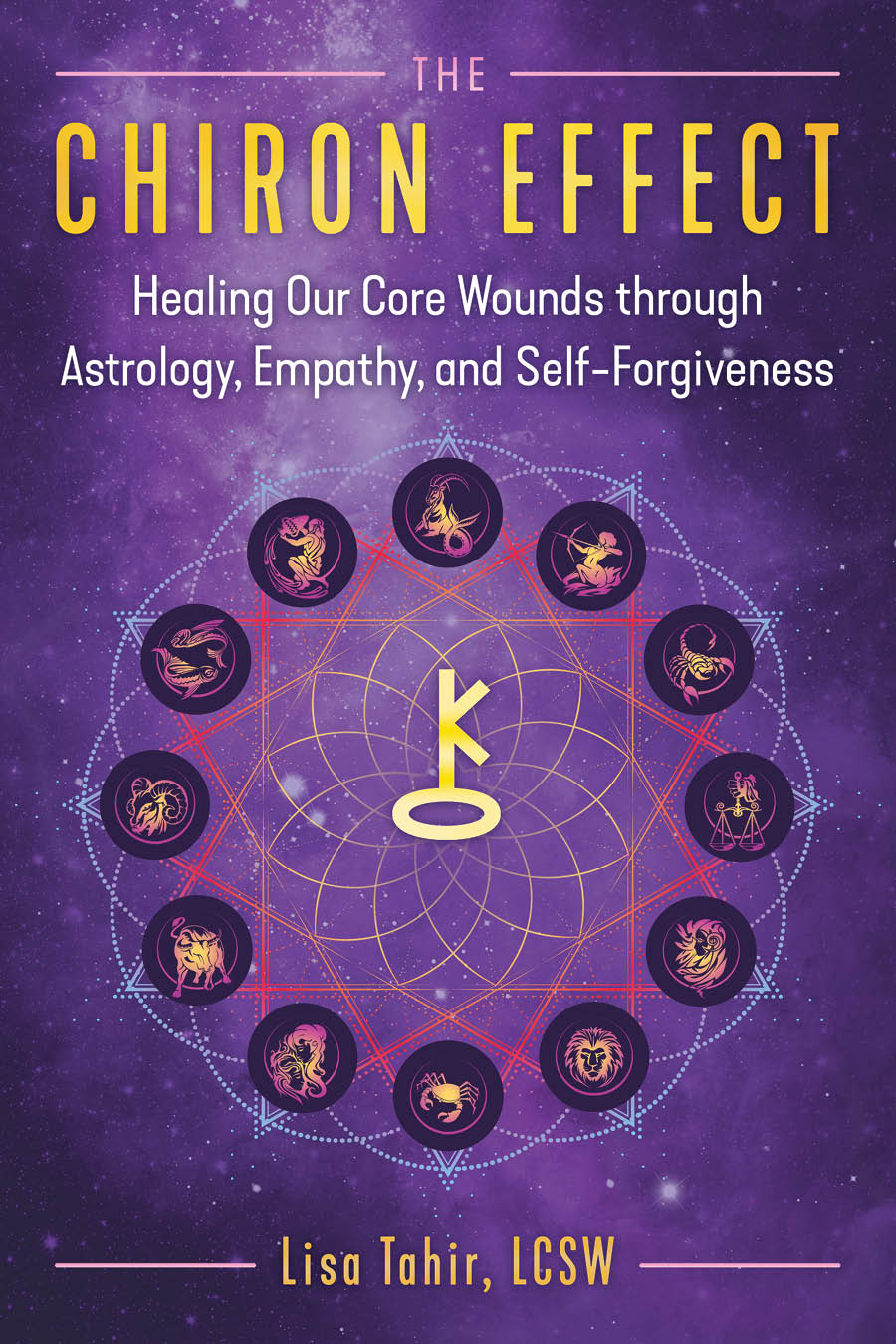
Grounded hope is not certainty that everything will unfold exactly as you wish. It is the willingness to meet the life you have today with care, and to keep making room for the life you are building. If you would like to explore this kind of inner work, Lisa’s book The Chiron Effect: Healing Our Core Wounds through Astrology, Empathy, and Self-Forgiveness offers a compassionate approach to reflection through astrology, psychology, empathy, and self-forgiveness.
Lisa Tahir offers Psychoastrology® sessions and therapy, including virtual sessions by phone, FaceTime, and Zoom. Her work supports adolescents and adults navigating anxiety, PTSD, relationships, self-esteem, career concerns, and LGBTQ-affirming care. You can learn more about scheduling, listen to her podcast All Things Therapy, or contact Lisa about speaking engagements. Whether you come to therapy, a book, or a reflective practice, you deserve support that respects both your hopes and your humanity.

The New Moon in Libra: A Psychoastrology® + Psychology Path to Starting Over Without Losing Yourself
The New Moon in Libra arrives on October 10, 2026, inviting us to begin again in the areas of relationship, self-worth, balance, and belonging.
But Libra’s invitation is not simply, “How can I make everyone happy?”
A deeper question is waiting underneath:
How can I create more harmony without abandoning myself to keep the peace?
This New Moon is especially meaningful because Mercury is already moving through its pre-shadow period in Scorpio. That can bring hidden thoughts, old conversations, emotional patterns, and unspoken truths closer to the surface. Rather than rushing to make a decision or repair every relationship, this is a powerful time to pause, listen inward, and become more honest about what you need.
In Psychoastrology®, astrology can serve as a reflective tool for identifying emotional patterns and core wounds. Psychology offers practical ways to understand those patterns, regulate the nervous system, build self-esteem, and make values-based choices.
Together, they can help you start over without losing yourself in the process.
The New Moon in Libra: A Beginning Rooted in Relationship
A New Moon marks the beginning of a lunar cycle. Symbolically, it offers a moment to plant seeds, clarify intentions, and make space for something new.
Libra is associated with partnership, communication, reciprocity, beauty, justice, and balance. This may bring attention to romantic relationships, friendships, family dynamics, workplace connections, or the relationship you have with yourself.
The Sun and Moon meet at approximately 17 degrees Libra on October 10. In Los Angeles, the New Moon is exact at about 8:50 a.m. Pacific time. You can read more about the astronomical and astrological details of this lunation through Cafe Astrology’s New Moon overview.
You might feel drawn to:
- Begin a new relationship or redefine an existing one
- Have a conversation you have been postponing
- Reconsider what mutual support looks like
- Create more beauty and calm in your environment
- Release a dynamic where you are over-functioning
- Rebuild trust with yourself
- Clarify what you truly want before saying yes
The key is to remember that balance does not mean both people always give the same amount at the same time. Healthy balance means both people matter.
That includes you.
Libra’s Shadow Side: When Peace Comes at Your Expense
Every sign has gifts and shadows. Libra’s gift is the ability to collaborate, listen, negotiate, and create harmony. Its shadow can emerge when harmony becomes more important than honesty.
You may notice the Libra shadow if you:
- Say “It’s fine” when it is not fine
- Change your preferences to avoid disappointing someone
- Feel responsible for everyone else’s emotional state
- Keep explaining your needs instead of honoring them
- Delay decisions because you are afraid of choosing incorrectly
- Confuse being needed with being loved
- Apologize for having boundaries
- Feel resentful after repeatedly saying yes
People-pleasing is often not a character flaw. It can be an adaptive strategy developed in response to conflict, unpredictability, rejection, or early relational experiences. From an attachment perspective, you may have learned that staying agreeable helped you maintain connection or emotional safety.
That strategy may have protected you once. But it may not be serving your adult life now.
Starting over does not require becoming hard, cold, or unavailable. It may simply mean learning that connection and self-respect can coexist.

Mercury in Scorpio: Look Beneath the Surface
Mercury entered its pre-shadow period in Scorpio on October 4, 2026, ahead of its retrograde beginning later this month. Astrologically, Mercury in Scorpio encourages deeper examination of communication, trust, intimacy, fears, and the truths we may prefer to keep hidden.
This does not mean you need to assume every feeling is a message or every silence is a warning. It does suggest that you may benefit from slowing down enough to notice what is happening beneath your first reaction.
Before sending the text, ending the relationship, accepting the offer, or agreeing to one more obligation, ask:
- What am I feeling in my body?
- What story am I telling myself?
- What do I know, and what am I assuming?
- Am I responding from my values or from fear?
- Am I trying to create genuine repair, or simply eliminate discomfort?
Your nervous system may interpret uncertainty as danger, especially if you have experienced trauma, abandonment, or relational instability. A regulated nervous system does not mean you never feel anxious. It means you can create enough safety to respond rather than react.
Try placing both feet on the floor. Lengthen your exhale. Look around the room and name five things you see. Then ask yourself what choice would honor both your relationship and your well-being.
Set Intentions That Include You
A Libra New Moon intention might sound like, “I want a better relationship.”
That is a beautiful beginning, but you can make it more personal and actionable:
- “I intend to practice honest communication without over-explaining.”
- “I welcome relationships that are reciprocal, respectful, and emotionally safe.”
- “I choose to pause before agreeing to commitments.”
- “I allow my preferences to matter.”
- “I release the belief that conflict automatically means disconnection.”
- “I am learning to experience peace without performing for it.”
- “I can care about others without taking responsibility for their choices.”
Notice the difference between an intention that focuses only on another person and one that includes your participation.
You cannot control whether someone becomes more available, accountable, or loving. You can clarify your boundaries, strengthen your self-esteem, and decide what you are willing to participate in.
A values-based relationship check-in
Choose three values that you want your relationships to reflect. You might choose honesty, freedom, tenderness, humor, stability, creativity, loyalty, growth, or mutuality.
Then ask:
- Where am I currently living these values?
- Where am I betraying them to avoid conflict?
- What is one small behavior that would bring me back into alignment?
- What support would make that change feel more possible?
Values clarification can turn a vague desire for “better relationships” into a grounded path forward.
A New Moon Ritual for Starting Over Without Self-Abandonment
You do not need an elaborate ceremony. A few quiet minutes and an honest journal can be enough.
1. Create a calming space
Sit somewhere comfortable. Light a candle, make tea, or place a meaningful object nearby. If your spiritual practice includes astrology, you might look at your birth chart and notice which house contains Libra. If you are not familiar with your chart, simply reflect on the relationship themes currently asking for your attention.
2. Regulate before reflecting
Place a hand over your heart and another over your abdomen. Breathe in gently for four counts and exhale for six. Continue for several rounds.
Say to yourself:
“I am allowed to slow down. I am allowed to listen to myself. I do not have to decide everything today.”
3. Journal honestly
Complete these prompts:
- I feel most like myself in relationships when…
- I know I am people-pleasing when…
- A boundary I am ready to practice is…
- Something I want to stop proving is…
- The kind of reciprocity I desire looks like…
- If I trusted my own worth, I would…
- My intention for this new cycle is…
4. Choose one embodied action
Make your intention visible through one small behavior. Schedule the conversation. Decline the commitment. Ask for support. Take yourself on a quiet walk. Rest before responding. Update a boundary. Let your “no” be complete.
A new beginning becomes real through repetition.

Healing the Pattern with Compassion
In Lisa Tahir’s work, Psychoastrology® connects psychological insight, spirituality, personal responsibility, and the symbolism of the birth chart. Her book, The Chiron Effect: Healing Our Core Wounds through Astrology, Empathy, and Self-Forgiveness, explores how unresolved wounds can create recurring patterns, and how empathy and self-forgiveness can help us change our orbit.
You do not have to shame yourself for the ways you learned to survive.
Maybe you became agreeable because disagreement once felt unsafe. Maybe you became independent because depending on others led to disappointment. Maybe you learned to monitor everyone’s moods because it helped you feel prepared.
These patterns deserve understanding. They also deserve updating when they no longer support the life you are building.
Healing may look like learning to tolerate someone’s disappointment without rushing to fix it. It may look like allowing a relationship to reveal its capacity instead of working harder to make it sustainable. It may look like choosing yourself without making yourself wrong for caring about others.

You Are Part of the Balance
This New Moon in Libra is not asking you to become perfectly balanced, endlessly calm, or certain about every next step.
It is inviting you to practice a more honest form of harmony: one that has room for your needs, your limits, your desires, your identity, and your voice.
You are allowed to begin again.
You are allowed to want more reciprocity.
You are allowed to change your mind.
You are allowed to love people and still choose distance. You are allowed to seek partnership and still belong fully to yourself.
If you would like support exploring relationship patterns, self-worth, boundaries, attachment, or your personal Psychoastrology® insights, learn more about therapy services with Lisa Tahir, LCSW. Sessions are available by phone, FaceTime, and Zoom, with an integrative approach that may include psychology, meditation, mindset work, spirituality, and intuitive techniques.
You can also schedule a session or contact Lisa with questions.
This Libra New Moon, may your new beginning include everyone who matters, including you.

Chiron Retrograde in Aries: A Psychoastrology® + Psychology Path to Healing the Wound That Says “I’m Not Enough”
There is a particular kind of exhaustion that comes from constantly trying to prove you belong.
You may recognize it as overachieving, overexplaining, people-pleasing, or saying yes before you have checked in with yourself. You may feel accomplished on paper while privately wondering whether you are lovable, safe, or worthy when you are not performing, producing, rescuing, or keeping everyone else comfortable.
The inner critic may say:
- “I should be further along.”
- “If I make a mistake, people will see who I really am.”
- “I have to be useful to be valued.”
- “Wanting more makes me selfish.”
- “If I assert myself, I will be rejected.”
In Psychoastrology®, astrology can offer a symbolic language for recognizing these repeating patterns. Psychology helps us understand how those patterns developed, how they protect us, and how we can begin to change them.
As of October 6, 2026, Chiron is retrograde in Aries, where it returned in mid-September and will remain until it stations direct on January 6, 2027. Rather than suggesting that a new wound is arriving, this inward cycle invites us to re-tend an old one: the wound around identity, self-worth, and the right to exist as ourselves.
Chiron in Aries and the pressure to prove yourself
Aries begins with the statement, “I am.”
It speaks to identity, desire, initiative, courage, anger, and self-assertion. When Chiron travels through Aries, the tender question may be:
“Am I worthy simply because I exist, or must I continually prove my value?”
This wound can develop through many experiences. Perhaps your natural intensity was criticized. Maybe your needs were treated as inconvenient. You may have learned that being easygoing, successful, quiet, helpful, or emotionally self-sufficient earned you more approval than being fully honest.
Over time, a core belief can form: “There is something wrong with me, so I must work harder to deserve love.”
That belief is not a fact. It is an adaptation.
The person who overfunctions may be protecting a younger part who once felt unseen. The person who never asks for help may be protecting against disappointment or dependence. The person who fawns (automatically complying, smoothing things over, or anticipating everyone else’s needs) may be trying to prevent conflict and preserve connection.
These strategies often begin as intelligent survival responses. The difficulty comes when they continue long after the original situation has changed.
Retrograde healing: turning inward without turning against yourself
Chiron retrograde is an opportunity to pause and listen beneath the performance.
This is not an invitation to obsess over the past or search for everything that is wrong. It is a quieter process of noticing where an old story still directs your choices.
The waning crescent Moon today, finishing in Leo and moving into Virgo, also supports release, rest, and thoughtful reflection rather than launching something new. You do not need to reinvent yourself overnight. You might simply become curious about the moments when you abandon your own knowing to maintain an image, relationship, or sense of control.
The Sun in Libra opposing retrograde Saturn in Aries brings another layer of awareness: where are you keeping the peace instead of being honest?
The Libra–Aries axis reminds us that harmony is not the same as self-erasure. A relationship can be respectful without requiring you to disappear inside it. Self-assertion does not have to mean aggression. It can sound like:
- “I need time to think about that.”
- “That does not work for me.”
- “I want to be included in this decision.”
- “I care about you, and I also need to be truthful.”
Healthy self-assertion is not a demand to become louder than everyone else. It is permission to remain present with yourself while relating to others.

From the inner critic to compassionate parts work
A useful way to approach the “I’m not enough” wound is through parts work, using language inspired by Internal Family Systems without needing to adopt a formal model.
Instead of saying, “I am a failure,” try noticing: “A part of me is afraid I am failing.”
Instead of, “I am too much,” try: “A part of me learned that being visible was dangerous.”
This small shift creates space between you and the belief. You are not denying the pain. You are recognizing that a protective part may be carrying an old job.
One part may manage your life through perfectionism and achievement. Another may respond to stress by shutting down, numbing, or withdrawing. Another may become the peacemaker, quickly apologizing or taking responsibility for feelings that do not belong entirely to you.
These parts are not bad. They may be trying to protect you from shame, rejection, conflict, or helplessness.
You can begin by asking gently:
- What is this part afraid would happen if I stopped proving myself?
- When did I first learn that my needs or desires were unsafe?
- What would this part need from me today, not from everyone else, to feel less alone?
The goal is not to force a part to change. It is to listen with enough compassion that it no longer has to work so hard.
Achievement-based self-esteem versus inherent worth
Achievement can build confidence. Completing a goal, learning a skill, or receiving appreciation can remind you of your capabilities. But achievement-based self-esteem is conditional: it rises and falls according to results.
Inherent worth is different.
Your worth is not a performance review. It does not disappear when you rest, disappoint someone, change direction, need support, or make a mistake. You can be accountable for your behavior without treating yourself as fundamentally defective.
This is where self-compassion becomes a practical healing tool. Kristin Neff’s model describes three elements:
- Mindfulness: noticing pain without exaggerating it or pushing it away.
- Self-kindness: responding to yourself with care rather than cruelty.
- Common humanity: remembering that struggle and imperfection are part of being human.
Try placing a hand over your heart and saying:
“This is a painful moment. I am not the only person who feels this way. May I respond to myself with honesty and care.”
Self-compassion is not an excuse to avoid responsibility. It gives you enough steadiness to take responsibility without collapsing into shame.

Four practices for this Chiron retrograde
1. Track the moment you begin to prove
This week, notice when you start explaining, overworking, apologizing, or trying to earn approval. Pause and ask:
“What am I trying to prove right now, and to whom?”
Then ask what would change if you allowed your presence to be enough for this moment.
2. Practice one honest, low-stakes assertion
Choose a situation that does not require a dramatic confrontation. Express a preference, ask for clarification, decline an invitation, or request more time.
Notice what happens in your body. You may feel tightness in your chest, heat in your face, tension in your shoulders, or an impulse to immediately take your words back. These sensations do not necessarily mean you have done something wrong. They may mean you are practicing something unfamiliar.
3. Separate responsibility from self-abandonment
Write down one situation where you feel responsible for another person’s comfort, mood, or reaction.
Then divide the page into two columns:
- What belongs to me
- What belongs to them
Your emotions, communication, and choices belong to you. Another person’s interpretation, disappointment, or response may not be yours to manage.
4. Give the inner critic a new assignment
When the inner critic appears, do not argue with it immediately. Ask:
“What are you trying to protect me from?”
Thank it for trying to help. Then offer a more current belief:
“I can learn without humiliating myself.”
“I can be visible and still be safe.”
“I do not need to earn the right to have needs.”
“I am allowed to want what I want.”

A brief grounding moment
If it feels comfortable, place both feet on the floor.
Notice the support beneath you. Let your shoulders soften slightly. Breathe in through your nose, and lengthen your exhale.
Silently name:
- Three things you can see
- Two sensations in your body
- One quality you want to offer yourself today
Now imagine speaking to the part of you that believes you must prove your worth. You might say:
“I see how hard you have worked to protect me. You do not have to disappear, and you do not have to run my whole life. I am here now. We can move slowly. We can choose what is true.”
Take one more breath. You do not have to force healing. Sometimes healing begins by staying present with yourself for a few seconds longer than you usually do.
A compassionate invitation to continue the work
In The Chiron Effect: Healing Our Core Wounds through Astrology, Empathy, and Self-Forgiveness, Lisa Tahir, LCSW, explores how Chiron can illuminate recurring patterns of vulnerability and invite a deeper practice of empathy, self-forgiveness, psychology, spirituality, and personal responsibility.
If this Chiron in Aries cycle is bringing familiar questions to the surface, you may wish to explore the book as a reflective companion. You can also schedule a session with Lisa for psychoastrology-informed therapy by phone, FaceTime, or Zoom. Together, you can explore the beliefs and protective patterns beneath your current experience while honoring your own pace and perspective.
You are not required to become someone entirely new in order to be worthy.
The healing path may be more intimate than that: returning to the self who has been here all along, listening with compassion, and learning that authenticity does not have to be earned.

Shame Doesn’t Get the Last Word: A Psychoastrology® + Psychology Path to Coming Home to Yourself
Have you ever felt the heat rise into your face after making a mistake? Maybe your chest tightened, your stomach dropped, and your first instinct was to disappear: to hide the email, avoid the conversation, or pretend you were fine.
Shame can feel like an all-over-body experience. It whispers, Don’t let anyone see you. If they really knew you, they would leave. You are the problem.
This is different from guilt.
Guilt says, “I did something bad.”
Shame says, “I am bad.”
Guilt can help us reflect, repair, apologize, and make a different choice. Shame attacks our identity. It turns one mistake, one rejection, one conflict, or one painful chapter into a verdict about our entire worth.
And shame rarely announces itself clearly. It may show up as anxiety, perfectionism, people-pleasing, overworking, self-sabotage, or the feeling that you must constantly prove you deserve love, belonging, or success.
But shame does not get the last word.
How shame hides in everyday life
At work, shame may look like overachieving until you are exhausted. You might volunteer for every task, stay late, hide a mistake, or avoid asking for help because needing support feels like failure.
You may believe that if you perform perfectly, no one will discover the truth you fear: I am not capable enough. I am not smart enough. I do not belong here.
In relationships, shame can make it difficult to be fully seen. You may apologize for having needs, accept treatment that hurts you, or work overtime to keep another person happy. Saying “no” may feel selfish. Setting a boundary may feel dangerous. You might shrink after criticism, even when the feedback is reasonable, because it touches an older wound.
Shame also affects work/life balance. When your worth is tied to productivity, rest can feel undeserved. Slowing down may bring up the fear that you are falling behind, or that without your accomplishments, there is nothing valuable about you.
This is one reason people can feel anxious even when life appears successful from the outside. The nervous system may be responding not only to what is happening now, but also to the old emotional rule that says, Stay useful. Stay agreeable. Stay impressive. Never make a mistake.

A psychological path through shame
Psychologically, healing shame begins with making it specific.
Instead of saying, “I am a failure,” try asking:
- What exactly happened?
- What did I do or not do?
- What meaning am I assigning to it?
- What would I say to someone I love in this same situation?
This separates behavior from identity.
You may have missed a deadline without being irresponsible. You may have hurt someone without being irredeemable. You may have made a relationship choice that did not serve you without being incapable of love.
Taking responsibility and offering yourself compassion can happen at the same time.
Research on self-compassion, including the work of Kristin Neff, points to the value of meeting suffering with mindfulness, self-kindness, and a sense of common humanity. Self-compassion is not an excuse to avoid accountability. It helps us face reality without collapsing under self-hatred.
A meta-analysis published in Clinical Psychology Review found that mindfulness-based therapies can support meaningful improvements in anxiety, depression, stress, and overall psychological well-being. For many people, learning to notice painful thoughts without automatically believing them creates the space needed for a new response.
Psychoastrology®: Seeing the wound without becoming the wound
Psychoastrology® offers another language for exploring the patterns beneath our pain.
In this approach, astrology is not used to label you, predict your fate, or replace psychological care. It can serve as a symbolic map: a way to reflect on your patterns, defenses, gifts, and opportunities for personal transformation.
Chiron is often associated with the “wounded healer.” In a birth chart, its sign and house placement can point toward an area where you have felt especially vulnerable, different, rejected, or unseen. Sometimes this is the place where you work hardest to appear okay.
The wound we bury may become the pattern we repeat.
We may unconsciously return to relationships where we have to earn love. We may choose work environments where over-functioning is rewarded. We may sabotage opportunities when success threatens to expose us to visibility. We may become highly intuitive about everyone else’s needs while remaining disconnected from our own.
Chiron invites us to ask: What if this wound is not proof that I am broken? What if it is a doorway into empathy, wisdom, and self-forgiveness?
Scorpio offers another meaningful symbol here. Scorpio instinctively protects what feels tender, private, or unacceptable. It understands the urge to hide the parts of ourselves we fear would be judged. Yet Scorpio also teaches that what is buried is not necessarily gone. It remains alive beneath the surface, asking to be witnessed and transformed.
The goal is not to reveal everything to everyone. The goal is to stop abandoning yourself in the places where you feel most ashamed.
The current astrological weather: Reclaiming your worth
As we move through October 2026, the symbolic language of the sky mirrors this inner work.
Venus retrograde in Scorpio through November 13 asks us to reassess self-worth, intimacy, trust, attachment, and the relationships where we may be confusing love with proving ourselves. This can be a meaningful time to notice where you are over-giving, hiding your needs, or accepting less than mutual care.
Venus retrograde is not a command to make dramatic decisions. It is an invitation to slow down and become honest. What do you truly value? Which connections allow you to be real? Where have you been performing desirability, usefulness, or perfection in exchange for belonging?
Then, on October 15, Pluto stations direct in Aquarius, offering a symbolic reminder that personal power can return when we stop outsourcing our identity to approval. Pluto’s movement can represent transformation at a deep level: releasing an old role, reclaiming your voice, and recognizing that you are more than the story others have told about you.
Astrology can provide a reflective backdrop. Your choices, healing, boundaries, and relationships remain yours.

A shame check-in for your journal
Take a few quiet minutes and write without editing yourself:
- Where in my life do I feel the strongest urge to hide?
- What does shame tell me this situation means about who I am?
- What are the actual facts, separate from the story I am telling about my worth?
- What need, boundary, grief, or desire have I been treating as unacceptable?
- What would it look like to offer myself accountability without cruelty?
You do not have to solve everything in one sitting. Sometimes naming the pattern is the first act of freedom.
Four ways to begin coming home to yourself
1. Name shame out loud to someone trustworthy
Shame grows in secrecy. You might say, “I am noticing a lot of shame right now, and I am afraid you will see me differently.”
Choose someone who has demonstrated care, respect, and emotional safety. You do not need to tell your whole story. A small, honest sentence can interrupt the isolation shame creates.
2. Practice hand-on-heart regulation
Place one or both hands over your heart. Feel the warmth and gentle pressure of your hands. Let your exhale lengthen slightly.
Then try saying:
“This is painful.”
“I am not alone in having painful human experiences.”
“I can meet myself with kindness while I decide what to do next.”
This practice does not erase the feeling. It helps remind your body that you are here with yourself now.
3. Separate behavior from identity
Write two sentences:
- “The behavior or situation I want to take responsibility for is…”
- “What this does not mean about my identity is…”
For example: “I avoided an important conversation. This does not mean I am incapable of being honest or worthy of a healthy relationship.”
Repair the behavior. Do not condemn the whole person.
4. Choose one small act of “unhiding”
Let yourself be seen in a manageable way. Ask for help. Share an unfinished idea. Say no without a long explanation. Rest before you have earned it. Wear something that feels like you. Tell the truth about how your day is actually going.
Small acts of authenticity build evidence that you can remain connected to yourself without performing perfection.
And if shame feels persistent, overwhelming, trauma-related, or connected to anxiety, depression, addiction, self-harm, or relationship distress, reaching out for therapy can be a powerful next step. A skilled therapist can help you explore the roots of shame while building practical tools for regulation, boundaries, and self-trust.
Lisa’s book, The Chiron Effect: Healing Our Core Wounds through Astrology, Empathy and Self-Forgiveness, offers a deeper exploration of core wounds and the ways psychology, astrology, empathy, and personal responsibility can support healing.

You are more than the part that learned to hide
Shame may have helped you survive a time when being fully visible did not feel safe. It may have taught you to work harder, give more, stay smaller, or anticipate everyone else’s needs.
You can honor the intelligence of that protection without allowing it to run your life forever.
Coming home to yourself does not mean becoming fearless. It means learning that fear, grief, uncertainty, and imperfection can be present without defining your worth.
You are allowed to be a work in progress and still be worthy of love. You are allowed to make repairs and still belong. You are allowed to grow beyond the identity shame assigned to you.
If you are seeking compassionate personal transformation therapy, holistic therapy online, or support that thoughtfully includes mental health and astrology, I invite you to schedule a virtual session by phone, FaceTime, or Zoom.
Spiritual reflection can complement therapy, but it never replaces professional mental health care.
For today, consider this: What is one part of yourself you are ready to stop hiding from, and what would gentle, supported visibility look like?

The Illusion of Control: A Psychoastrology® + Psychology Path to Trusting the Unknown
There is a particular kind of exhaustion that comes from trying to manage everything: every possible outcome, every conversation, every person’s response, every detail of the future.
Sometimes control looks productive. It may look like planning, researching, checking, rehearsing, anticipating, or staying constantly available. But underneath those behaviors, there may be a nervous system asking a deeper question:
“If I stop managing everything, will I still be safe?”
This is the illusion of control, not because your choices do not matter, but because your mind may be asking you to control what no human being can fully control: timing, other people’s feelings, the future, uncertainty, and the meaning of every event.
In this current astrological season, we are being invited to notice where we are gripping too tightly and where trust may be asking to grow.
The current sky: review, release, and transformation
We are moving through Libra season, with the Sun in Libra until approximately October 23. Libra brings our attention to balance, relationships, fairness, decision-making, and the ways we seek peace.
But Libra’s desire for harmony can sometimes become an attempt to prevent discomfort at all costs. We may over-explain, over-accommodate, or try to keep everyone happy so that nothing feels unpredictable.
At the same time, Venus is retrograde in Scorpio, beginning a deeper review of intimacy, trust, desire, self-worth, money, attachment, and emotional power. Venus remains retrograde into mid-November, eventually revisiting Libra themes as well. This can be a potent period for asking:
- What am I holding onto because I am afraid of what will happen if I let go?
- Where have I confused control with love?
- What am I trying to force because I do not trust the timing?
- What needs to be felt, rather than fixed?
Then, around October 15, Pluto stations direct in Aquarius, symbolizing a shift in long-term transformation around power, identity, community, technology, and collective life. Pluto does not typically offer quick answers. Its work is deeper: revealing what is no longer sustainable so that something more honest can emerge.
Astrology is not a guarantee of what will happen. It can be a meaningful symbolic language for reflection. Used alongside psychology, it may help us notice patterns without surrendering our personal agency.
Why uncertainty can feel like danger
Psychologically, the urge to control is often connected to intolerance of uncertainty. The tendency to experience not knowing as especially distressing or threatening.
When uncertainty feels unsafe, the mind may try to create certainty through:
- Repeatedly checking messages, schedules, bank accounts, or social media
- Replaying conversations and searching for hidden meanings
- Asking for reassurance but feeling relieved only briefly
- Over-preparing for every possible problem
- Avoiding decisions until you feel completely certain
- Trying to predict or manage another person’s reaction
- Assuming that a lack of information means something bad is happening
Research connects intolerance of uncertainty with worry, avoidance, threat-monitoring, and hypervigilance. You can read more in this research review on intolerance of uncertainty and anxiety.
Hypervigilance is not a character flaw. It is a protective state. Your body and brain may be scanning for signs of danger because, at some point, being prepared felt safer than being surprised.
The difficulty is that a nervous system cannot always tell the difference between an actual threat and an uncertain possibility. A delayed text, an unclear work decision, or a change in someone’s tone can activate the same internal alarm that says, “Do something now.”
But not every uncomfortable feeling is an emergency.

Control is not the same as influence
One of the most compassionate ways to work with anxiety is to separate control from influence.
You may be able to influence a relationship through honest communication, but you cannot control another person’s feelings or choices.
You may be able to influence your health through rest, nourishment, movement, and care, but you cannot control every physical outcome.
You may be able to influence your career through preparation and clear action, but you cannot control organizational decisions, economic changes, or another person’s opinion.
Try creating two columns in your journal:
Within my control
- My words and actions
- The boundaries I communicate
- Whether I pause before responding
- How I care for my body
- The support I seek
- The commitments I make
- The meaning I choose to give an experience
Outside my control
- Other people’s choices
- The exact timing of an outcome
- Whether everyone understands me
- The past
- The future
- Unexpected changes
- How quickly another person heals or responds
This exercise is not about becoming passive. It is about placing your energy where it can actually make a difference.
Surrender does not mean giving up. It means releasing the fantasy that you must personally manage every variable in order to be okay.
Nervous-system practices for trusting the unknown
Trust is not only a belief. It is also something the body learns through repeated experiences of uncertainty, discomfort, and recovery.
1. Pause before you act on urgency
When you feel the need to immediately check, text, explain, decide, or fix, pause for 60 seconds.
Place both feet on the floor and ask:
“Is this an actual emergency, or am I experiencing the discomfort of not knowing?”
You do not have to dismiss the feeling. Simply give yourself enough space to respond rather than react.
2. Practice small, safe doses of uncertainty
You do not need to leap into overwhelming situations to become more comfortable with uncertainty. Begin with low-stakes experiments:
- Leave a minor decision open for an hour
- Take a walk without tracking every minute
- Wait before checking for a reply
- Allow someone else to choose the restaurant
- Complete one task without repeatedly reviewing it
- Let a conversation end without immediately seeking reassurance
Notice what happens in your body. You may feel anxious at first. Then, with time, you may also notice that the anxiety rises, shifts, and eventually decreases without you having to control the outcome.
If uncertainty is connected to trauma or intense anxiety, move gently and consider working with a therapist. The goal is not to force yourself into distress. The goal is to build capacity with support.
3. Orient to what is true right now
Hypervigilance pulls your attention into possible futures. Orientation brings you back to the present.
Slowly look around your environment and name:
- Five things you can see
- Three sounds you can hear
- Two physical sensations you can feel
- One thing that is supportive or steady in this moment
You might say to yourself:
“I do not know everything about the future. I know where I am right now, and I can meet this moment.”
If focused breathing feels comfortable, try inhaling gently and making your exhale slightly longer. If breathwork increases anxiety, keep your eyes open and focus instead on the room, your feet, or the support of the chair beneath you.
4. Create a workday ending ritual
The illusion of control often follows us from work into personal life. To protect your energy, create a small transition between roles.
At the end of your workday:
- Write down unfinished tasks.
- Choose the next specific action for tomorrow.
- Close the computer or put away your materials.
- Say, “This is enough for today.”
- Do something sensory that marks the transition: a shower, a walk, music, stretching, or preparing a meal.
You are not abandoning responsibility. You are reminding your body that responsibility has limits.

Psychoastrology® and the practice of release
In Psychoastrology®, the birth chart can be used as a symbolic map for exploring emotional patterns, core wounds, defenses, and pathways toward greater self-understanding.
The purpose is not to use astrology to predict every event or outsource your choices to the planets. It is to ask more meaningful questions.
This season’s Libra, Scorpio, and Aquarius symbolism may invite you to explore:
- Where do I seek harmony by abandoning my own truth?
- What fears surface when intimacy requires trust?
- What old identity or coping strategy is ready to transform?
- Where am I trying to control an outcome instead of honoring my values?
- What would it look like to participate fully without demanding certainty?
Take a few minutes to reflect on these prompts:
What am I trying to control right now, and what feeling am I hoping control will protect me from?
Then ask:
What is one action I can take that supports my well-being without requiring a guaranteed outcome?
The answer may be practical: send the email, make the appointment, set the boundary, rest, have the conversation, or ask for help.
Trust does not mean knowing that everything will unfold exactly as you want. Trust means developing a relationship with yourself that says:
“Whatever happens, I can listen, respond, learn, and seek support.”

A gentle invitation
If you are ready to explore the places where control, fear, and self-protection shape your choices, Psychoastrology® may offer a compassionate pathway into deeper self-understanding. You can learn more about Lisa’s book, The Chiron Effect: Healing Our Core Wounds through Astrology, Empathy, and Self-Forgiveness, and explore how astrology, psychology, spirituality, and mindset can work together.
Lisa Tahir, LCSW offers personalized virtual therapy by phone, FaceTime, and Zoom for adolescents, adults, and couples. To take the next step, visit the scheduling page or contact Nolatherapy.
You do not have to control the entire path to take the next honest step.

The Loneliness Nobody Sees: A Psychoastrology® + Psychology Path Back to Connection
You can be surrounded by people and still feel completely alone.
You can attend meetings, answer texts, care for family, participate in group chats, and move through a full day without feeling truly known. From the outside, everything may look fine. Inside, there may be a quiet ache: Does anyone really see me? Would anyone notice if I stopped showing up?
This is the loneliness nobody sees.
It often appears in adults working remotely, caregivers whose days revolve around other people’s needs, and those who have become very skilled at looking capable. It can also touch anyone who has learned to share the polished version of their life while keeping their deeper questions, feelings, identity, or longing safely private.
Loneliness is not a personal failure. It is information. It may be showing you that your life contains contact, but not enough meaningful connection; conversation, but not enough emotional presence; relationships, but not enough room to be your whole self.
Through the lens of psychology and Psychoastrology®, this experience can become an invitation, not to judge yourself, but to gently understand what your inner life has been trying to communicate.
When “fine” becomes a hiding place
Many people do not identify as lonely because they associate loneliness with having no one. But loneliness can be less about the number of people around you and more about whether you feel emotionally met.
You may recognize it as:
- Feeling disconnected even after a full day of interaction
- Having plenty of practical conversations but few vulnerable ones
- Missing the ease of being with someone without performing
- Feeling valued for what you do, but not known for who you are
- Not having a place where you can talk about your inner world without minimizing it
- Experiencing a flat or distant feeling that is difficult to explain
Remote work can intensify this because many of the small, unplanned moments of human contact disappear. There may be no hallway conversation, shared lunch, or quick exchange that reminds you that you are part of something living. Video calls can be useful, but a calendar full of meetings does not automatically create belonging.
Caregivers may experience something similar. Their days can be filled with responsibility, yet their own emotional experience remains unrecognized. They may be surrounded by family, patients, children, or loved ones while rarely being able to step outside the role of the dependable one.
And for LGBTQ+ people, loneliness may sometimes include the exhaustion of deciding where it is safe to be fully visible. Even when surrounded by others, it can feel isolating to edit your truth or wonder whether your relationships, identity, or experience will be understood.

The wound of not feeling truly known
In The Chiron Effect, Lisa Tahir describes Chiron as a symbol of core wounding and the places where we may develop protective patterns. Chiron is often called the wounded healer, not because pain is required for wisdom, but because meeting our vulnerability with empathy can open a new path forward.
The wound beneath hidden loneliness may sound like:
- “There is something about me that others will not understand.”
- “I am welcome when I am useful, pleasant, or strong.”
- “If people knew the whole truth, they might leave.”
- “I can care for everyone else, but I do not know how to let myself be known.”
- “Belonging is available to other people, but not quite to me.”
These thoughts are not proof that you are unlovable or destined to remain disconnected. They may be old interpretations formed around moments when your needs, identity, sensitivity, or emotional reality did not receive enough acknowledgment.
Psychology helps us notice these interpretations and the behaviors that follow them. Psychoastrology offers a symbolic language for exploring the themes that keep repeating in our lives. Together, they can help you ask a more compassionate question:
What part of me is waiting to be witnessed, not fixed, hidden, or explained away?
That question can be a doorway to personal transformation therapy: a process of understanding your patterns while also creating new experiences of safety, honesty, and belonging.
Libra season: connection with more truth in it
Libra season is often associated with relationship, harmony, and the desire for mutuality. In a reflective, not predictive, sense, this season can highlight the difference between peacekeeping and genuine peace.
Sometimes we maintain pleasant relationships that do not allow much depth. We may say, “I’m good,” because it is easier than describing what is really happening. We may stay socially available while emotionally absent from our own lives.
Libra’s invitation is not to become more agreeable. It is to consider what balanced connection feels like:
- There is room for more than one person’s experience.
- You do not have to disappear to preserve closeness.
- Your identity and perspective are treated with respect.
- Conversation includes curiosity, not only problem-solving.
- Being together does not require pretending.
On October 10, the New Moon in Libra offers a meaningful moment for reflection and intention-setting. You might ask:
- Where do I feel most like myself with another person?
- What kind of conversation leaves me feeling more present rather than more drained?
- Where am I participating in connection out of habit instead of genuine mutuality?
- What would it mean to create one relationship or community space where honesty is welcome?
These questions are not about forcing closeness. They are about becoming more discerning about the kind of connection that nourishes your emotional life.
Venus retrograde in Scorpio: making room for emotional honesty
Venus retrograde in Scorpio, beginning October 3 and moving back into Libra on October 25, can be viewed symbolically as a period for looking beneath the surface of our relational lives.
Scorpio asks us to notice what has been unspoken. Not to create drama, but to acknowledge the deeper emotional truths that polite conversation may overlook.
You might reflect on:
- What feelings do I keep translating into “I’m just tired”?
- Which relationships feel emotionally alive, and which feel mostly performative?
- What do I long to talk about but keep dismissing as “too much”?
- Where would greater honesty help me feel more connected to myself and others?
This is not a prediction that relationships will change in a particular way. Astrology cannot replace mental-health care or determine your future. Instead, mental health and astrology can meet as two different forms of reflection: psychology offers evidence-based tools for understanding thoughts, emotions, and behavior, while astrology may provide symbols that help you name an experience.
The goal is not to blame the stars for loneliness. The goal is to use reflection to become more conscious of what you need in order to feel present, respected, and connected.

Small ways to move toward being known
You do not have to transform your entire social life overnight. Connection often returns through small, repeatable experiences.
1. Replace the automatic answer
The next time someone asks how you are, try offering one true sentence instead of the most convenient one.
You might say:
- “I’m functioning, but I’ve been feeling isolated.”
- “I’ve had a full week, but not much real connection.”
- “I’m okay today, though I have been missing deeper conversation.”
You decide how much to share and with whom. The practice is simply allowing your inner reality to have a little more space.
2. Create a recurring point of contact
A single meaningful conversation can be helpful, but regularity often creates trust. Consider a weekly phone call, a standing walk, a shared meal, a creative gathering, or a community space where you can return as yourself.
For remote workers, this could mean a coworking day with a friend or a short personal check-in that is not about tasks. For caregivers, it may mean time with someone who knows you outside of your caregiving role.
3. Choose spaces where your identity is affirmed
Connection is deeper when you do not have to educate others about your humanity before you can relax. Seek communities that respect LGBTQ+ identities, cultural differences, spiritual perspectives, disability experiences, family structures, and the many ways people create meaningful lives.
Belonging is not asking everyone to be the same. It is being able to remain fully yourself while participating in something shared.
4. Practice receiving presence
When someone offers care, notice whether you immediately redirect the conversation, make a joke, or insist that you are fine. You do not have to disclose everything. You might simply say, “Thank you for noticing,” or “I would like to stay with this conversation for a minute.”
Being known is built through both expression and presence.
5. Let professional support become a real relationship
Therapy can offer a consistent space to explore the loneliness beneath high functioning, productivity, caregiving, relationship patterns, or identity-related stress. You do not need to wait until your life looks visibly difficult.
Nolatherapy offers personalized sessions by phone, FaceTime, and Zoom. For people seeking holistic therapy online, virtual care can make it easier to begin, especially when leaving home, arranging transportation, or finding local affirming services feels complicated.

You are not too much, too far away, or too difficult to know
The loneliness nobody sees can make you question whether connection is possible. But feeling unseen is not the same as being unknowable.
There may be parts of you that have been waiting for a safer context, a more reciprocal relationship, a community that reflects your values, or a compassionate space where you do not have to perform wellness. Your longing for connection is not evidence of weakness. It is evidence that relationship matters to you.
This October, you might hold one simple intention:
I am willing to create more opportunities to be known as I am.
That intention does not demand perfection. It can begin with one honest sentence, one recurring conversation, one affirming community, or one therapy session.
To explore the Chiron themes connected with vulnerability, belonging, and healing, read Lisa Tahir’s book The Chiron Effect and learn more about Psychoastrology®. You can also explore therapy services, including personalized phone, FaceTime, and Zoom sessions, or schedule a session.
For more conversations about emotional health, spirituality, mindset, and transformation, listen to the All Things Therapy podcast.
If loneliness is accompanied by thoughts of suicide, self-harm, or feeling unable to stay safe, call or text 988 in the United States and Canada for the Suicide & Crisis Lifeline. If you are in immediate danger, call 911 or go to the nearest emergency department. You deserve immediate support and care.

Anger Is Information: A Psychoastrology® + Psychology Path to Healthy Anger
Anger is often the emotion we are taught to fear most.
Many of us learned early that anger makes us “difficult,” “dramatic,” selfish, or unkind. Women and people socialized to be agreeable may receive especially strong messages to smile, stay calm, keep the peace, and make everyone else comfortable. LGBTQ+ people, people of color, and others who have had to carefully manage how they are perceived may also learn to suppress anger for safety or belonging.
But anger is not a moral failure.
Anger is information. It can tell you that something matters, a boundary has been crossed, a need has gone unmet, or a softer feeling is asking to be acknowledged. The goal is not to eliminate anger. The goal is to develop a relationship with it that is honest, responsible, and healing.
In psychology, anger is often understood as a secondary emotion. It may rise quickly to protect more vulnerable feelings underneath, such as hurt, fear, grief, shame, loneliness, or disappointment. Through the symbolic lens of Psychoastrology®, anger can also be explored through Mars: the part of the chart connected with action, desire, courage, assertion, and healthy boundaries.
Together, psychology and astrology can offer a compassionate path toward understanding what your anger is trying to say.
Anger may be protecting something tender
Anger can feel more powerful than sadness or fear. It may give you energy, clarity, and a sense of strength when you feel hurt or powerless.
Sometimes the first layer sounds like:
- “How dare they?”
- “I’m done.”
- “No one listens to me.”
- “This always happens.”
- “I can’t take one more thing.”
Underneath, there may be another truth:
- “I feel dismissed.”
- “I’m afraid I don’t matter.”
- “I’m grieving what I hoped would happen.”
- “I feel unsafe.”
- “I’m embarrassed that I need help.”
- “I wanted to be respected.”
This does not mean your anger is irrational or that the softer feeling is the only “real” emotion. It means anger may be carrying a message from a deeper place.
A helpful question is: What is my anger protecting?
It may be protecting your dignity, your time, your body, your values, your autonomy, or your longing to be treated with care.

The window of tolerance: anger without losing yourself
The window of tolerance is the zone in which your nervous system has enough regulation to feel an emotion while still being able to think, communicate, and make choices.
When anger is within your window of tolerance, you may feel activated, but you can pause. You can listen. You can decide whether a conversation needs to happen now or later.
When anger moves outside that window, you may experience hyperarousal: yelling, impulsive texting, racing thoughts, clenched muscles, or an urge to attack or flee. You may also move toward hypoarousal: numbness, shutdown, dissociation, exhaustion, or emotional disconnection.
Neither response makes you bad. They are signals that your nervous system needs support.
Healthy anger work begins with noticing the early signs, before the emotional volume reaches its highest point. You might observe:
- A clenched jaw or tight throat
- Heat in your face, chest, or hands
- A racing heart
- Shallow breathing
- Restlessness or pacing
- Repetitive thoughts
- An urge to prove, punish, withdraw, or be understood immediately
If you are outside your window of tolerance, the first step may not be communication. It may be regulation.
You can say, “I want to talk about this, and I need 20 minutes to settle my body first.” A pause is not avoidance when you use it to return with more clarity and less risk of causing harm.
Suppression is not the same as peace
There is a difference between regulating anger and suppressing it.
Regulation says, “I feel angry, and I can choose how to respond.”
Suppression says, “I am not allowed to feel angry. I have to pretend everything is fine.”
When anger is repeatedly pushed down, it may emerge as resentment, depression, anxiety, passive-aggressive behavior, chronic tension, fatigue, or somatic symptoms. You may become disconnected from your own limits because you have learned to overlook every signal that something is not working.
On the other hand, expressing anger through threats, cruelty, intimidation, or violence is not healthy expression. It is harmful behavior that requires accountability and, sometimes, professional support.
Healthy anger lives between suppression and aggression. It allows you to tell the truth without using your pain as permission to injure someone else.
The American Psychological Association has explored anger as a potentially useful emotion when it is understood and directed constructively. The Mayo Clinic’s overview of anger management also emphasizes learning to recognize anger early and respond in healthier ways.
Mars, boundaries, and the astrology of anger
In astrology, Mars symbolizes the part of us that acts. Mars is associated with drive, desire, courage, sexuality, conflict, protection, and the ability to say, “This is what I want,” or “This is where I draw the line.”
Your Mars sign and its relationships to other chart placements may offer a symbolic language for exploring your anger style.
For example, someone with strong fire-sign Mars energy may express anger quickly and directly. Someone with earth-sign Mars may hold it in until the pressure becomes impossible to ignore. Air-sign Mars may process anger through words, debate, or mental analysis. Water-sign Mars may experience anger deeply, intuitively, and emotionally, sometimes needing privacy before speaking.
No placement is inherently better or worse. The invitation is to notice your patterns with curiosity rather than judgment.
The 12th house is traditionally connected with the unconscious, hidden material, retreat, and what may be difficult to see directly. Anger connected symbolically with the 12th house may be suppressed, displaced, spiritualized, or turned inward. You may be very aware of everyone else’s needs while struggling to admit your own frustration.
The Aries-Libra polarity can also illuminate anger. Aries teaches directness, self-definition, and healthy self-advocacy. Libra teaches consideration, relationship, balance, and cooperation. When these energies are out of balance, you may become overly aggressive, or so accommodating that you lose contact with your own truth.
Scorpio season, which unfolds in the heart of autumn, offers another symbolic container for this work. Scorpio invites us to look beneath the surface and acknowledge what has been buried: resentment, grief, betrayal, fear, desire, and the places where we have given away our power. This is not an invitation to become consumed by intensity. It is an opportunity to bring hidden material into conscious, compassionate relationship.
Astrology is not a replacement for mental-health care. It can be a reflective tool. A way to ask better questions about your inner life.

Four practices for working with anger
1. Notice the first signal
Before asking, “Why am I so angry?” ask, “Where do I feel this in my body?”
Place one hand over your chest or abdomen. Notice your jaw, shoulders, hands, stomach, and breath. You do not have to make the sensation disappear. Simply practice recognizing it.
Try saying: “Anger is here. I do not have to act from it immediately.”
2. Name the softer feeling underneath
Complete this sentence:
“Under my anger, I may be feeling…”
Let the answer be simple: hurt, scared, ashamed, lonely, disappointed, exhausted, or unseen.
You might also ask: “What did I need in that moment?”
Perhaps you needed respect, honesty, rest, reassurance, safety, space, support, or a clear agreement.
3. Use a direct and compassionate statement
The following structure can help you communicate without blame:
“I feel ___ because I need ___.”
You can make it more specific:
- “I feel overwhelmed because I need more shared responsibility.”
- “I feel hurt because I need you to speak to me respectfully.”
- “I feel anxious because I need clarity about what happens next.”
- “I feel angry because my boundary was crossed, and I need it to be honored.”
This does not guarantee that another person will respond as you hope. It does give you a clearer way to represent yourself.
4. Move the energy safely
Anger is an activating emotion, and the body may need a physical outlet that does not involve harm.
Try walking briskly, stretching, shaking out your hands, dancing, taking a warm shower, doing slow strength-based movement, or breathing with a longer exhale. You can also press your feet into the floor and notice the support beneath you.
Avoid using aggressive “venting” as a solution, such as breaking objects or attacking a pillow, if it increases your intensity. The aim is not to rehearse aggression. The aim is to help your nervous system complete a cycle of activation and return to choice.

A short grounding meditation
If it feels safe, pause and place both feet on the floor.
Look around and name five things you see. Notice four things you can feel. Listen for three sounds. Take two slower breaths. Name one need that is present right now.
Then repeat:
“My anger is information. I can listen without becoming it. I can protect myself without abandoning my compassion.”
If meditation or closing your eyes feels uncomfortable because of trauma, keep your eyes open and orient to the room. There is no single right way to ground.
You might journal with these prompts:
- What boundary, value, or need does my anger point toward?
- What feeling appears when I allow myself to soften?
- Where did I learn that anger was unsafe or unacceptable?
- What would healthy self-advocacy look like today?
- Is this anger about the present, the past, or both?
- What action would honor my truth without causing harm?
If your anger feels uncontrollable, leads to threats or violence, turns inward, or is connected to trauma, you do not have to work with it alone. Anger work can be done safely and gradually with a therapist.
Lisa Tahir, LCSW, integrates psychology, spirituality, meditation, and Psychoastrology® in her work with adolescents and adults. Through virtual therapy sessions by phone, FaceTime, or Zoom, you can explore anger, boundaries, relationship patterns, and the deeper wounds that may be shaping your reactions. You can also schedule a session or contact Lisa with questions.
For a deeper exploration of core wounds, empathy, astrology, and self-forgiveness, visit The Chiron Effect, Lisa’s book. You can also listen to conversations about healing and transformation on the All Things Therapy podcast.
Your anger is not the whole of you. It is one part of your inner wisdom: sometimes fierce, sometimes frightened, and often trying to help you come back to yourself.

Venus Retrograde in Scorpio: A Psychoastrology® + Psychology Path to Loving Without Losing Yourself
Have you ever had the quiet realization that you have been editing yourself to keep something safe?
Maybe you stopped sharing your real opinion because it created tension. Maybe you became endlessly flexible in a relationship, took on extra work to remain indispensable, or stayed agreeable in a friendship where your needs rarely had room. From the outside, everything may look peaceful. Inside, though, you can feel the cost of constantly making yourself smaller.
This is the deeper invitation of Venus retrograde in Scorpio, which begins October 3, 2026. Rather than focusing on the familiar “someone from the past may return” interpretation, let’s explore a more meaningful question:
Where have I confused love, belonging, or security with abandoning myself?
Venus retrograde as a Psychoastrology® invitation
In astrology, Venus symbolizes love, pleasure, values, self-worth, beauty, money, and the ways we give and receive affection. When Venus appears to move backward through the sky, we can use that symbolism as an invitation to pause and review, not as a prediction or warning.
In Psychoastrology®, astrology is a reflective tool. It can help us name patterns, access intuition, and consider unconscious material. It is not fortune-telling, and it is never a replacement for mental health care.
Venus stations retrograde in Scorpio on October 3 and moves back into Libra on October 25. Scorpio asks us to look beneath the surface: What do I fear losing? What am I trying to control? Where do I give away my power in exchange for closeness? Libra, where the Sun is also traveling this month, brings the conversation back to balance, fairness, and mutuality.
This Venus retrograde cycle may be especially useful for reviewing:
- What you truly value, beyond what you were taught to value
- Whether your relationships include genuine reciprocity
- How you define loyalty and commitment
- What you accept when you fear rejection
- Whether your self-worth depends on being chosen, needed, or approved of
- How you want to be loved, and how you want to love yourself
The surrounding October astrology adds another layer of reflection: a New Moon in Libra on October 10, Pluto stations direct in Aquarius on October 15, and Mercury stations retrograde in Scorpio on October 24. The Full Moon in Taurus arrives October 26, inviting us to return to the body, stability, and what is actually sustainable.
You do not have to make every decision during an emotionally intense moment. You can slow down enough to hear yourself.

When attachment turns into self-abandonment
Attachment patterns can influence how we respond when closeness feels uncertain. Someone with anxious attachment may become hyperfocused on another person’s mood, availability, or approval. Someone with avoidant attachment may disconnect from their own needs or insist they do not need anyone. Many people experience a combination of these patterns depending on the relationship and the circumstances.
These patterns are not character flaws. They are often learned ways of protecting yourself.
If connection once felt inconsistent, conditional, unsafe, or difficult to predict, you may have learned to monitor other people closely. You may try to prevent disconnection by becoming especially helpful, agreeable, sexual, productive, quiet, or emotionally accommodating.
This is where the term “fawn response” can be useful. While “fawn” is not a formal diagnosis and the exact term is still more common in clinical and popular trauma-informed language than in research literature, it describes a pattern of appeasing, complying, or pleasing in response to perceived threat.
The nervous system may be saying:
- “If I keep them happy, I will be safe.”
- “If I do not need anything, they will not leave.”
- “If I become easier to love, I will finally be loved.”
- “If I can fix this, I will not have to feel helpless.”
Self-abandonment can then look like love. You may call it patience, understanding, compassion, or loyalty. Those qualities are beautiful when they include you, too. They become painful when your care for another person requires the disappearance of your own voice.
Research supports a meaningful connection among attachment, self-compassion, emotional distress, and relationship functioning. A scoping review of 72 articles found that self-compassion was generally associated with secure attachment, healthier close relationships, constructive conflict repair, and more balanced responses to interpersonal needs. A clinical study of adults with anxiety and depression also found that lower self-compassion and attachment insecurity were associated with greater emotional distress.
This does not mean you can simply “think” yourself into secure attachment. It does mean self-compassion is a skill that can be developed, and that treating yourself with kindness may help you relate from choice rather than fear.
The Chiron thread: “Am I too much, or not enough?”
Many relationship wounds gather around a familiar question:
Who do I have to be in order to be loved?
For some, the wound says, “I am too much.” Too emotional. Too needy. Too intense. Too ambitious. Too sensitive. For others, it says, “I am not enough.” Not attractive enough, successful enough, interesting enough, calm enough, or worthy enough to stay.
In Lisa Tahir’s work with Chiron, the “wounded healer” represents a place of vulnerability that can become a source of wisdom and empathy. The wound is not something you deserved, and it does not have to define your future. Often, the very places where you have felt most tender become the places where you learn to recognize pain in yourself and others with greater compassion.
The goal is not to erase your history or pretend that what happened did not matter. The goal is to stop organizing your entire life around preventing the old pain from happening again.
You can honor the part of you that learned to appease without allowing that part to run every relationship.
Try a Venus retrograde self-worth review
1. Journal with honesty and tenderness
Choose one or two prompts:
- Where am I editing myself to preserve a relationship, job, or friendship?
- What do I believe would happen if I expressed my honest need?
- What do I repeatedly tolerate because I fear being alone?
- Which parts of myself feel easiest to offer, and which parts feel unsafe to reveal?
- What does reciprocity look like to me in everyday behavior?
- If I already believed I was worthy, what choice would become possible?
Try writing without correcting yourself. You are not creating a legal argument. You are listening for the truth beneath the performance.
2. Complete a reciprocity audit
Choose one relationship and divide a page into two columns:
What I give | What I receive
Include emotional support, time, initiation, practical help, affection, respect, accountability, curiosity, repair, and space to be fully yourself.
This is not about keeping score. Healthy relationships will not always be perfectly equal in every moment. People get sick, overwhelmed, busy, or need extra care. The question is whether there is a living pattern of mutuality over time.
Ask yourself:
- Can I bring up a concern without being punished or dismissed?
- Does the other person show interest in my inner world?
- Are my boundaries treated as information or as betrayal?
- After conflict, is there repair, or only pressure to move on?
- Do I feel more like myself in this relationship, or less?
3. Practice one compassionate boundary
You might say:
“I care about you, and I also need to be honest about what works for me. I’m not available to continue this pattern. I’m willing to talk about a solution that respects both of us, but I’m no longer willing to override my own needs to keep the peace.”
A boundary is not a punishment. It is clarity about what you will participate in and what you need in order to remain emotionally and physically safe.
A five-minute practice for the urge to chase or fix
When you feel compelled to send another message, over-explain, apologize for having needs, or rescue someone from their discomfort, pause.
- Minute one: Orient. Look around and name five things you see, four things you feel, and three sounds you hear.
- Minute two: Breathe. Inhale gently for four counts and exhale for six. Repeat several times.
- Minute three: Place a hand on your heart or lower ribs. Say, “Something in me is afraid of disconnection.”
- Minute four: Separate urgency from truth. Ask, “What action would I take if I knew I did not have to earn love?”
- Minute five: Choose one supportive next step. Wait 20 minutes before responding, write the message in your notes instead, contact a trusted person, or return to the boundary you already identified.
The goal is not to suppress desire. Scorpio teaches us that desire carries information. The goal is to let desire speak without letting fear make every decision.

When professional support may help
If relationship patterns are connected to trauma, panic, depression, addiction, intense anxiety, coercion, abuse, or difficulty functioning, support from a licensed mental health professional can help you move toward safety and lasting change. You do not have to wait until a relationship ends, or until you reach a breaking point, to ask for help.
If you are in immediate danger, call emergency services. If you are in the United States and experiencing a mental health crisis or thoughts of suicide or self-harm, call or text 988 or visit the 988 Suicide & Crisis Lifeline. If you are outside the U.S., contact your local crisis service or emergency number.
Astrology can offer language and reflection. Therapy can offer clinical care, support, and a place to practice new ways of relating.
Loving without losing yourself
Venus retrograde in Scorpio is not here to frighten you. It is an invitation to become more honest about what love costs when you are not included in the equation.
You are allowed to have needs. You are allowed to change your mind. You are allowed to want depth without accepting emotional chaos. You are allowed to be generous without becoming responsible for another person’s feelings. You are allowed to leave relationships, jobs, and dynamics that require you to abandon yourself in order to belong.
If you would like to explore your patterns of wounding and healing, learn more about Lisa Tahir’s book, The Chiron Effect: Healing Our Core Wounds through Astrology, Empathy and Self-Forgiveness. You can also explore Psychoastrology®, review therapy services, or schedule a session.
Lisa offers personalized virtual sessions by phone, FaceTime, and Zoom. You can also listen to the All Things Therapy podcast for compassionate conversations about emotional health, mindset, spirituality, and personal transformation.
You do not have to become less of yourself to be loved well.

The Patterns You Didn’t Choose: A Psychoastrology® + Psychology Path to Healing What You Inherited
Sometimes anxiety begins before the moment you can remember.
You may have grown up in a family where emotions were rarely discussed, conflict was unpredictable, work was valued above connection, or everyone quietly carried more than they could name. You may have learned to scan the room, anticipate other people’s needs, stay quiet, achieve, withdraw, or keep moving because that was what helped your family survive.
These patterns were not necessarily chosen by you. They may have traveled through generations as beliefs, behaviors, nervous system responses, and unspoken rules.
Healing begins when we can recognize that truth without turning it into blame.
As Libra season closes and October begins, we are invited to look honestly at the relational patterns we inherited, not to judge our families or ourselves, but to understand what shaped us and consciously decide what continues.
What We Inherit Is More Than a Family Story
Intergenerational trauma refers to the ways unresolved stress, grief, violence, displacement, addiction, discrimination, or emotional neglect can affect future generations. Research suggests these experiences may be transmitted through relationships, caregiving patterns, family beliefs, stress responses, and the emotional atmosphere of a home.
You may not have experienced the original event, but you may still feel its echoes.
Perhaps a grandparent lived through scarcity and taught everyone that there was never enough. Maybe a parent experienced abandonment and became emotionally unavailable. Maybe your family survived by avoiding difficult conversations, minimizing pain, or placing adult responsibilities on children.
Over time, these adaptations can become family “common sense”:
- “We don’t talk about what happened.”
- “You have to be strong.”
- “Success is the safest way to earn love.”
- “People cannot be trusted.”
- “If I relax, something will go wrong.”
- “My needs are less important than everyone else’s.”
These beliefs can shape anxiety, self-worth, romantic relationships, career decisions, and the way you move through daily life. They can even influence how much energy you bring home after work, how comfortable you feel receiving support, or whether you recognize safety when it arrives.
None of this means you are broken. It means your mind and body learned from the environment around you.
The Nervous System Remembers What the Mind May Not Know
Family patterns are not only cognitive. They can become embodied.
A nervous system exposed to chronic unpredictability may become vigilant. A person raised around emotional silence may have difficulty identifying feelings. Someone who witnessed frequent conflict may freeze, flee, or become highly activated when a conversation becomes tense, even when the present situation is not dangerous.
These responses are protective strategies. At one point, they helped you adapt.
The challenge is that an old survival response can continue operating long after the original conditions have changed. You may find yourself reacting to a present-day email, conversation, or relationship through the lens of an earlier experience.
A helpful question is:
“Is this response about what is happening now, or is something older being activated?”
This question does not dismiss your feelings. It creates space around them.
Try placing both feet on the floor, looking around the room, and naming five things you see. Then gently remind yourself:
“This feeling is real, and I am here in the present. I can respond slowly.”
Small moments of awareness help the nervous system learn that the past and present are not the same.

Family Systems: Staying Connected Without Losing Yourself
Family systems psychology views the family as an emotional unit. When one person carries fear, grief, anger, or shame, the impact can ripple through the entire system. Families often develop ways of managing discomfort, such as silence, conflict, over-functioning, emotional distance, or assigning one person the role of “the responsible one” or “the difficult one.”
You may have inherited a role before you had the language to question it.
Maybe you became the mediator. Maybe you were expected to make everyone proud. Maybe you were the one who left, challenged tradition, pursued therapy, or named what others preferred to ignore.
Changing a family pattern can feel lonely because familiar roles create a sense of belonging, even when they are painful. When you begin making different choices, others may not immediately understand. Your growth can challenge the emotional equilibrium your family has known for years.
This does not mean you must reject your family. It means you are allowed to become more fully yourself within the story.
You can honor where you come from while choosing what you carry forward.
Consider journaling with these prompts:
- What emotional role did I play in my family?
- What did that role help me receive or avoid?
- What did I learn about love, success, anger, vulnerability, and safety?
- Which beliefs still support my life?
- Which beliefs belonged to an earlier generation?
Approach your answers with curiosity rather than accusation. You are gathering information, not building a case against anyone.
The Psychoastrology® Lens: A Symbolic Map for Meaning
Psychology helps us understand how patterns may be learned and transmitted. Psychoastrology® offers a symbolic language for exploring meaning, timing, and personal transformation.
Astrology is not a substitute for mental health care, and astrological placements are not scientific diagnoses. For many people, however, the birth chart can serve as a reflective tool. A way to ask deeper questions about inherited themes and developmental choices.
Saturn and the IC/4th House
In astrology, Saturn is often associated with responsibility, restriction, structure, fear, and maturation. The IC and 4th house are traditionally connected with home, ancestry, family of origin, and inner foundations.
Symbolically, Saturn connected with the IC or 4th house may invite reflection on questions such as:
- Where did I feel responsible for more than was appropriate for my age?
- What family burdens have I mistaken for personal failure?
- How can I transform inherited hardship into wisdom without repeating emotional deprivation?
- What would a stable inner home feel like for me now?
This symbolism does not mean your family was destined to be difficult or that you are destined to struggle. It can simply give language to an experience that has been hard to explain.
The Nodal Axis
The South Node is often interpreted as a familiar pattern or instinctive mode of functioning. The North Node symbolizes growth toward qualities that may feel unfamiliar but increasingly life-giving.
From an intergenerational perspective, the nodal axis can be used as a reflection on repetition and choice:
- What patterns feel automatic because they have been modeled for generations?
- What new behavior feels awkward because no one in my family demonstrated it?
- What would it mean to move toward emotional honesty, mutuality, creativity, or self-trust?
The goal is not to shame the South Node or force yourself into a performance of growth. Familiar patterns often contain real strengths. The work is to use those strengths consciously rather than allowing old conditioning to make every decision.

Chiron and the Place Where Pain Becomes Wisdom
Chiron is often called the “wounded healer.” In Lisa Tahir’s work, Chiron represents core areas of vulnerability that can contribute to repeating painful patterns. These wounds may influence how we relate to worth, belonging, communication, intimacy, achievement, or visibility.
A Chiron wound is not a life sentence. It is an invitation to meet yourself with empathy.
Healing does not require pretending the wound never happened. It asks you to stop organizing your entire life around protecting it.
You might explore:
- Where do I expect rejection before it occurs?
- Where do I hide a need because it once felt unsafe to express?
- What part of me still believes I must earn belonging?
- How could self-forgiveness change the choices I make today?
Self-forgiveness is not excusing harm. It is releasing the belief that you should have known then what you know now. It is acknowledging that many of your coping strategies made sense in context, and that you can develop new ones with support.
A Daily Practice for Interrupting Inherited Patterns
Choose one pattern you are ready to observe, not solve all at once. Then use this four-step practice:
1. Name it
Write a simple statement:
“When conflict begins, I tend to become silent.”
Or:
“When I feel uncertain, I assume I have done something wrong.”
2. Locate it
Notice where the response appears in your body. Is there tightness in your chest, a clenched jaw, shallow breathing, heaviness, or an urge to leave?
3. Place it in context
Ask:
“When might this response have helped me?”
This question honors the intelligence of your survival strategy.
4. Choose one updated response
You might pause before replying, ask for clarification, tell the truth kindly, seek support, or return to the conversation when you feel more grounded.
Transformation often happens through these small interruptions. Each time you respond differently, you create a new experience for your nervous system, and potentially a new inheritance for those who come after you.

You Are Allowed to Begin Again
Healing inherited patterns is not about becoming untouched by your history. It is about becoming conscious of it.
You can grieve what was missing. You can appreciate what helped your family survive. You can stop repeating what harms you. You can build relationships, work rhythms, and inner beliefs that reflect who you are now rather than what previous generations feared.
If you would like to explore these themes more deeply, Lisa Tahir’s book, The Chiron Effect: Healing Our Core Wounds through Astrology, Empathy, and Self-Forgiveness, offers a Psychoastrology® framework for identifying recurring patterns and approaching them through psychology, spirituality, empathy, and personal responsibility.
Lisa also offers personalized therapy sessions by phone, FaceTime, or Zoom, including integrative work that may incorporate Psychoastrology®, meditation, energy principles, and intuitive techniques. You can learn more about virtual therapy and scheduling.
You did not choose every pattern you inherited.
But with compassion, support, and awareness, you can choose what happens next.

Balance Isn’t a Tightrope: A Psychoastrology® + Psychology Path to Work/Life Harmony in Libra Season
On September 29, 2026, the Sun is moving through Libra, inviting us to consider one of life’s most persistent questions: How can I create more harmony between my work, relationships, responsibilities, and inner life?
Many of us approach balance as if it were a tightrope. We imagine that one wrong step (a demanding project, a family need, an unexpected expense, or an emotional conversation) will send everything tumbling. Then we try to hold ourselves perfectly still.
But balance is not a fixed position. It is a living practice of noticing, adjusting, and returning to what matters.
Libra season offers a beautiful lens for this work. Ruled by Venus and traditionally connected with the 7th house of partnership, Libra highlights relationships, values, fairness, beauty, and the way we create agreements with others. Through Psychoastrology®, we can pair that symbolic reflection with psychology-based tools that support meaningful, sustainable change.
This is where spirituality and mental health can meet: not as substitutes for one another, but as complementary ways of understanding the whole person.
Libra energy asks: What does harmony include?
Harmony is often confused with quiet. If no one is upset, we may assume everything is fine. If the schedule is full but everyone else is cared for, we may call that success.
Yet genuine harmony is not the absence of tension. It is the presence of enough honesty, flexibility, and mutual respect to meet tension without abandoning yourself.
In psychological terms, work/life harmony involves examining how you distribute your time, attention, emotional energy, and physical resources. It also asks whether your daily choices reflect your values, or simply your current pressures.
During this Libra-season new-moon moment, consider:
- What areas of my life are receiving the most energy?
- What am I maintaining out of habit rather than genuine choice?
- Where do my calendar and my stated values disagree?
- What would “enough” look like in this chapter?
- Which relationships, routines, or commitments feel reciprocal?
You do not need to redesign your entire life overnight. Personal transformation often begins with a small, honest observation.

Balance begins with nervous-system regulation
It is difficult to make thoughtful decisions when your body believes you are in an emergency.
When the nervous system is activated, the mind tends to narrow its focus. You may become more reactive, urgent, indecisive, or rigid. A small email can feel like a crisis. A scheduling conflict can feel like proof that everything is too much.
Before asking, “What should I do?” try asking, “What state am I in?”
A brief regulation practice can create enough space for a wiser response:
- Place both feet on the floor.
- Relax your jaw and lower your shoulders.
- Exhale slightly longer than you inhale for five rounds.
- Name three things you can see and two sensations you can feel.
- Ask yourself, “What is the next supportive step, not the entire solution?”
This practice is not about forcing yourself to feel calm. It is about helping your system recognize that you have options.
In a Libra context, regulation supports the ability to listen: to your own needs, to another person’s perspective, and to the deeper values beneath a conflict. It gives you a little more room between stimulus and response.
Use cognitive reframing to question the “either/or”
Work/life stress often grows around rigid thoughts:
- “If I focus on my career, I am neglecting my relationships.”
- “If I take time for myself, I am being irresponsible.”
- “If I change my schedule, everyone will be disappointed.”
- “I have to solve this perfectly before I can move forward.”
Cognitive reframing invites you to examine whether a thought is completely true, partially true, or shaped by fear.
Try shifting:
- From “I must choose between success and connection” to “I can define success in a way that includes connection.”
- From “I need to be available all the time” to “I can be caring and still have periods of availability.”
- From “Balance means equal time” to “Balance means appropriate energy for this season.”
- From “A difficult conversation will damage the relationship” to “An honest conversation may give the relationship a chance to become more real.”
This is not positive thinking. It is flexible thinking.
Libra teaches us to consider more than one perspective, but that does not mean treating every perspective as equally accurate. Your emotional response contains information. Another person’s preference contains information. Your values, limits, and lived experience matter too.
Let Venus clarify what is worth your energy
Venus, Libra’s ruling planet, is associated with love, pleasure, beauty, relationships, and values. Psychologically, values clarification asks: What do I want my life to stand for?
Not what looks impressive. Not what earns the most approval. Not what you were taught to pursue. What feels meaningful to you?
Write down five values you want to experience more consistently. They might include creativity, stability, family, freedom, learning, spirituality, justice, health, intimacy, or service.
Then ask:
- Where is this value already present in my life?
- What is one behavior that would express it this week?
- What am I doing that repeatedly pulls me away from it?
- Is there a small adjustment I can make without waiting for perfect circumstances?
For example, if connection is a core value, the action may be a technology-free meal with someone you love. If creativity matters, it may be protecting thirty minutes to write or make art. If health matters, it may be scheduling an appointment you have been postponing.
Values become transformative when they move from abstract ideas into daily behavior.
Explore the Chiron question: Where did I learn that balance was unsafe?
Chiron, often described as the wounded healer, can symbolize places where pain and wisdom coexist. In The Chiron Effect, Lisa Tahir explores how core wounds can create recurring patterns, and how empathy, self-forgiveness, psychology, spirituality, and personal responsibility can help us shift those patterns.
In Libra or the 7th-house realm, Chiron themes may invite reflection on fairness, partnership, conflict, belonging, and the fear of losing yourself in relationship. You may recognize patterns such as over-negotiating, avoiding necessary conversations, or believing that harmony must be purchased through self-denial.
This reflection is not about blaming your past. It is about developing compassion for the strategies that once helped you cope.
Ask yourself gently:
- What did I learn about disagreement when I was younger?
- Did I associate peace with safety, or silence?
- What do I fear might happen if I express a different preference?
- Can I practice one honest, low-stakes act of self-definition?
A low-stakes example might be choosing the restaurant, stating your preferred meeting time, or saying, “I need a little more information before I decide.”
Small experiments teach the psyche that connection and individuality can coexist.

Create agreements instead of relying on assumptions
Many work/life tensions are made worse by invisible expectations. One person assumes a task will be handled. Another assumes they are being understood. A workplace assumes constant availability. A partner assumes that “help” means the same thing to both people.
Libra’s relational wisdom encourages us to bring agreements into the light.
Consider creating clear agreements around:
- Response times for work messages
- Household responsibilities
- Personal and shared financial priorities
- Time for solitude and time together
- How you will revisit unresolved concerns
- What support looks like during stressful periods
An agreement is not a rigid contract that eliminates all change. It is a shared starting point that makes communication easier.
You can begin with language such as:
“What would feel fair and sustainable for both of us?”
Or:
“Can we decide together what is realistic this week?”
Harmony becomes more attainable when people are not expected to read one another’s minds.
A Libra new-moon reflection
Set aside ten quiet minutes with a journal. Light a candle or sit near a window if that feels meaningful to you. Then complete these prompts:
- I feel most balanced when…
- My life currently needs less…
- My life currently needs more…
- One value I want to embody this month is…
- A relationship or work agreement I want to clarify is…
- The next kind, practical step is…
End with an intention that feels believable:
“I am learning to create harmony without disappearing from my own life.”
You do not have to achieve perfect equilibrium. You are practicing responsiveness, discernment, and self-trust.

A compassionate path toward work/life harmony
Mental health and astrology can work together as reflective tools when we remain grounded, curious, and respectful of individual experience. Astrology may offer language for patterns and timing. Psychology can offer practical methods for understanding thoughts, regulating emotions, communicating clearly, and making values-based choices.
Together, they can support personal transformation therapy that honors the mind, body, relationships, spirituality, and deeper meaning-making process.
If you would like to explore this work more deeply, Lisa’s book, The Chiron Effect: Healing Our Core Wounds through Astrology, Empathy and Self-Forgiveness, offers a compassionate framework for identifying recurring patterns and moving toward healing.
Lisa Tahir, LCSW, also offers personalized therapy services integrating traditional psychotherapy with Psychoastrology®, meditation, energy principles, and intuitive techniques. Sessions are available virtually by phone, FaceTime, or Zoom, making holistic support more accessible across locations.
To explore a session, visit the scheduling page or contact Lisa with your questions. Lisa is also available for speaking engagements on emotional health, mindset, meditation, spirituality, human potential, and personal transformation.
Balance is not a performance. It is a relationship with your life: one that can be revisited, repaired, and renewed. This Libra season, may you create a harmony spacious enough to include your responsibilities, your relationships, your dreams, and yourself.