





Interviews and Publications

Virgo Season and Your Mental Health: Trading Perfectionism for Sacred Discernment
Virgo season begins on August 22, 2026, inviting us into a more intentional relationship with our routines, responsibilities, health, and inner world. From August 25 through September 10, Mercury, the planet associated with the mind, communication, and discernment, moves through Virgo. On August 27, the Sun and Mercury meet in a cazimi, traditionally viewed as a brief window of heightened clarity and insight.
This timing can be supportive if you are seeking organization, focus, and a fresh perspective. It can also intensify the pressure to improve everything at once.
If you are prone to anxiety or perfectionism, Virgo season may feel like an internal inspection: What is wrong with me? What needs fixing? Why am I not further along?
Through the lens of psychology, spirituality, and Psychoastrology®, Virgo energy offers another possibility. It can help you move from self-criticism to sacred discernment, the ability to notice what needs attention without making your flaws mean that you are flawed.
Virgo Energy Is Not a Verdict
Astrology is not a diagnosis, and no birth-chart placement determines your mental health. However, astrology can offer a symbolic language for recognizing patterns, needs, and growth opportunities.
Virgo is often associated with analysis, service, health, daily rituals, and refinement. These qualities can help you create supportive systems and make thoughtful choices. Under stress, however, the same energy may become overthinking, excessive checking, worry, rigidity, or the feeling that you must earn your worth through productivity.
Perfectionism often looks like high standards, but underneath it may be an attempt to create safety. If everything is flawless, perhaps nothing can go wrong. If you anticipate every problem, perhaps you can prevent disappointment. If you never rest, perhaps no one can accuse you of not doing enough.
The nervous system eventually becomes exhausted by this strategy. Constant self-monitoring can keep the body braced, the mind scanning, and the heart disconnected from the truth that you are already worthy.
Sacred discernment asks a different question:
“What genuinely needs my care, and what is my anxiety asking me to control?”
That question creates space between awareness and self-attack.
From Perfectionism to Discernment
Perfectionism says, “This must be corrected before I can feel okay.”
Discernment says, “I can notice this clearly and choose my next step with compassion.”
Perfectionism makes every detail equally urgent. Discernment helps you identify what matters most. Perfectionism turns a mistake into evidence of inadequacy. Discernment treats a mistake as information.
During Virgo season, try pausing whenever your inner critic becomes loud. Ask yourself:
- Is this thought helping me grow, or is it trying to punish me?
- What is truly within my control today?
- What would “complete” look like, even if it is not perfect?
- Am I responding to a present situation or an old fear?
- What would I say to someone I love who was struggling in this same way?
This is not a request to abandon excellence. It is an invitation to separate excellence from self-worth.
You can care deeply about your work, relationships, healing, and responsibilities without using them as proof that you deserve love.
A Birth Chart Can Reveal Where Perfectionism Shows Up
One reason mental health and astrology can be meaningful for personal reflection is that a birth chart may help you explore where a pattern tends to arise.
In a Psychoastrology® session, we might consider several symbolic areas of the chart:
- Mercury by sign and house: Mercury can suggest how you process information, communicate, and respond to uncertainty. A highly analytical Mercury may need intentional practices for slowing down and trusting what it already knows.
- Virgo placements and the sixth house: These may point toward themes involving routines, health, work, service, and the desire to be useful. The growth edge may involve learning that rest is not laziness and that your value extends beyond what you accomplish.
- Saturn: Saturn can symbolize internalized rules, responsibility, fear of failure, and the standards you believe you must meet. Its placement may invite you to examine whose expectations you are carrying.
- The tenth house: Career, visibility, and public achievement may become places where perfectionism seeks approval or protection.
- Chiron: Chiron can illuminate a core wound that influences recurring patterns. In The Chiron Effect, Lisa Tahir explores how the sign and house placement of Chiron may reveal areas of vulnerability and the path toward empathy and self-forgiveness.

None of these placements mean that something is wrong with you. Instead, they can provide questions for compassionate exploration:
Where did I learn that mistakes were dangerous? Where do I feel I must be useful to belong? What part of me is still trying to prove that I am enough?
The chart is not a sentence. It is a map. A map does not force you to take one road; it helps you understand the terrain.
A Nervous-System Practice for Virgo Season
When your thoughts are racing, insight alone may not be enough. Your body may need evidence that it is safe to slow down.
Try this simple grounding practice:
- Place both feet on the floor and notice the support beneath you.
- Look around and name five neutral details in the room.
- Inhale gently through your nose for a count of four.
- Exhale slowly for a count of six.
- Place one hand over your heart and one over your abdomen.
- Say, “I do not have to solve everything in this moment.”
Repeat for three to five rounds. The longer exhale can help encourage a sense of settling, while orienting to your surroundings brings your attention out of future-focused worry and back into the present.

You can pair this practice with a Virgo-inspired routine that is supportive rather than punishing:
- Choose one or two priorities for the day.
- Eat, sleep, and hydrate as consistently as possible.
- Take short breaks before you believe you “deserve” them.
- Limit repetitive checking of email, symptoms, or your to-do list.
- Spend a few minutes in nature without turning the experience into another task.
- End the day by naming three things you handled, not perfectly, but with care.
Small, repeatable choices often regulate the nervous system more effectively than dramatic attempts to transform your entire life overnight.
Try a “Good Enough” Experiment
Perfectionism is maintained by avoidance. You may delay sending the email, beginning the project, having the conversation, or sharing your work because you are waiting to feel completely ready.
This Virgo season, choose one low-risk opportunity to practice “good enough.”
Send the draft after one thoughtful review instead of seven. Leave one minor household task unfinished while you rest. Wear something comfortable rather than something perfectly styled. Share an honest thought without rehearsing every possible response.
Then notice what happens in your body. You may feel tension, fear, or a strong urge to go back and correct everything. Breathe. Remind yourself:
“Discomfort is not danger. I can allow this to be imperfect and remain safe.”
This is a form of personal transformation therapy in practice: not forcing yourself to change, but gently teaching your mind and body that you can survive uncertainty, imperfection, and visibility.
Your Flaws May Be Growth Edges
A growth edge is a part of you that is still developing. It is not a character defect.
Your sensitivity may become discernment. Your attention to detail may become meaningful craftsmanship. Your desire to help may become compassionate service, with boundaries. Your awareness of what could be improved may become wisdom when it is balanced by acceptance.
The goal is not to become a person who never worries, never makes mistakes, or never feels insecure. The goal is to develop a kinder relationship with the parts of you that worry, strive, and protect.
This is where anxiety and spirituality can meet in a grounded way. Spirituality does not require bypassing pain with positive thoughts. It can help you remember that your humanity is not a problem to overcome. Psychology can help you understand your patterns, while spiritual practice can help you connect with meaning, compassion, and trust.
Together, they can support a more whole approach to healing.
Let August 27 Bring One Clear Insight
The August 27 Sun-Mercury cazimi can be used as a symbolic clarity window. You do not need to make every decision or create a perfect plan. Instead, journal on one question:
“What is one pattern I am ready to stop managing through self-criticism?”
Then ask:
- What would I choose if I believed I was already enough?
- Which routine would support my wellbeing rather than my image?
- What boundary would create more peace?
- What is one next step that is practical, compassionate, and possible?
Let the answer be simple. Clarity does not always arrive as a dramatic revelation. Sometimes it sounds like, “I need to rest.” Sometimes it is, “I cannot keep saying yes.” Sometimes it is, “I am ready to ask for help.”
Explore a Holistic Path to Healing
If you are curious about holistic therapy online, Lisa Tahir, LCSW, offers virtual sessions that blend traditional psychotherapy with integrative approaches, including meditation, spirituality, energy principles, intuitive techniques, and Psychoastrology®.
This work is not about surrendering your agency to the stars. It is about using every meaningful tool available to understand yourself with greater compassion and responsibility.
To explore the connection between birth-chart symbolism, core wounds, empathy, and self-forgiveness, read Lisa’s book, The Chiron Effect: Healing Our Core Wounds through Astrology, Empathy, and Self-Forgiveness. You can also listen to All Things Therapy, Lisa’s long-running podcast on emotional health, relationships, spirituality, mindset, and personal transformation.
If perfectionism, anxiety, relationship patterns, or life transitions are making it difficult to feel grounded, you do not have to work through them alone. Learn more about therapy services, explore virtual Zoom therapy, or schedule a session with Lisa.
Virgo season is not asking you to become flawless.
It is inviting you to become more discerning about what deserves your energy: and more forgiving of the beautiful, unfinished human being who is learning how to live.

Anxiety and the Soul: How Psychoastrology® Meets Psychology for Real Healing
Anxiety can make life feel smaller.
You may find yourself overthinking conversations, anticipating everything that could go wrong, or struggling to relax even when nothing is immediately wrong. Your body may feel tense, your thoughts may race, and your inner world may seem disconnected from the calm, confident person you want to be.
Psychotherapy can help us understand where anxiety comes from and how it affects our thoughts, behaviors, relationships, and bodies. Spirituality can help us explore meaning, intuition, purpose, and the deeper parts of ourselves that long to be understood.
When these perspectives are brought together thoughtfully, healing can become more personal and compassionate. This is the space where Psychoastrology® meets psychology.
What Is Psychoastrology®?
Psychoastrology® is an integrative approach developed by Lisa Tahir, LCSW. It brings together depth psychology, natal astrology, spirituality, and personal responsibility.
Rather than using astrology to predict the future, Psychoastrology® uses the birth chart as a symbolic map for self-reflection. It can help illuminate recurring emotional themes, unconscious patterns, core wounds, and areas of vulnerability.
Psychology helps us ask:
- What happened to me?
- How did I learn to cope?
- What beliefs are shaping my choices today?
- How does anxiety show up in my body and relationships?
Psychoastrology adds another layer of reflection:
- What deeper life theme might this pattern represent?
- What part of me is asking to be witnessed?
- Where am I being invited to grow?
- How can I relate to my sensitivity as wisdom instead of weakness?
This approach is not about blaming the stars for your struggles. It is about using symbolism to create language for experiences that may be difficult to explain. For some people, astrology offers a meaningful way to understand their emotional landscape and begin a process of personal transformation therapy.
Anxiety Is More Than a Problem to Eliminate
When anxiety appears, our first impulse is often to get rid of it as quickly as possible. We may distract ourselves, overwork, isolate, seek constant reassurance, or try to control every detail of our environment.
These strategies can make sense. Anxiety is often the nervous system’s attempt to protect us from danger, rejection, uncertainty, or emotional pain. Even when the original threat is no longer present, the body may continue responding as if it needs to stay alert.
From a psychological perspective, anxiety may be connected to trauma, attachment wounds, chronic stress, perfectionism, grief, identity struggles, or learned beliefs about safety and worthiness.
From a spiritual perspective, anxiety may also signal that something in your life feels out of alignment. You may be living according to other people’s expectations, ignoring your intuition, abandoning your boundaries, or moving away from what feels meaningful.
Neither perspective needs to cancel out the other.
Anxiety can be a symptom that deserves treatment, while also being a messenger that deserves curiosity.
The Nervous System Needs Safety, Not Shame
Insight is powerful, but insight alone does not always calm the body. You can understand why you feel anxious and still experience a racing heart, tight chest, upset stomach, or restless mind.
This is why nervous system regulation is an important part of holistic therapy online and in-person care. Before exploring deeper emotional or spiritual themes, it helps to create a greater sense of safety in the present moment.

Try this simple practice when anxiety begins to rise:
- Notice your surroundings. Name five things you can see, four things you can touch, three things you can hear, two things you can smell, and one thing you can taste.
- Soften your body. Unclench your jaw, lower your shoulders, and let your hands rest somewhere supportive.
- Lengthen your exhale. Breathe in comfortably, then allow your exhale to be slightly slower and longer.
- Orient to the present. Say to yourself, “In this moment, I am here. I can take one next step.”
- Offer compassion. Instead of asking, “What is wrong with me?” try asking, “What is my body trying to protect me from?”
These practices are psychologically grounded, but they can also become spiritual rituals. A breath can be a reminder that you are still connected to yourself. A hand over your heart can become an act of self-forgiveness. A walk outside can help you remember that your life is larger than the anxious thought passing through your mind.
The Chiron Effect: From Wounding to Wisdom
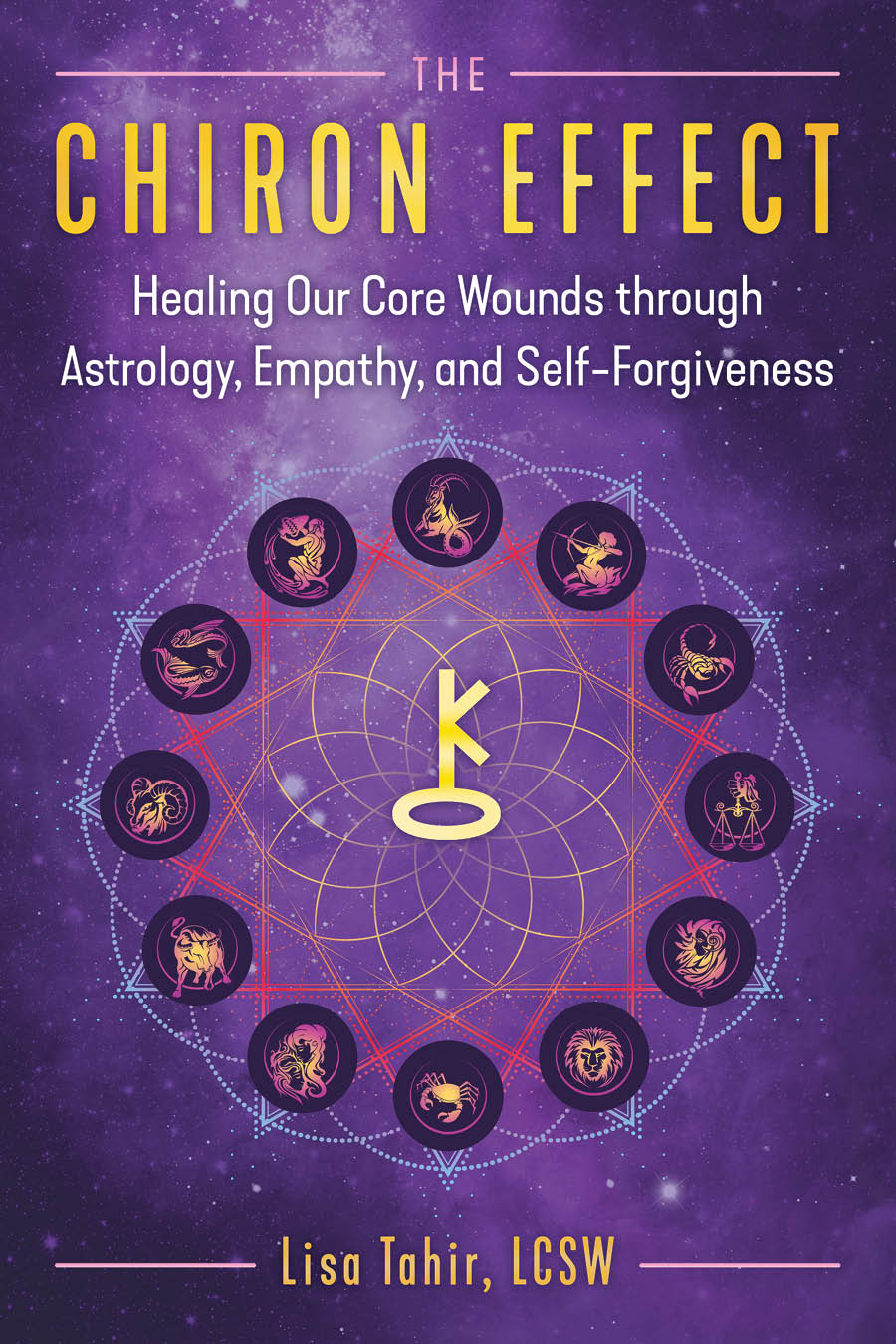
A central part of Lisa Tahir’s work is Chiron, often called the “wounded healer” in astrology. In her book, The Chiron Effect: Healing Our Core Wounds through Astrology, Empathy and Self-Forgiveness, Lisa explores how Chiron’s placement in the birth chart can symbolically point toward recurring areas of vulnerability.
Everyone carries wounds. Some relate to belonging. Others involve communication, self-worth, family, intimacy, achievement, or the right to take up space.
When these wounds remain unconscious, we may continue to orbit around them. We might repeatedly choose unavailable relationships, overwork to prove our value, silence our needs, or expect rejection before anyone has actually rejected us.
Anxiety often grows in this orbit.
The goal is not to use a birth chart to label or diagnose yourself. A chart cannot replace a mental health assessment, psychotherapy, medication, or other evidence-based care. Instead, it can serve as a reflective tool that helps you name a pattern and approach it with less shame.
The healing comes through empathy, self-forgiveness, psychological insight, and changed behavior.
A Chiron-informed reflection might sound like:
“This fear of being rejected has shaped many of my choices. It helped me survive emotionally at one point in my life. But I am learning that I can honor the wound without allowing it to make every decision.”
That is where symbolism becomes practical. You are not simply identifying a pattern. You are learning how to respond to it differently.
A Psychoastrology-Informed Reflection for Anxiety
You can try this journaling practice when you feel emotionally activated. You do not need to know your birth chart for it to be useful.

1. Name the trigger
What happened just before your anxiety increased?
Be specific. Was it an unanswered text, a work deadline, a difficult conversation, financial uncertainty, a memory, or a change in plans?
2. Identify the story
What did your mind immediately tell you?
You may notice thoughts such as:
- “I am going to fail.”
- “They are going to leave.”
- “I am not enough.”
- “If I cannot control this, something terrible will happen.”
- “I should be handling this better.”
3. Listen for the underlying wound
Ask, “What does this situation seem to threaten?”
Is it your sense of safety, belonging, identity, competence, freedom, or worth?
This question moves you beneath the surface symptom and toward the emotional need asking for care.
4. Connect with the soul-level theme
If you know your chart, you might reflect on Chiron, the Moon, Saturn, or other placements as symbolic themes. If you do not, simply ask:
“What might this anxiety be inviting me to learn about myself?”
Possible answers may include learning to trust, set boundaries, receive support, rest, speak honestly, or release the need to earn love.
5. Choose one grounded action
Healing requires more than insight. Choose one small action that supports your well-being today.
You might:
- Send an honest text instead of withdrawing.
- Take a ten-minute walk.
- Ask for clarification rather than assuming the worst.
- Reschedule a commitment so you can rest.
- Practice saying no.
- Make an appointment with a licensed therapist.
- Eat, hydrate, or sleep before making a major decision.
Small choices help create a new orbit.
Mental Health and Astrology: Holding Both with Care
There is room for curiosity and discernment in conversations about mental health and astrology.
Astrology is not a scientifically validated method for diagnosing anxiety disorders or determining the cause of mental health conditions. It should never be used to dismiss symptoms, encourage fear, or replace professional support.
At the same time, spiritual and symbolic practices can help people make meaning of their experiences. They may offer language, reflection, ritual, and a sense of connection. When integrated ethically, they can complement therapy rather than compete with it.
A compassionate approach honors your whole person: your history, nervous system, relationships, body, beliefs, culture, identity, and spiritual framework.
You do not have to choose between being psychologically grounded and spiritually open.
Healing Is a Return to Yourself
Anxiety may tell you that you are broken, behind, unsafe, or alone. Healing gently challenges those messages.
You are not your anxious thoughts. You are not defined by the wound you carry. You are a person whose patterns developed for reasons: and who can learn new ways of relating to yourself and the world.

If you are curious about anxiety and spirituality, Psychoastrology®, or an integrative approach to emotional healing, Lisa Tahir offers personalized psychotherapy by phone, FaceTime, and Zoom. Learn more about therapeutic services at Nolatherapy or explore Zoom therapy options.
You can also begin with Lisa’s book, The Chiron Effect, and listen to her podcast, All Things Therapy, for conversations about emotional health, spirituality, mindset, and personal transformation.
When you are ready, you can schedule a session with Lisa. Your anxiety deserves care( not criticism.) Your soul deserves to be heard.

The Courage to Change: How Psychoastrology® and Holistic Therapy Support Personal Transformation
Change can be exciting, but it can also feel deeply uncomfortable.
Even when you know that a relationship, career path, habit, or way of thinking is no longer supporting you, taking the next step may bring anxiety. You may wonder:
- What if I make the wrong decision?
- What if people are disappointed in me?
- Who will I be if I stop overworking, pleasing, or protecting myself?
- Can I trust my intuition?
- Is it possible to grow without rejecting who I have been?
Personal transformation rarely begins with certainty. More often, it begins with courage: the courage to become curious about your patterns and compassionate toward the parts of you that developed them.
Through psychotherapy, spirituality, mindfulness, and Psychoastrology®, you can begin to understand yourself as a whole person, mind, body, emotions, relationships, values, and spirit. This integrated perspective can create meaningful change while keeping your healing grounded in practical support.
What Is Psychoastrology®?
Psychoastrology® is Lisa Tahir’s integrative approach combining psychological insight with the symbolic language of natal astrology. It is not designed to predict your future or suggest that your birth chart determines your choices.
Instead, your chart can be used as a reflective map. It may help you explore recurring emotional themes, areas of vulnerability, protective behaviors, and strengths that have developed through your life experiences.
Psychoastrology® can invite questions such as:
- Where do I tend to feel most sensitive or exposed?
- What patterns repeat in my relationships or career?
- What do I believe I must do to be worthy, safe, or loved?
- Which coping strategies once protected me but now limit me?
- What would it look like to meet these parts of myself with empathy?
Psychotherapy helps you process emotions, understand behavior, regulate your nervous system, and practice new responses. Astrology may offer symbolic language for experiences that have been difficult to explain. Together, these perspectives can support deeper self-understanding.
It is important to hold astrology as a complementary, experiential tool, not a diagnosis or replacement for evidence-based mental health care. When anxiety, trauma, depression, addiction, or relationship distress is interfering with your life, qualified professional support matters.
The Chiron Effect: Understanding Core Wounds
A central part of Lisa’s work is Chiron, often called the “wounded healer.” In mythology and astrology, Chiron represents an area of vulnerability that can become a source of wisdom, empathy, and healing.
In The Chiron Effect: Healing Our Core Wounds through Astrology, Empathy, and Self-Forgiveness, Lisa explores how Chiron’s sign and house placement may illuminate recurring areas of wounding. These may involve themes such as self-worth, belonging, communication, identity, trust, intimacy, or feeling seen.
Most of us have a place where we feel especially tender. Maybe you fear being misunderstood. Perhaps you learned to earn love through achievement or caretaking. You may struggle to receive support, set boundaries, or believe that rest is allowed.
When these wounds remain unconscious, we may continue to orbit them. We repeat familiar relationship dynamics, overwork to prove our value, withdraw before we can be rejected, or criticize ourselves before anyone else has the chance.
Awareness creates space.
Once you can recognize a pattern, you have more opportunity to pause and choose a response that reflects who you are becoming, not only what you have survived.
Self-forgiveness is part of this process. It does not mean excusing harm or avoiding accountability. It means understanding that many of your defenses developed for a reason. You can take responsibility for your choices without making shame your permanent identity.
Try asking:
What was this part of me trying to protect?
That question can soften the inner critic and open the door to change.
Anxiety and Spirituality: Making Space for the Whole Person
Anxiety often creates urgency. Your thoughts race toward the future, your body becomes tense, and your attention narrows around what might go wrong.
From a psychological perspective, anxiety may be connected to nervous-system activation, learned beliefs, unresolved experiences, perfectionism, or ongoing stress. From a spiritual perspective, anxiety may also bring up questions about trust, purpose, uncertainty, control, and connection.
A holistic approach makes room for both perspectives.
This does not mean treating anxiety as a mystical message or ignoring clinical care. It means honoring the whole person. You can explore meaning and spirituality while also learning practical tools for emotional regulation, communication, boundaries, and nervous-system support.
When anxiety appears, try separating the experience into three parts:
- The sensation: What is happening in your body?
- The story: What is your mind telling you this means?
- The need: What would help you feel safer, clearer, or more supported?
For example:
- Sensation: “My chest feels tight.”
- Story: “I am going to fail.”
- Need: “I need to slow down, prepare, and remember that one outcome does not define my worth.”
A feeling can be real without being the whole truth.
Mindfulness, meditation, gentle movement, time in nature, and reflective journaling may complement therapy. If anxiety is persistent, overwhelming, or interfering with sleep, work, relationships, or daily functioning, consider reaching out to a licensed mental health professional.

A Five-Minute Practice for Personal Transformation
You do not need a complicated ritual to begin reconnecting with yourself. Try this practice once a day or whenever you feel emotionally activated.
1. Orient to the present
Look around your space and name five things you see. Notice colors, textures, and shapes. Let your eyes move slowly.
This simple action can remind your body that you are here, in the present moment.
2. Breathe gently
Inhale comfortably, then allow your exhale to be slightly longer. Do not force deep breathing. The goal is steadiness, not performance.
3. Name what you feel
Complete this sentence:
I am noticing…
You might write, “I am noticing anxiety,” “I am noticing resentment,” or “I am noticing fear of disappointing someone.”
Naming an emotion creates a little distance between you and the experience. You are having a feeling; you are not the feeling.
4. Identify the deeper theme
Ask what area of life feels activated. Is it belonging, control, communication, independence, intimacy, self-worth, or safety?
If you know your Chiron placement, you may use it as a symbolic prompt. Let it inspire curiosity rather than provide a fixed explanation.
5. Choose one grounded action
Ask:
What is one kind, practical thing I can do next?
Your answer might be taking a walk, asking for clarification, drinking water, setting a boundary, postponing a decision, sending an honest message, or scheduling support.
Small actions create trust with yourself. Repeated small actions become new patterns.
Work/Life Balance Is an Emotional Practice
Work/life balance is not only about organizing your calendar. It is also about examining the beliefs beneath your behavior.
You may have learned:
- “If I rest, I am lazy.”
- “If I say no, people will leave.”
- “If I am not needed, I do not matter.”
- “If I make a mistake, I will lose everything.”
- “My value depends on how much I accomplish.”
These beliefs can lead to over-functioning, burnout, resentment, and disconnection from your own needs.
A holistic therapy approach invites you to look beneath the schedule and ask what your nervous system has come to associate with rest, success, responsibility, and care.
You can begin practicing more supportive beliefs:
- “Rest supports my capacity.”
- “A boundary can protect connection.”
- “My value is larger than my productivity.”
- “Feedback is information, not a verdict.”
- “I can care for others without abandoning myself.”

This is one reason holistic therapy online can be so helpful. Through phone, FaceTime, or Zoom sessions, you can explore the emotional patterns that show up in your everyday environment: and then practice bringing new skills into your work, relationships, routines, and home life.
Lisa’s therapeutic services support adolescents and adults navigating anxiety, trauma, addiction, self-esteem, relationships, career concerns, LGBTQ+ issues, and personal growth.
Healing Is a Return, Not a Reinvention
Personal transformation does not require becoming someone entirely new.
Often, it means returning to the parts of yourself that became hidden beneath fear, shame, pressure, or survival. Your sensitivity may become discernment. Your past isolation may deepen your compassion. Your experience with uncertainty may help you develop wisdom.
This does not mean romanticizing pain. It means allowing your life to become more than the wounds you have experienced.
You are not your anxiety. You are not your history. You are not limited to the patterns you inherited or repeated.
Healing may look like pausing before reacting. It may look like asking for help instead of handling everything alone. It may mean choosing a relationship that feels consistent rather than familiar in a painful way. It may involve resting before you are completely depleted.
For deeper reflection on core wounds, empathy, and self-forgiveness, explore The Chiron Effect. The book offers Lisa’s Psychoastrology® framework for identifying recurring areas of vulnerability and approaching them with compassion, personal responsibility, and hope.
You can also listen to Lisa’s long-running All Things Therapy podcast, featuring conversations about mental health, emotional well-being, spirituality, mindfulness, and personal transformation.
When you are ready, you can schedule a session or contact Lisa with your questions. You can also explore Lisa’s interviews and publications for additional insights.
The courage to change does not mean you are never afraid. It means you are willing to listen beneath the fear, honor what needs care, and take one honest step forward.
Your healing journey does not have to be perfect.
It only has to be yours.
This article is for educational and reflective purposes and is not a substitute for diagnosis, psychotherapy, medical treatment, or crisis care. If you are experiencing a mental health emergency or thoughts of harming yourself, contact emergency services or a crisis resource in your area.

Finding Your Center: How Psychoastrology® and Holistic Therapy Can Guide Personal Transformation
Have you ever noticed that you can understand a pattern intellectually and still feel caught inside it?
You may recognize that you overwork when you feel insecure, withdraw when relationships become vulnerable, or say “yes” when your body is asking for rest. You may even journal, meditate, or attend therapy, yet find yourself returning to the same emotional crossroads.
This is where a deeper, more compassionate kind of self-exploration can help.
Psychoastrology® brings together psychological insight and the symbolic language of natal astrology. It is not about predicting your future or blaming your birth chart for your choices. Instead, it can offer a reflective map for understanding emotional themes, protective behaviors, strengths, and areas where healing may be calling for your attention.
When combined with psychotherapy, mindfulness, and personal responsibility, this approach can support meaningful personal transformation therapy, the kind that helps you move from simply managing symptoms to understanding yourself with greater compassion.
What Does It Mean to Find Your Center?
Finding your center does not mean feeling calm every moment of every day. It means developing an inner place you can return to when life feels uncertain.
Your center may include:
- The ability to pause before reacting
- Greater awareness of your emotional needs
- A stronger connection to your values
- More compassionate self-talk
- The capacity to set boundaries without excessive guilt
- A willingness to honor both your practical and spiritual experiences
Psychotherapy can help you identify thought patterns, attachment wounds, trauma responses, and behaviors that no longer serve you. Spirituality can help you explore meaning, intuition, purpose, and connection. Psychoastrology® offers a symbolic framework that may help connect these different parts of your experience.
The goal is not to choose between psychology and spirituality. The goal is to create a more integrated understanding of who you are.

Psychoastrology®: A Symbolic Lens for Psychological Growth
In Psychoastrology®, the birth chart is viewed as a symbolic representation of personal themes and potential. It can prompt questions such as:
- Where do I tend to feel most vulnerable?
- What emotional patterns repeat in my relationships?
- What do I believe I must do to be worthy, safe, or loved?
- Which strengths have developed because of what I have survived?
- Where am I being invited to grow?
These questions can complement traditional therapeutic work. For example, someone struggling with workplace burnout may begin by exploring time management and cognitive beliefs about productivity. They may then go deeper, asking why rest feels unsafe or why their identity is so closely connected to achievement.
That exploration can reveal family expectations, perfectionism, fear of disappointing others, or an old belief that love must be earned. Astrology may provide a symbolic language for discussing those themes, while therapy helps the person process emotions and practice new behaviors.
This is one reason people interested in mental health and astrology often describe the work as both clarifying and personal. The chart does not define you. It can simply offer another way to begin a conversation with yourself.
The Chiron Effect and the Path of Self-Forgiveness
A central part of my work is Chiron, often described in astrology as the “wounded healer.” In The Chiron Effect: Healing Our Core Wounds through Astrology, Empathy, and Self-Forgiveness, I explore how Chiron’s sign and house placement may illuminate recurring areas of vulnerability.
Most of us have a place where we feel especially sensitive. Perhaps you fear being misunderstood. Maybe you struggle to trust, feel unseen in relationships, doubt your creativity, or worry that you are not enough. These wounds can influence how you respond to conflict, success, intimacy, and change.
When these patterns remain unconscious, we may continue orbiting them. We choose familiar dynamics, repeat old coping strategies, or interpret present circumstances through the lens of past pain.
Awareness creates an opportunity to choose differently.
Self-forgiveness is not an excuse for harmful behavior. It is a way of releasing the shame that can keep you stuck. You can take responsibility for your actions while also recognizing that many of your defenses developed for a reason.
A compassionate question might be:
“What was this part of me trying to protect?”
That question can soften the inner critic and make room for healing.
How Anxiety and Spirituality Can Work Together
Anxiety often arrives with a sense of urgency. Your mind races toward possible danger, your body becomes tense, and your attention narrows around what might go wrong.
From a psychological perspective, anxiety may involve nervous-system activation, learned beliefs, unresolved experiences, or ongoing stress. From a spiritual perspective, anxiety may also raise questions about trust, control, uncertainty, purpose, or disconnection from your inner wisdom.
A spiritually open approach does not mean treating anxiety as a mystical message or ignoring clinical care. It means making space for the whole person.
When anxiety appears, try asking:
-
What is happening in my body?
Notice tightness, heat, restlessness, shallow breathing, or fatigue. -
What story is my mind telling me?
Is it saying, “I will fail,” “I am unsafe,” or “I must solve everything now”? -
What need may be underneath the anxiety?
You may need reassurance, rest, information, support, or a boundary. -
What spiritual value do I want to practice?
Perhaps the invitation is toward patience, courage, discernment, acceptance, or trust.
This process helps you honor both the psychological and spiritual dimensions of your experience without allowing either one to cancel out the other.
If anxiety is intense, persistent, or interfering with sleep, work, relationships, or daily functioning, consider reaching out to a licensed mental health professional. Holistic practices can complement therapy, but they should not replace appropriate clinical support.
A Five-Minute Centering Practice
You do not need a complicated ritual to reconnect with yourself. Try this simple practice once a day, especially during a busy transition between work and home.
1. Orient
Look around the room and name five things you see. Let your eyes move slowly. This signals to your nervous system that you are present in the current moment.
2. Breathe
Inhale gently through your nose and exhale a little more slowly than you inhale. Do not force a deep breath. Let the practice be comfortable and steady.
3. Name the pattern
Say quietly, “I notice I am feeling…” Complete the sentence without judging yourself. You might feel anxious, pressured, lonely, resentful, or uncertain.
4. Connect with a personal theme
Reflect on the area of life that feels activated. Is this about belonging, communication, independence, intimacy, self-worth, or control? If you know your Chiron placement, you may use it as a symbolic prompt, not a fixed explanation.
5. Choose one grounded action
Ask, “What is one kind, practical thing I can do next?” This might be sending a message, taking a walk, postponing a decision, drinking water, setting a work boundary, or scheduling support.
Small actions create trust with yourself.

Bringing Spiritual Insight Into Work/Life Balance
Work/life balance is not only a scheduling problem. Sometimes it reflects an identity pattern.
You may have learned that productivity equals worth. You may feel responsible for everyone’s emotional well-being. You may fear that slowing down will cause you to lose momentum or become irrelevant.
A holistic therapy approach invites you to examine the belief beneath the behavior:
- “If I rest, I am lazy.”
- “If I say no, people will leave.”
- “If I am not needed, I do not matter.”
- “If I make a mistake, I will lose everything.”
Then you can practice a more supportive belief:
- “Rest supports my capacity.”
- “A boundary can protect connection.”
- “My value is larger than my productivity.”
- “A mistake is information, not a verdict.”
This is where holistic therapy online can be especially supportive. Through phone, FaceTime, or Zoom sessions, you can explore your inner world while remaining connected to the environment where your daily patterns actually occur. You can learn to bring insight from the therapy session into your kitchen, office, relationships, and routines.
You can learn more about virtual therapy sessions and the ways I support emotional health, relationships, self-esteem, anxiety, career concerns, and personal growth through Nolatherapy’s services.
Healing Is a Return, Not a Reinvention
Personal transformation does not require becoming someone entirely new. Often, it means returning to the parts of yourself that were silenced by fear, shame, pressure, or survival.
Your sensitivity may become discernment. Your past isolation may deepen your compassion. Your experience with uncertainty may help you develop wisdom. The places where you have struggled can become places where you learn to offer yourself patience and care.
This does not mean romanticizing pain. It means allowing your life to become more than the wounds you have experienced.

If you would like to explore healing through the combined perspectives of psychology, spirituality, and Psychoastrology®, I invite you to begin with The Chiron Effect. The book offers insights into core wounds, empathy, self-forgiveness, and the possibility of shifting the patterns that keep you circling the same pain.
You can also schedule a session to receive personalized support. Together, we can explore your emotional patterns, spiritual questions, and practical next steps in a way that honors your individuality.
You are not your anxiety. You are not your history. You are not limited to the patterns you inherited or repeated.
Your center is still within you: and healing can begin with the compassionate decision to come home to yourself.
This article is for educational and reflective purposes and is not a substitute for diagnosis, psychotherapy, medical treatment, or crisis care. If you are in immediate danger or experiencing a mental health emergency, contact emergency services or a local crisis resource.

Healing Your Inner Critic: A Psychoastrology® Path to Gentler Self-Talk
Have you ever made one small mistake and suddenly heard a whole courtroom of criticism in your mind?
You should have known better.
You’re falling behind.
Everyone else is doing it better than you.
What is wrong with you?
This voice is often called the inner critic. It can sound harsh, but it usually developed for a reason. At some point, criticism may have seemed like a way to stay safe, avoid rejection, prevent failure, or earn approval. The problem is that a strategy that once helped you survive can eventually keep you anxious, perfectionistic, disconnected, and afraid to be fully seen.
Healing your inner critic does not require silencing yourself or pretending everything is positive. It invites a more honest and compassionate relationship with your thoughts.
Through Psychoastrology®, we can explore self-talk through both psychological and symbolic lenses. Your birth chart is not a diagnosis, and astrology does not replace mental health care. Instead, it can offer a meaningful map for noticing emotional patterns, core wounds, and the places where personal transformation may be ready to begin.
Your Inner Critic May Be Trying to Protect You
Many therapeutic approaches view the inner critic as a part of you: not the whole of you. It may be a perfectionist, a people-pleaser, a taskmaster, or an internalized voice from a critical person or environment.
Even when its message is painful, the critic may be attempting to protect you from something it believes is worse:
- Shame
- Abandonment
- Failure
- Conflict
- Rejection
- Feeling out of control
- Being perceived as inadequate
This does not mean you have to agree with the critic. It means you can become curious about it.
Instead of responding, “I hate myself for thinking this way,” try asking:
“What is this part afraid might happen if it stops criticizing me?”
That question creates space. You are no longer fused with the thought. You are observing it.
This is an important shift in mental health work: moving from I am a failure to I am noticing a fear that I might fail. The first statement defines you. The second gives you room to respond.
Psychoastrology® and the Symbolic Language of Self-Talk
Psychoastrology® blends psychology, spirituality, and personal responsibility. Developed by Lisa Tahir, LCSW, this approach uses astrology as a symbolic tool for exploring psychological patterns and core wounds.
When looking at the inner critic, several archetypal themes may be useful:
Mercury: The Voice in Your Mind
Mercury is associated symbolically with communication, thought patterns, and the way you process information. Exploring Mercury can help you notice how quickly your mind moves, whether you tend to overanalyze, and what kind of language you use with yourself.
Do you turn uncertainty into catastrophe? Do you assume you know what others are thinking? Do you speak to yourself in absolutes: always, never, everyone, no one?
A Mercury-inspired practice is to choose one recurring thought and rewrite it in a way that is both kinder and more accurate.
Instead of:
“I always mess everything up.”
Try:
“This did not go as I hoped. I can learn from it and make my next choice with more awareness.”
The Moon: Emotional Safety
The Moon can be explored as a symbol of emotional needs, instinctive reactions, and the conditions that help you feel safe. When your nervous system is overwhelmed, your inner critic may become louder.
You might criticize yourself when you actually need:
- Rest
- Reassurance
- Food or hydration
- A boundary
- Connection
- Time to process
- A compassionate place to grieve
Before trying to reason with a harsh thought, check in with your body. Is your chest tight? Is your stomach tense? Are you holding your breath?
Gentle self-talk begins with recognizing that your body may be asking for care: not correction.
Saturn: Rules, Standards, and Self-Judgment
Saturn can represent structure, responsibility, and the rules we create for ourselves. In its more rigid expression, it may sound like relentless self-discipline:
You should be further along.
You cannot rest until everything is done.
You must be perfect to be respected.
But structure does not have to equal punishment. A healthier Saturn asks:
“What support would help me follow through without abandoning myself?”
You can honor responsibility while releasing unrealistic standards. You can be accountable for your actions without making your entire identity wrong.
Chiron: The Core Wound Beneath the Criticism
In The Chiron Effect: Healing Our Core Wounds through Astrology, Empathy, and Self-Forgiveness, Lisa Tahir explores Chiron as the “wounded healer” and as a symbolic way to understand recurring patterns of vulnerability.
Chiron may help you ask:
- Where do I most often feel “not enough”?
- What kind of feedback feels disproportionately painful?
- What do I fear others will discover about me?
- Where do I repeat patterns that leave me feeling powerless?
- What would self-forgiveness look like here?
The purpose is not to label yourself or become attached to a wound. It is to recognize a pattern with enough compassion that you can begin choosing differently.

A Five-Minute Practice for Gentler Self-Talk
Try this simple practice when the inner critic appears. You can use it as journaling, meditation, or a pause during your day.
1. Notice the trigger
What happened immediately before the criticism began?
Perhaps someone did not respond to your message. You received constructive feedback at work. You compared yourself to someone online. You made a mistake in a relationship.
Name the moment without judging it.
2. Write down the exact thought
Do not summarize it. Write the actual words your inner critic uses.
For example:
“I’m not good at anything.”
“They are going to leave me.”
“I should not need help.”
Seeing the thought on paper can make it feel less like an unquestionable truth.
3. Identify the feeling underneath
Is the deeper feeling sadness, fear, embarrassment, loneliness, anger, or grief?
The critic often speaks loudly because a more vulnerable emotion has not yet been heard.
4. Ask what you need
Rather than asking, “How do I get rid of this feeling?” ask:
“What would help me feel a little safer right now?”
The answer might be a walk, a glass of water, a conversation, a boundary, a nap, or a reminder that one difficult moment does not define your life.
5. Offer a compassionate reframe
A compassionate reframe is not a forced affirmation. It should feel believable enough for your nervous system to receive.
Try:
- “I am learning. I do not have to know everything today.”
- “This is painful, but I can move through it.”
- “I am allowed to make mistakes and remain worthy.”
- “I can take responsibility without attacking myself.”
- “My sensitivity is information, not a flaw.”
Turning the Critic into a Guide
As you practice, your inner critic may gradually become less like a judge and more like an advisor.
A judge attacks your identity. A guide offers information.
A judge says:
“You are irresponsible.”
A guide says:
“You may need a clearer plan and more rest.”
A judge says:
“No one will love you if you are fully honest.”
A guide says:
“Honesty feels risky because connection has not always felt safe. Let’s practice sharing one truth with someone trustworthy.”
This is the heart of personal transformation therapy: not becoming a completely different person, but learning to relate to yourself differently. You begin to recognize old survival patterns without letting them make every decision.
The Spiritual Invitation: From Self-Punishment to Self-Forgiveness
Spirituality can support healing when it helps you reconnect with meaning, compassion, and a sense of belonging. It becomes less helpful when it is used to bypass real pain or pressure yourself to be “positive” before you are ready.
A grounded relationship between anxiety and spirituality makes room for both. You can be grateful and still be grieving. You can trust your path and still feel afraid. You can believe in growth without shaming yourself for needing time.
In Lisa’s work, self-forgiveness is not about excusing harm or avoiding responsibility. It is about releasing the belief that punishment is the same as healing.
You are allowed to understand why you responded as you did and still choose a new response. You are allowed to honor the part of you that survived while creating a life that is not organized around survival.

When Therapy Can Help
Self-reflection can be powerful, but you do not have to navigate a relentless inner critic alone. Consider seeking professional support if self-criticism is connected to trauma, depression, panic, addiction, relationship distress, or urges to harm yourself.
A therapist can help you slow down the pattern, understand where it came from, and build practical tools for emotional regulation and self-compassion. At Nolatherapy, therapy may include traditional approaches alongside meditation, mindfulness, energy principles, intuitive techniques, and Psychoastrology®: always tailored to your needs and comfort level.
For those interested in holistic therapy online, Lisa offers sessions by phone, FaceTime, and Zoom. Learn more about therapeutic services and Zoom therapy.
Explore The Chiron Effect
If you feel drawn to understanding the deeper patterns beneath your self-talk, explore Lisa Tahir’s book, The Chiron Effect: Healing Our Core Wounds through Astrology, Empathy, and Self-Forgiveness.
The book offers a Psychoastrology® framework for identifying core areas of vulnerability and working with them through empathy, self-forgiveness, and personal responsibility. You can also use the Chiron placement resource to begin exploring your chart.
Your chart does not determine your destiny. It can, however, give you language for experiences that may have felt confusing or isolating. When combined with thoughtful psychotherapy, it can become a tool for reflection, insight, and change.
The next time your inner critic speaks, see if you can pause before believing it. Listen for the fear beneath the judgment. Offer yourself the kind of truth that creates safety rather than shame.
You are not here to become perfect.
You are here to become more fully yourself.
Ready for personalized Psychoastrology® insights and compassionate support? Schedule a session with Lisa Tahir, LCSW, or contact Nolatherapy with your questions. Your healing journey can begin with one honest, gentle conversation.

The Art of the Inner Pause: Reclaiming Work/Life Balance Through Psychoastrology®
There is a particular kind of exhaustion that does not come from one difficult day. It builds slowly, from answering one more message, carrying one more responsibility, solving one more problem, and postponing your own needs until “later.”
Eventually, later becomes a lifestyle.
You may be functioning, meeting deadlines, caring for others, and appearing fine while feeling disconnected from yourself. Your mind is always moving ahead, your body is quietly tense, and rest begins to feel like something you have to earn.
This is where the inner pause becomes powerful.
An inner pause is a brief, intentional moment when you step out of automatic doing and return to yourself. It is not avoidance. It is not laziness. It is a way of listening, to your body, emotions, intuition, values, and limits, before deciding what comes next.
Through the lens of Psychoastrology®, the inner pause can also become a tool for personal transformation. By bringing psychology and spirituality into conversation with astrology, we can explore patterns of behavior, emotional needs, and the deeper wounds that may influence how we work, love, serve, and care for ourselves.
Work/Life Balance Begins With Awareness
Many people approach work/life balance as a scheduling problem. They look for the perfect calendar, routine, or productivity system that will finally make everything feel manageable.
Practical organization can help. But balance is also an emotional and nervous-system experience.
You can have a well-organized calendar and still feel overwhelmed. You can take time off and remain mentally stuck at work. You can be physically present with the people you love while internally reviewing everything you did wrong that day.
The first step toward balance is noticing what is happening inside you.
Try asking:
- What am I feeling right now?
- Where do I feel stress in my body?
- Am I responding to a real need or an old fear?
- What am I saying yes to: and what am I silently resenting?
- What would support look like in this moment?
These questions create space between stimulus and response. Even a few conscious breaths can interrupt the momentum of anxiety, overthinking, or self-criticism.

The Inner Pause and the Psychology of Over-Functioning
Over-functioning often looks like competence. You are the reliable one. The helper. The person who anticipates everyone’s needs and keeps things moving.
But over time, over-functioning can become a way of seeking safety, approval, or control.
You may believe:
- “If I do everything perfectly, nothing will fall apart.”
- “If I am useful, I will be valued.”
- “If I slow down, I will disappoint someone.”
- “Other people’s needs should come before mine.”
- “I have to handle this on my own.”
These beliefs are not character flaws. They may be adaptive strategies developed during earlier experiences when being vigilant, productive, or emotionally self-sufficient helped you cope.
The difficulty is that a strategy that once protected you may eventually prevent you from resting, receiving support, or being fully present in your own life.
This is one reason therapy can be so transformative. In personalized therapy sessions with Lisa Tahir, LCSW, you can explore the emotional patterns beneath your stress and begin practicing new ways of relating to yourself.
The inner pause gives you a moment to ask: Is this truly mine to carry?
Mental Health and Astrology: Entering Virgo Season
In tropical Western astrology, the Sun enters Virgo around August 22 in the Americas and August 23, 2026, at approximately 02:19 UTC. Virgo season traditionally invites attention toward daily routines, health, discernment, service, and practical care.
This energy can be grounding. It reminds us that transformation is often built through small, consistent choices: drinking water, going to bed, taking a walk, asking for help, clearing one corner of a room, or creating a healthier boundary around work.
But Virgo symbolism can also illuminate the inner critic.
When we feel pressure to improve every part of ourselves, Virgo energy may show up as perfectionism, worry, over-analysis, or a constant sense that we are falling behind. We may confuse self-care with self-optimization and turn healing into another project to complete.
The invitation is not to become perfect. It is to become more compassionate and discerning.
Instead of asking, How can I do more? Virgo season offers a wiser question:
What is truly necessary: and what would allow me to care for myself while caring for what matters?

A Virgo Season Inner Pause Practice
You can use the following practice whenever you feel rushed, anxious, or pulled in too many directions. It takes less than two minutes.
1. Stop and notice
Put down your phone or move your hands away from the keyboard. Feel your feet on the floor. Notice whether your jaw, shoulders, stomach, or hands are tense.
You do not need to change anything yet. Simply notice.
2. Breathe into the moment
Take a gentle inhale and allow your exhale to be slightly longer. There is no need to force deep breathing. Let the breath be comfortable and natural.
As you exhale, imagine releasing the demand to solve everything immediately.
3. Name what is present
Try saying quietly:
- “I am feeling pressured.”
- “I am afraid of making a mistake.”
- “I am tired and need support.”
- “I am carrying more than I have acknowledged.”
Naming an emotion does not make it bigger. It can help you relate to the feeling with greater clarity rather than being swept away by it.
4. Ask one compassionate question
Choose one:
- What do I need right now?
- What is the next kind step?
- What can wait until tomorrow?
- How can I help without abandoning myself?
- What boundary would bring more peace into this situation?
5. Choose one small action
The answer may be sending one email, ending your workday, drinking water, taking a walk, telling the truth, or asking someone to share the load.
Personal transformation often begins with one honest, manageable action: not a complete reinvention of your life.
Anxiety and Spirituality: Returning to the Body
For people interested in anxiety and spirituality, the inner pause can serve as a bridge between emotional awareness and spiritual connection.
Anxiety often pulls attention into the future. Spiritual practice can invite attention back to the present. Psychology helps us understand the thoughts, attachment patterns, and protective responses involved. The body provides immediate information about what is happening now.
Together, these perspectives can create a more holistic relationship with healing.
A spiritual practice does not have to be formal or religious. It might involve meditation, prayer, time in nature, journaling, intuitive reflection, or simply sitting quietly and allowing yourself to be a person rather than a productivity machine.
At the same time, spirituality should support: not replace: professional mental health care. If anxiety, trauma, depression, or stress is significantly affecting your daily life, relationships, sleep, or safety, consider reaching out to a qualified mental health professional.
What Chiron Can Teach Us About Balance
Lisa’s book, The Chiron Effect: Healing Our Core Wounds through Astrology, Empathy, and Self-Forgiveness, explores the relationship between core wounding, recurring patterns, and healing.
In mythology, Chiron is known as the wounded healer. In Psychoastrology®, Chiron can help us reflect on areas where we may feel especially vulnerable: and where we may also develop compassion, wisdom, and the ability to support others.
Sometimes our struggle with work/life balance is connected to a deeper wound:
- A fear that we are not enough unless we achieve
- A belief that rest is unsafe or undeserved
- A pattern of earning love through caretaking
- A need to remain in control to avoid disappointment
- A tendency to hide our needs because vulnerability once felt risky
Understanding these patterns is not about blaming the past. It is about developing a more compassionate relationship with the present.
When you can recognize the wound beneath the pattern, you have more freedom to choose differently.

Reclaiming Your Life One Pause at a Time
Work/life balance does not require that every day be equally divided or perfectly peaceful. Some seasons will ask more of you. Parenting, caregiving, work transitions, grief, illness, relationships, and personal growth can all change your capacity.
Balance means staying in relationship with yourself as life changes.
It means noticing when your pace is no longer sustainable. It means allowing your needs to be part of the conversation. It means understanding that rest, pleasure, play, and connection are not interruptions to your life. They are part of a healthy life.
As Virgo season approaches, consider creating a simple ritual:
- Begin your morning with one hand on your heart and one on your belly.
- Identify what your energy genuinely allows today.
- Take one screen-free pause during the workday.
- Write down unfinished tasks before closing your laptop.
- End the evening by naming one thing you handled with care.
These practices may seem small, but small practices become patterns. Patterns shape identity. And identity influences the life you believe you are allowed to live.
If you are ready to explore your emotional patterns, birth chart, relationships, anxiety, or work/life balance more deeply, Lisa offers compassionate, integrative therapy by phone, FaceTime, or Zoom. Psychoastrology® sessions weave together psychology, spirituality, mindset work, and personal responsibility in a way that is tailored to you.
You can also schedule a session or contact Lisa with questions.
You do not have to wait until you are completely depleted to pause. You are allowed to stop now, listen inward, and begin again from a place of greater kindness.
The next step does not have to be perfect.
It only has to be true.

Mercury Retrograde and Your Mental Health: Turning Cosmic Chaos Into Self-Insight
Mercury retrograde has a way of becoming the scapegoat for everything: the forgotten password, the awkward text, the delayed flight, the tense conversation, or the sudden return of an old relationship pattern.
You may hear people say, “Mercury is retrograde, so of course I feel anxious.” And sometimes, that statement feels emotionally true. During these periods, many of us become more aware of communication issues, unfinished business, technology frustrations, and the parts of life that need a second look.
But here is the grounding truth: Mercury retrograde is an apparent change in Mercury’s motion as viewed from Earth. There is no established scientific evidence that this astronomical event directly causes anxiety, depression, relationship conflict, or other mental health symptoms. Research and clinical perspectives generally point instead to stress, expectation, confirmation bias, and the power of shared cultural narratives.
That does not mean your experience is invalid.
If you feel more unsettled during Mercury retrograde, your feelings deserve care. You can honor the symbolic meaning of astrology without giving away your personal power or treating the planets as the cause of everything that happens.
This is where Psychoastrology® can offer a meaningful bridge between psychology, spirituality, and personal transformation.
Mercury Retrograde as a Pause, Not a Punishment
Astrologically, Mercury is associated with communication, thought processes, learning, travel, technology, and decision-making. When Mercury appears to move backward, many people use the period as an invitation to review, reflect, repair, and reconsider.
Psychologically, this can be helpful when it encourages mindful self-observation rather than fear.
Instead of asking, “What bad thing is Mercury retrograde going to cause?” try asking:
- What needs my attention right now?
- Where am I rushing instead of responding thoughtfully?
- What conversation have I been avoiding?
- What belief about myself keeps repeating?
- What unfinished emotional business is ready to be understood?
This shift moves you from fatalism to agency. You are no longer waiting for cosmic chaos to happen to you. You are using a familiar symbolic cycle to become more intentional.
Why It Can Feel So Real
Beliefs influence the way we interpret our experiences. If you expect Mercury retrograde to bring confusion, you may become more vigilant for mistakes or miscommunication. A delayed email might feel more significant. A forgotten appointment may seem like proof that something is “off.” This is sometimes described as an expectation or nocebo effect: anticipating difficulty can increase distress and shape what you notice.
Confirmation bias can play a role, too. We tend to remember events that confirm what we already believe and overlook similar events that happen at other times.
Still, the emotional reaction itself is real. Stress is stress, whether it comes from a work deadline, relationship uncertainty, poor sleep, financial pressure, or an astrological story that has captured your attention.
A compassionate response sounds like this:
“Mercury retrograde may not be causing my anxiety, but I notice that I am anxious. What support, structure, or healing do I need today?”
That question puts your well-being back at the center.

A Psychoastrology® Approach to Mental Health
Psychoastrology® explores the intersection of your psychological patterns and astrological chart. It is not a replacement for psychotherapy, medical care, or evidence-based treatment. Rather, it can serve as a reflective language for exploring the emotional themes that shape your choices, relationships, self-image, and healing journey.
In Lisa Tahir’s work, Chiron, the “wounded healer” archetype, is used as a map for understanding core areas of vulnerability and potential growth. Her book, The Chiron Effect: Healing Our Core Wounds through Astrology, Empathy, and Self-Forgiveness, explores how recurring emotional patterns may point toward places that need compassion and conscious transformation.
During Mercury retrograde, you might use this lens to notice how old wounds influence communication.
For example:
- A fear of rejection may cause you to overanalyze someone’s silence.
- A wound around self-worth may make constructive feedback feel like personal criticism.
- An abandonment fear may lead you to seek constant reassurance.
- A history of being misunderstood may cause you to shut down before explaining yourself.
- A desire to avoid conflict may keep you from expressing an important boundary.
The goal is not to blame your chart, your past, or another person. The goal is to develop enough awareness to choose a new response.
Five Ways to Turn Mercury Retrograde Into Self-Insight
1. Create a “pause before responding” practice
Before replying to a difficult text or email, take three slow breaths. Notice what is happening in your body. Is your jaw tight? Is your chest constricted? Are you feeling the urge to defend, withdraw, or attack?
Then ask:
“What do I want this communication to create?”
You may still need to be direct. Pausing does not mean becoming passive. It gives your nervous system a moment to move out of reactivity so your words reflect your values.
2. Keep a trigger log
When something activates you, write down five details:
- What happened?
- What did I feel?
- What story did my mind create?
- What old pattern might this resemble?
- What would a compassionate, grounded response look like?
This practice helps separate facts from interpretations. It also allows you to identify patterns in your work, relationships, and self-talk.
You can learn more about creating a supportive mental health routine in this guide to integrating Psychoastrology® with daily self-care.
3. Review your boundaries and commitments
Mercury retrograde is often associated with reviewing rather than rushing ahead. Use that symbolism to look at your calendar, workload, and emotional commitments.
Ask yourself:
- Where am I overextending?
- Which responsibilities are truly mine?
- What do I need to renegotiate?
- Am I saying yes out of desire or fear?
- What would create better work/life balance?
A boundary is not a punishment or a rejection of someone else. It is information about what allows you to remain emotionally and physically well.
4. Practice mindful technology use
If technology frustrations intensify your stress, create small points of intentionality. Back up important files. Double-check dates and addresses. Leave extra time for travel. Before checking your phone in the morning, take a few minutes to notice your thoughts and set an intention for the day.
You might say:
“I can respond to what is urgent without making everything an emergency.”
Reducing doom-scrolling and fear-based astrology content can also help. If a social media post leaves you feeling doomed, powerless, or afraid to make ordinary decisions, it may be time to step back.
5. Offer empathy to the part of you that is struggling
Many of us respond to emotional pain with criticism. We think we should be “over it” by now. We judge ourselves for repeating a relationship pattern, feeling insecure, or becoming overwhelmed.
Psychoastrology® invites a different response: curiosity and self-forgiveness.
Instead of asking, “What is wrong with me?” ask:
“What happened to me, and what is this part of me trying to protect?”
This does not excuse harmful behavior. It creates the compassion necessary to change it.
When Reflection Needs Professional Support
Self-reflection can be powerful, but you do not have to navigate intense symptoms alone. If anxiety, depression, trauma responses, substance use, relationship distress, or sleep disruption is persistent or interfering with your daily life, consider reaching out to a qualified mental health professional.
Astrology should never be used to dismiss symptoms, delay treatment, or explain away a crisis. If you are experiencing thoughts of harming yourself or someone else, contact emergency services or a crisis resource in your area immediately.
Therapy can help you understand the psychological roots of your reactions while building practical skills for emotional regulation, communication, boundaries, and resilience. Lisa offers personalized sessions for adolescents, adults, and couples by phone, FaceTime, and Zoom, incorporating traditional therapeutic approaches alongside meditation, mindset work, spirituality, energy principles, and intuitive techniques.
You Are More Than Any Transit
Mercury retrograde does not define your future. It does not make you destined for conflict, failure, or confusion. At most, it can become a symbolic reminder to slow down and listen more carefully: to your thoughts, your body, your relationships, and your deeper needs.
Your chart is not a sentence. Your history is not a life sentence. A trigger is not a command.
You have the ability to pause, reflect, repair, ask for support, and choose differently. That is the heart of personal transformation: not becoming perfect, but becoming more conscious and compassionate in the moments when old patterns appear.
If you are curious about exploring your core wounds and healing patterns, begin with Lisa Tahir’s book, The Chiron Effect. You can also schedule a therapy session to receive individualized support rooted in psychology, spirituality, empathy, and self-forgiveness.
Mercury may appear to move backward: but your healing can continue moving forward.


Finding Your Anchor: Navigating Life’s Transitions with Psychoastrology® and Mindfulness
Life transitions can be exciting, meaningful, and deeply unsettling, all at the same time.
A new job may bring opportunity and uncertainty. A breakup may create space for healing while also stirring grief. A move, diagnosis, relationship change, graduation, or shift in identity can leave you asking, Who am I now? What comes next? Can I trust myself through this?
During these moments, it is natural to search for something steady. We often want a clear plan, a guarantee, or reassurance that the transition will lead somewhere good. Yet healing rarely happens by forcing certainty. More often, it begins by developing an inner anchor: a grounded way of returning to yourself while life continues to change around you.
This is where mindfulness and Psychoastrology® can meet in a meaningful way. Mindfulness helps you stay present with your thoughts, emotions, and body. Psychoastrology® offers a symbolic framework for understanding the deeper patterns, wounds, and growth opportunities that may become more visible during times of change.
Together, they can support emotional awareness, self-forgiveness, and personal transformation.
Why Transitions Can Feel So Disorienting
Transitions affect more than your schedule. They can disrupt your identity, routines, relationships, expectations, and sense of belonging.
You may find yourself moving between the past, present, and future:
- Missing who you were before the change
- Trying to manage what is happening right now
- Worrying about who you will become next
- Questioning whether your choices are “right”
- Feeling pressure to adjust before you are emotionally ready
This emotional juggling can lead to anxiety, irritability, sadness, overthinking, or difficulty concentrating. Even positive changes can activate old fears. A promotion might awaken perfectionism. A new relationship might bring up abandonment concerns. Greater independence might trigger a fear of being unsupported.
The transition itself may not be the only source of distress. Sometimes, the change touches an older wound that has been waiting to be understood.

Psychoastrology® as a Map for Self-Understanding
Psychoastrology® is Lisa Tahir’s integrative approach that brings psychology and the symbolic language of astrology into conversation.
Rather than using astrology to predict a fixed future, Psychoastrology® invites you to explore the emotional themes and patterns that may shape your experience. In Lisa’s work, the placement of Chiron, often called the “wounded healer”, can serve as a symbolic map of vulnerability, pain, and healing potential.
Everyone has areas where they feel especially sensitive. You may struggle with feeling worthy, being heard, trusting others, setting boundaries, belonging, or allowing yourself to receive support. These wounds do not mean that you are broken. They often reflect the places where you learned to protect yourself.
During a life transition, protective patterns can become more active. You may withdraw, over-function, people-please, become controlling, or criticize yourself harshly. Psychoastrology® can help you name these patterns with greater compassion.
The goal is not to use your chart as a label. The goal is to use it as an invitation to ask:
What is this experience showing me about the part of myself that needs care?
Lisa’s book, The Chiron Effect: Healing Our Core Wounds through Astrology, Empathy, and Self-Forgiveness, explores twelve areas of core wounding and offers reflections, affirmations, and practices designed to support healing.
Mindfulness: Your Return to the Present Moment
If Psychoastrology® offers a map, mindfulness helps you stay connected to the ground beneath your feet.
Mindfulness is the practice of noticing your present-moment experience without immediately judging, fixing, or running from it. You may observe your breath, body sensations, thoughts, emotions, or surroundings.
This sounds simple, but it can be profoundly supportive during change. When you are anxious, your mind may race toward possible futures. When you are grieving, your thoughts may replay the past. Mindfulness gives you a gentle way to return to what is happening now.
Try this brief grounding practice:
- Place both feet on the floor.
- Notice three things you can see.
- Notice two things you can feel physically.
- Take one slow breath and lengthen your exhale.
- Say quietly: I am here. I am allowed to take this one moment at a time.
Mindfulness does not require you to feel calm before you begin. It helps you make room for whatever is present so that your emotions do not have to take over the entire room.
A Three-Part Anchor Practice for Life Transitions
You can combine Psychoastrology® and mindfulness in a simple daily routine. The purpose is not to add another task to your already-full life. It is to create a few intentional pauses that help you reconnect with yourself.
1. Notice the Theme
Begin by naming what feels most activated.
Are you feeling:
- Unworthy?
- Abandoned?
- Confused?
- Overwhelmed?
- Afraid to be seen?
- Unable to trust your decisions?
- Responsible for everyone else’s emotions?
Write down the theme without criticizing yourself. You might say, I am noticing a fear of failure, rather than, I am failing.
If you are familiar with your birth chart, you can reflect on how your Chiron placement or other symbolic themes might relate to this experience. You do not need to interpret every transit or placement. One meaningful question is enough:
What emotional pattern seems to be repeating, and what might it be asking me to understand?
2. Regulate Your Body
Emotional insight is valuable, but it can be difficult to access when your nervous system feels overwhelmed. Before making a major decision or engaging in a difficult conversation, help your body feel safer.
Try one of these state practices:
- Take five slow breaths, emphasizing a longer exhale.
- Place one hand on your chest and one on your abdomen.
- Go outside and notice the temperature, sounds, and textures around you.
- Stretch your shoulders, jaw, and hips.
- Drink water and eat something nourishing.
- Put your phone away for five minutes.
- Take a mindful walk without trying to solve the entire problem.

Ask yourself, What does my body need before I ask my mind to figure this out?
This question can be especially useful for work/life balance. Sometimes the next step is not another email, strategy, or conversation. Sometimes it is rest, food, movement, or a boundary.
3. Choose a Compassionate Response
Once you have noticed the pattern and regulated your body, ask what response aligns with your values.
You might choose to:
- Say no without over-explaining
- Ask for clarification at work
- Allow yourself to grieve
- Speak honestly in a relationship
- Take one small step instead of demanding a complete plan
- Reach out for support
- Forgive yourself for using an old coping strategy
- Begin again after a difficult day
Transformation is often less dramatic than we imagine. It may look like pausing before reacting. It may be recognizing that you are people-pleasing. It may be allowing someone to help you. It may be choosing not to abandon yourself when someone else is disappointed.
Small choices become new patterns over time.
Use a Trigger Log to Understand Repeating Patterns
A trigger log can help you connect daily experiences with deeper emotional themes. You can keep it in a notebook or on your phone.
Record:
- What happened?
- What did I feel in my body?
- What story did my mind create?
- What did I want to do immediately?
- What older fear might this touch?
- What would empathy sound like right now?
- What is one grounded action I can take?
For example:
My supervisor gave feedback on a project. I felt my stomach tighten and immediately thought, “I am not good enough.” I wanted to overwork late into the night. This may connect to a deeper wound around worthiness. An empathetic response might be, “Feedback is information, not a verdict on my value.” My grounded action is to clarify the next steps and stop working at my scheduled time.
This kind of reflection helps you separate the present moment from the old story attached to it.
Self-Forgiveness Is Part of Finding Your Anchor
Many people believe healing means eliminating their wounds. A more compassionate perspective is that healing means changing your relationship with them.
You may still feel afraid, but you no longer shame yourself for being afraid. You may still notice an urge to withdraw, but you pause and consider whether connection would better serve you. You may still remember what happened, but the memory no longer defines your identity.
Self-forgiveness does not excuse harm or remove responsibility. It allows you to acknowledge what happened without making lifelong punishment the price of being human.
Try completing these sentences:
- I forgive myself for believing that I had to __________.
- I was trying to protect myself when I __________.
- Today, I can offer myself __________.
- The part of me that feels afraid needs to hear __________.
- I am learning that I can change without rejecting who I have been.

You Do Not Have to Navigate Change Alone
Mindfulness and Psychoastrology® can offer meaningful tools for reflection, but they are not substitutes for professional mental-health care. If you are experiencing persistent anxiety, depression, trauma symptoms, addiction, relationship distress, or thoughts of harming yourself, please seek support from a qualified mental-health professional or crisis resource.
Therapy can provide a compassionate space to explore both the practical circumstances of your transition and the deeper patterns being activated. Lisa Tahir offers personalized sessions for adolescents, adults, and couples, with support available by phone, FaceTime, and Zoom. Her work blends traditional psychotherapy with meditation, mindset, spirituality, intuition, and Psychoastrology® in a way that is tailored to each client.
You can learn more about therapeutic services or schedule a session.
Begin with One Grounded Question
You do not need to know exactly where this transition will lead. You do not need to have every answer today.
Begin with one grounded question:
What would it look like to stay connected to myself while this chapter changes?
Let your answer be small. One breath. One boundary. One honest conversation. One nourishing meal. One moment of rest. One decision made from self-respect rather than fear.
For more insight into healing, spirituality, psychology, and personal transformation, explore Lisa’s book, The Chiron Effect, and listen to her long-running podcast, All Things Therapy.
Your anchor is not the absence of change. It is the growing trust that, through change, you can continue returning to yourself: with awareness, compassion, and courage.

Mental Health, Psychoastrology®, and Personal Transformation
Personal transformation rarely happens in one dramatic moment. More often, it begins quietly: noticing a familiar reaction, questioning an old belief, or finally admitting that the way you have been coping is no longer helping you feel well.
Mental health and spirituality can meet in that space of honest reflection. Psychology helps us understand emotions, behaviors, relationships, trauma, and thought patterns. Spiritual practices can help us reconnect with meaning, intuition, compassion, and a sense of something larger than our immediate circumstances.
Psychoastrology® offers another reflective lens for this inner work. Developed by Lisa Tahir, LCSW, Psychoastrology® brings psychology and astrology together to explore emotional patterns and areas of vulnerability. In particular, Lisa’s work focuses on Chiron, the “wounded healer” archetype, as a way to understand the places where we may feel especially sensitive, protective, or stuck.
This approach is not about predicting your future or labeling you. It is an invitation to become more curious about yourself, and to use that awareness to create meaningful change.
What Is Psychoastrology®?
Psychoastrology® is a complementary approach that uses astrology as a starting point for psychological and spiritual self-reflection. In Lisa’s work, the placement of Chiron in a birth chart can point toward recurring themes connected to self-worth, belonging, communication, relationships, safety, creativity, identity, or personal power.
The purpose is not to say, “This is who you are, and you cannot change.” The purpose is to ask:
- What emotional themes keep repeating in my life?
- Where do I tend to criticize, abandon, or distrust myself?
- What situations cause me to become guarded or reactive?
- What need might be underneath my current coping strategy?
- How could empathy help me respond differently?
Many psychological theories explore the ways early experiences influence adult relationships and behaviors. We may repeat familiar patterns because they once helped us survive, belong, or feel safe. Over time, however, a strategy that was protective in childhood may become limiting in adulthood.
Psychoastrology® can help make those patterns more visible. Therapy, personal responsibility, self-forgiveness, and intentional action help us begin to change them.
Your Wounds Are Not Your Identity
When we are hurting, it is easy to define ourselves by the wound.
You might think:
- “I am too anxious.”
- “I always choose unavailable people.”
- “I am bad at setting boundaries.”
- “I am not confident enough to pursue what I want.”
- “Something is wrong with me.”
These statements can feel like facts, but they are often interpretations shaped by painful experiences. A more compassionate perspective might be:
- “A part of me learned to expect danger.”
- “I learned to over-function in relationships.”
- “I am practicing boundaries because they were not modeled for me.”
- “My confidence is developing through experience.”
- “I am carrying pain, and I am learning how to care for it.”
This shift does not deny what happened. It simply separates your identity from your history.
Chiron’s symbolism can be helpful here because it holds two truths at once: we can be wounded, and we can still heal. We can have tender places without being permanently broken. We can acknowledge what shaped us without allowing it to dictate every future decision.

The Connection Between Mental Health and Personal Transformation
Mental health is not only the absence of crisis. It also includes the ability to understand your emotions, care for your needs, maintain meaningful relationships, make values-based choices, and recover from difficulty.
Personal transformation often begins when we move from automatic living to conscious participation. Instead of reacting from an old fear, we pause. Instead of repeating a familiar relationship dynamic, we notice our choices. Instead of ignoring exhaustion, we listen to what our body may be communicating.
This is especially important for work/life balance. Many people have learned to measure their worth by productivity, achievement, or how much they can do for others. Over time, this can create anxiety, resentment, burnout, or disconnection from the self.
A psychologically and spiritually informed approach may invite questions such as:
- Am I working from purpose or from fear?
- Do I believe rest must be earned?
- What am I afraid would happen if I disappointed someone?
- Which commitments reflect my values?
- Where am I saying yes when my body and spirit are saying no?
These questions are not meant to create more self-judgment. They are meant to help you return to yourself.
Three Practices for Emotional Well-Being
You do not have to overhaul your entire life to begin healing. Small, consistent practices can help you build awareness and emotional safety.
1. Identify the Pattern Beneath the Problem
When you feel upset, pause before immediately trying to fix the situation. Write down:
- What happened?
- What did I feel?
- What did I believe the situation meant about me?
- What did I want or need?
- How did I respond?
For example, a delayed text from a partner may trigger anxiety. The deeper belief may be, “I am being abandoned.” The underlying need may be reassurance, communication, or a sense of security.
This process helps you distinguish the present moment from the history it may be activating.
2. Practice Self-Forgiveness Without Avoiding Responsibility
Self-forgiveness is not the same as excusing harmful behavior. It means recognizing that you acted with the awareness, resources, and coping skills available to you at the time.
You can take responsibility while also offering yourself compassion:
“I can acknowledge that this choice hurt me or someone else. I can learn from it without using shame as my permanent identity.”
Shame tends to keep us stuck. Accountability creates an opportunity to repair, make different choices, and move forward.
3. Create a Daily Pause
A pause can be five minutes of meditation, a few slow breaths, a walk outdoors, prayer, journaling, or simply placing your hand over your heart and noticing what is present.
Ask yourself:
- What am I feeling right now?
- Where do I feel it in my body?
- What does this part of me need?
- What is one supportive action I can take today?
The goal is not to empty your mind or achieve perfect calm. The goal is to build a relationship with your inner experience. When you can listen to yourself with less judgment, you become better able to make choices aligned with your well-being.
Using Astrology as a Reflective Tool
If you are curious about your Chiron placement, Lisa’s Psychoastrology® and book page offers information about The Chiron Effect: Healing Our Core Wounds through Astrology, Empathy, and Self-Forgiveness, along with a link to find your Chiron sign and house.
As you explore your chart, remember to hold the information gently. A chart should not be used to diagnose a mental health condition, determine your worth, or limit your possibilities. Let it inspire questions rather than deliver conclusions.
You might reflect on:
- Does this theme feel familiar in my life?
- How might this vulnerability have influenced my relationships or career?
- What strengths have developed because of what I have lived through?
- What would it look like to meet this part of myself with empathy?
- What support would help me create a new pattern?
If exploring your chart brings up grief, trauma, or intense emotions, you do not have to process those feelings alone. A licensed mental health professional can help you work through them safely and at your own pace.
Healing Is Both Practical and Personal
Transformation is not only about having insight. It is also about what you do with that insight.
You may understand that you struggle with people-pleasing, but healing may require practicing a clear “no.” You may recognize that anxiety influences your work habits, but change may involve taking a lunch break, delegating a task, or asking for support. You may understand that an old relationship pattern comes from fear of abandonment, but growth may involve choosing consistency over chemistry that feels familiar.
The spiritual side of healing can remind us that we are more than our symptoms, mistakes, roles, or circumstances. The psychological side helps us develop the skills to live that truth in daily life.
Together, these perspectives can support a deeper form of self-understanding: one that is compassionate, grounded, and focused on possibility.
Explore The Chiron Effect
Lisa Tahir’s book, The Chiron Effect: Healing Our Core Wounds through Astrology, Empathy, and Self-Forgiveness, provides a framework for exploring twelve areas of vulnerability associated with Chiron’s placement in the birth chart. It includes reflective insights, practical takeaways, affirmations, and invitations to approach your healing with greater self-empathy.
The book has also been endorsed by His Holiness the 14th Dalai Lama, who shared that it could greatly benefit readers.
You can order the book through Barnes & Noble, Amazon, or Inner Traditions.
If you are seeking personalized support, Lisa offers therapy for adolescents, adults, and couples through phone, FaceTime, and Zoom sessions. Her work integrates traditional psychotherapy with meditation, mindset practices, spirituality, energy principles, and intuitive techniques based on each client’s needs.
You can learn more about therapeutic services or contact Lisa to schedule a session.
You are not required to heal everything at once. Begin with one honest question, one compassionate thought, or one small choice that supports the person you are becoming. Your wounds may be part of your story: but they do not have to be the end of it.

Why Your Anxiety Might Be a Portal to Personal Transformation
Anxiety can feel like an interruption. It may arrive as racing thoughts, a tight chest, restless sleep, irritability, overthinking, or a sense that something is about to go wrong. When anxiety takes over, it is natural to want to silence it as quickly as possible.
But what if anxiety is not only a problem to eliminate?
What if it is also information?
This does not mean anxiety is something you should simply accept without support. Clinical anxiety can be painful and disruptive, and professional care may be essential. Still, anxiety can sometimes reveal where you are ready for greater honesty, healing, self-trust, and personal transformation.
In this sense, anxiety may become a portal: an opening into the parts of yourself that need attention, compassion, and a new way forward.
Anxiety Often Appears at the Edge of Change
Anxiety frequently increases when something important feels uncertain. You may be changing careers, redefining a relationship, becoming more visible, setting a boundary, questioning an old belief, or realizing that a familiar way of living no longer fits.
Even positive change can activate fear.
The mind often prefers what is familiar over what is healthy. A job may exhaust you, but it is predictable. A relationship may feel limiting, but leaving or renegotiating it brings uncertainty. An old identity may no longer represent who you are becoming, but releasing it can feel like losing security.
Anxiety can arise at this developmental edge because your internal world is asking:
- What am I afraid of losing?
- What am I being invited to become?
- Where have I been choosing familiarity over alignment?
- What truth have I been postponing?
These questions are not meant to create more pressure. They are invitations to slow down and listen with curiosity.
Psychological approaches such as acceptance-based therapy encourage us to notice anxious thoughts and sensations without automatically obeying them. Instead of asking, “How do I get rid of this feeling?” you might ask, “What is this feeling trying to show me, and what matters most right now?”
That shift can transform anxiety from a judgment into a conversation.

The Difference Between Listening to Anxiety and Letting It Lead
There is an important distinction between honoring anxiety as information and allowing it to make every decision.
Anxiety may tell you that you need rest, support, a boundary, or a more honest conversation. It may also produce catastrophic predictions that are not facts. The goal is not to treat every anxious thought as a prophecy. The goal is to develop enough inner steadiness to discern what is useful.
Try separating the experience into three parts:
- The sensation: What is happening in your body?
- The story: What are you telling yourself about what it means?
- The need: What might help you feel safer, clearer, or more supported?
For example:
- Sensation: “My heart is racing.”
- Story: “I am going to fail.”
- Need: “I need to prepare, breathe, and remember that one outcome does not define me.”
This practice creates space between you and the anxious response. You are not denying what you feel. You are learning that a feeling can be real without being the whole truth.
If anxiety is connected to trauma, panic, addiction, or severe impairment, exploring it should happen with appropriate professional support. You do not have to force yourself to “go deeper” when your nervous system is overwhelmed. Safety comes first.
A Psychoastrology® Perspective on Anxiety
Psychoastrology® offers a symbolic way to reflect on emotional patterns through the language of astrology and psychology. It is not a replacement for evidence-based mental health treatment, diagnosis, or medication. Instead, it can serve as a reflective map, a way to explore themes, meaning, and recurring patterns in your life.
In astrology, certain placements or cycles may symbolically highlight themes such as responsibility, belonging, trust, identity, control, grief, or self-worth. You might recognize that your anxiety tends to gather around one of these areas.
For example, anxiety about work may be connected to deeper fears of failure or not being enough. Anxiety in relationships may touch an old wound around abandonment or rejection. Anxiety about the future may be less about the future itself and more about your relationship with uncertainty.
This symbolic lens can help you move from shame to self-understanding.
Rather than thinking, “Something is wrong with me,” you might begin asking:
“What pattern is asking to become conscious?”
Lisa Tahir’s work with Chiron centers on this idea of core wounding and the patterns that can form around it. In The Chiron Effect, Chiron is presented as a “wounded healer” archetype, one that points toward places of vulnerability while also revealing opportunities for empathy, self-forgiveness, and healing.
The purpose is not to label yourself or use your birth chart as a fixed explanation for your life. It is to become more aware of the emotional orbit you may be repeating, so you can begin choosing a different response.
Anxiety and Spirituality: Making Meaning Without Bypassing Reality
Spirituality can provide comfort during anxious seasons. Meditation, prayer, time in nature, breathwork, and meaningful rituals can help you reconnect with a larger sense of perspective.
However, spiritual growth should not require you to bypass your emotions.
You do not have to pretend that everything is happening for a reason when you are hurting. You do not have to force gratitude over grief. You do not have to call anxiety a “lesson” before you have had the chance to feel supported.
A grounded approach to anxiety and spirituality makes room for both mystery and practical care.
You can believe in personal transformation while also attending therapy. You can explore astrology while also working with a physician or psychiatrist. You can meditate while learning nervous-system regulation skills. You can trust your intuition while checking your assumptions.
Holistic therapy online can support this kind of integration by honoring the whole person: thoughts, emotions, body, relationships, values, spirituality, and lived experience.
A Five-Minute Portal Practice
The next time anxiety appears, try this brief reflection. Set a timer for five minutes and write without editing yourself.
1. Name what is happening
Say or write: “I am noticing anxiety.”
This simple language reminds you that anxiety is an experience you are having, not your identity.
2. Locate it in your body
Where do you feel it? Your throat, chest, stomach, shoulders, or jaw?
Breathe slowly and place a hand over that area if it feels supportive. You are practicing presence, not trying to force the sensation away.
3. Identify the fear beneath the fear
Complete this sentence:
“If this situation goes badly, I am afraid that…”
You may discover fears about rejection, financial security, disappointing someone, losing control, being misunderstood, or having to start over.
4. Connect the fear to a value
Ask:
“What does this fear reveal that I care about?”
Perhaps you care about integrity, belonging, freedom, stability, creativity, love, or meaningful work. Anxiety often becomes clearer when you identify the value it is trying to protect.
5. Choose one aligned action
Do something small and realistic. Send the email. Take a walk. Ask for clarification. Schedule an appointment. Turn off your phone for thirty minutes. Rest without earning it first.
Transformation rarely happens through one dramatic decision. More often, it happens through repeated choices that bring you into closer relationship with your values.

Reimagining Work/Life Balance Through the Lens of Anxiety
Anxiety may also reveal that your life has become overly divided. You may be physically present at home while mentally living inside your inbox. You may be giving care to everyone else while ignoring your own emotional needs. You may be treating exhaustion as evidence of commitment.
Ask yourself:
- What am I saying yes to that my body experiences as a no?
- Where does my work identity overshadow the rest of me?
- What would a sustainable day look like?
- Which boundary would create more room for health?
In mental health and astrology conversations, it can be tempting to focus on timing, when a transit will end or when circumstances will improve. Timing can be meaningful, but your daily choices matter too.
You are not powerless within a season of uncertainty. You can seek support, practice boundaries, repair relationships, change routines, and develop a kinder inner voice.
You Do Not Have to Transform Alone
Anxiety may point toward growth, but you do not have to interpret or manage it by yourself. Therapy can help you distinguish intuition from fear, process past wounds, develop coping skills, and make values-based decisions.
Lisa Tahir offers personalized sessions for adolescents, adults, and couples by phone, FaceTime, and Zoom. Her integrative approach brings together psychology, spirituality, meditation, mindset work, energy principles, intuition, and Psychoastrology® based on each client’s needs. Learn more about therapeutic services or schedule a session.
If anxiety is interfering with sleep, work, relationships, substance use, or your ability to function, please reach out to a qualified mental health professional. If you are in immediate danger or thinking about harming yourself, contact emergency services or call or text 988 in the United States and Canada.
Anxiety is not proof that you are failing. Sometimes, it is a sign that an old way of living is asking to be examined. With compassion, discernment, and support, the places that hurt can become places where wisdom grows.

Continue the Journey with The Chiron Effect
For a deeper exploration of core wounds, repeating patterns, empathy, self-forgiveness, and healing through the symbolic language of astrology, discover Lisa Tahir’s book, The Chiron Effect: Healing Our Core Wounds through Astrology, Empathy, and Self-Forgiveness.
The Chiron Effect invites you to look at your wounds not as evidence that you are broken, but as places calling for understanding and conscious care. Your anxiety may be part of that invitation: a doorway into greater self-awareness, deeper compassion, and a life that feels more authentically your own.