





There are parts of ourselves we learn to hide.
Maybe you were taught that anger was unacceptable, so you became agreeable. Maybe your sensitivity was called “too much,” so you learned to disconnect from your feelings. Perhaps your ambition, sensuality, spirituality, grief, or need for rest had to be pushed aside so you could belong, survive, or be seen as “good.”
These hidden parts do not disappear. They often wait beneath the surface, influencing our reactions, relationships, anxiety, choices, and sense of self.
In Jungian psychology, this hidden material is often called the shadow. Shadow work invites us to meet these disowned parts with curiosity rather than shame. Through a combination of psychology, spirituality, and Psychoastrology®, this inner work can become a meaningful path toward healing and personal transformation.
What Is Shadow Work?
Carl Jung described the shadow as the parts of the personality that remain outside our conscious identity. These may include traits, emotions, needs, memories, instincts, and abilities that we learned to reject or hide.
The shadow is not exclusively negative. It may hold anger, jealousy, fear, or resentment, but it can also contain creativity, confidence, playfulness, sexuality, leadership, intuition, and joy.
For example:
- The person who seems “selfish” may be modeling a form of self-care you have never permitted yourself.
- The person who appears “overly confident” may activate your own unclaimed desire to be visible.
- The person who is “too emotional” may reflect feelings you learned to suppress.
- The person who seems controlling may reveal your own unmet need for safety.
This does not mean every judgment is a projection or that harmful behavior should be excused. Discernment still matters. Shadow work is not about blaming yourself for other people’s actions. It is about becoming more honest about what gets activated inside you, and choosing how to respond.
The Society of Analytical Psychology’s overview of Jung’s shadow offers a helpful introduction to this concept.
The Meeting Place Between Psychology and Spirituality
Shadow work can feel psychological because it explores patterns, defenses, attachment wounds, and unconscious beliefs. It can also feel spiritual because it asks larger questions:
- What is this experience trying to teach me?
- What part of myself is asking to be reclaimed?
- How can I relate to my pain with compassion?
- What would become possible if I no longer organized my life around shame?
This is where mental health and astrology can meet in a grounded and thoughtful way.
Psychology helps us understand how patterns formed and how they affect our nervous system, relationships, and behavior. Spirituality can offer meaning, ritual, reflection, and a sense of connection. Psychoastrology® uses astrological symbolism as a reflective language for exploring themes, not as a fixed prediction of who you are or what must happen.
Astrology does not replace mental-health care, diagnosis, or treatment. Used responsibly, it can serve as a personal metaphor or contemplative map. It may help you name themes that are already present in your life so you can explore them with greater awareness and choice.

How Psychoastrology® Can Support Shadow Work
In my work, I use Psychoastrology® to connect psychological insight with spiritual reflection and personal responsibility. The birth chart can be approached as a symbolic map of patterns, potentials, tensions, and areas where we may feel especially vulnerable.
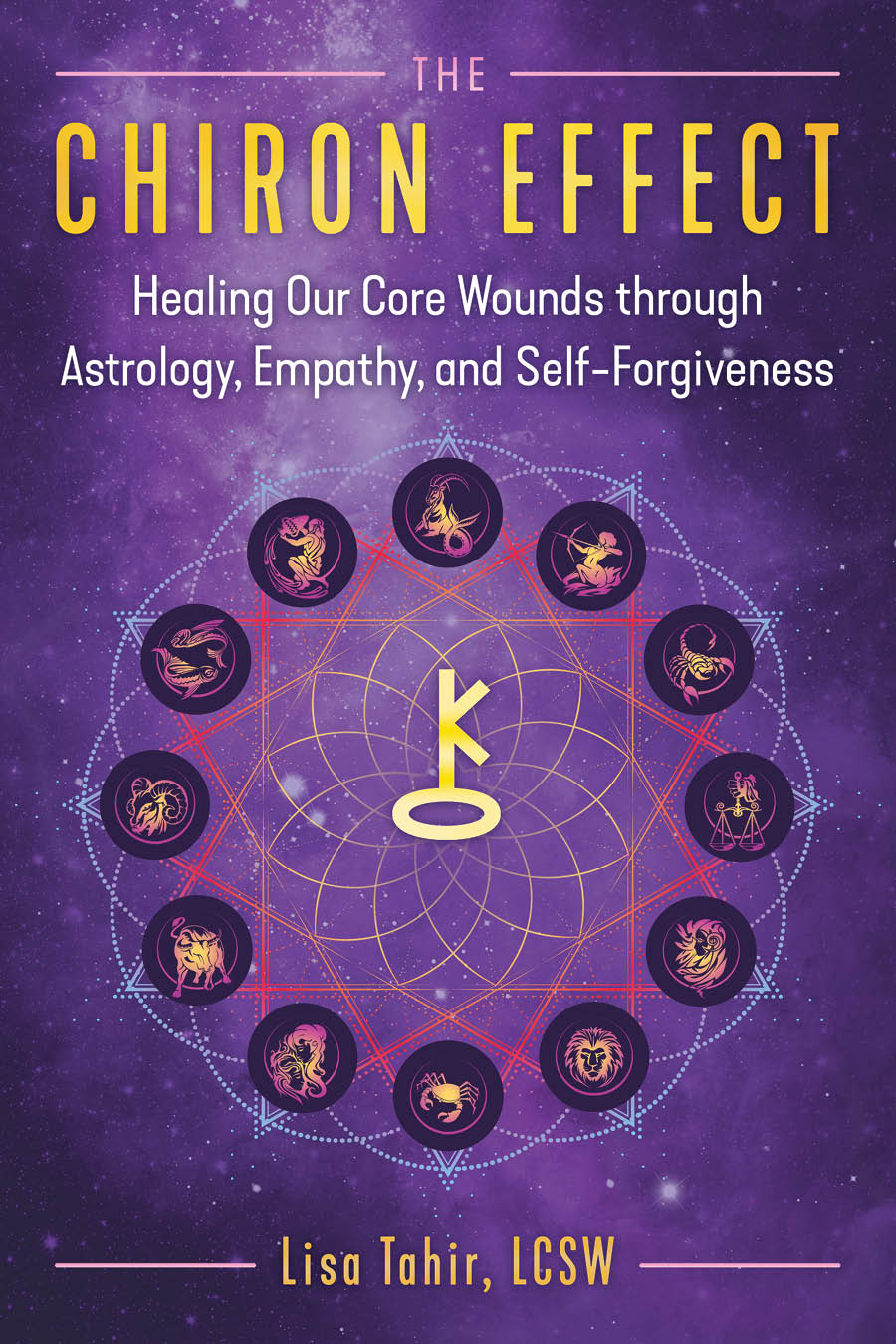
One central archetype in my book, The Chiron Effect, is Chiron, the wounded healer. Chiron symbolizes the places where we may carry a deep sensitivity or recurring wound, as well as the wisdom and compassion that can emerge through tending to it.
The goal is not to define yourself by a placement or use astrology fatalistically. Instead, you might ask:
- What painful pattern keeps repeating in my relationships or work?
- What do I fear others will discover about me?
- Where do I over-function, under-function, or abandon myself?
- What strengths developed because I had to cope?
- What would healing look like in daily life, not just as an idea?
This process can reveal what Lisa Tahir calls an “orbit”: a familiar emotional or behavioral frequency that keeps drawing us toward similar experiences. When we bring empathy and self-forgiveness to that orbit, we create the possibility of choosing something new.
Four Gentle Ways to Begin Shadow Work
Shadow work does not need to be dramatic. It can begin with one honest pause.
1. Notice the reaction beneath the reaction
When you experience an intense emotional response, take a moment to identify what happened internally.
Ask yourself:
- What exactly did I feel?
- Where do I notice it in my body?
- What meaning did I immediately assign to the situation?
- Does this feeling remind me of an earlier experience?
- What did I need then, and what might I need now?
You do not have to solve the feeling immediately. Naming it can create enough space to respond rather than react.
2. Explore your projections with compassion
Think of someone who strongly irritates, fascinates, or activates you. Identify the quality that stands out.
Is it their neediness, confidence, independence, emotionality, ambition, or ability to say no?
Now consider:
“Where might this quality exist in me, even in a small or hidden way?”
You are not required to become like this person. Instead, look for the healthy expression of the quality. “Selfish” might point toward appropriate self-protection. “Aggressive” might contain assertiveness. “Detached” might include a need for boundaries.
3. Journal with your hidden part
Choose a recent trigger and write a dialogue between your present self and the part that felt activated.
You might begin:
“I see that you are afraid. What are you trying to protect me from?”
Then allow the response to come without editing. You may discover that the part you criticize has been working hard to protect you.
End with:
“Thank you for trying to help. I am learning new ways to keep us safe.”
This practice is not a replacement for trauma therapy, especially if your writing brings up overwhelming memories. Go slowly, pause when needed, and consider seeking professional support.
4. Reclaim one disowned gift
Shadow work is also about recovering what was hidden because it felt unsafe or unacceptable.
Ask yourself:
- What did I love before I worried about being judged?
- What quality did I suppress to make others comfortable?
- Where am I ready to take up more space?
- What part of my identity, creativity, voice, or desire wants acknowledgment?
Choose one small action. Make the call. Rest without apologizing. Wear the color. Set the boundary. Return to the creative practice. Let yourself be seen by someone trustworthy.
Transformation is often built through these quiet acts of reclamation.
When Shadow Work Brings Up Anxiety
Turning inward can sometimes increase anxiety before it creates clarity. You may encounter grief, anger, shame, loneliness, or memories that feel difficult to hold. This does not mean you are doing the work incorrectly.
The nervous system needs safety and pacing. If you feel flooded, dissociated, panicked, or unable to return to the present, stop the exercise and ground yourself:
- Place both feet on the floor.
- Name five things you can see.
- Take a slow breath with a longer exhale.
- Hold something cool or textured.
- Contact a trusted person or mental-health professional.
For some people, exploring anxiety and spirituality can be supportive. Meditation, prayer, breathwork, movement, time in nature, and ritual may help create meaning and regulation. For others, spiritual language may feel uncomfortable or disconnected from their lived experience. There is no single correct path. Your healing should honor your beliefs, identity, culture, and boundaries.
If you are experiencing persistent anxiety, depression, trauma symptoms, thoughts of self-harm, or significant impairment in daily life, please seek qualified mental-health support. Integrative work is most helpful when it remains grounded, collaborative, and emotionally safe.

Personal Transformation Therapy Begins With Self-Compassion
We often imagine transformation as becoming someone entirely new. But healing is less about replacing yourself and more about becoming connected to the self you had to leave behind.
The angry part may need permission to set boundaries.
The anxious part may need reassurance.
The grieving part may need time.
The ambitious part may need room to grow.
The spiritual part may need to be respected rather than explained away.
This is the heart of personal transformation therapy: creating a relationship with yourself that is honest, compassionate, and responsible.
You do not have to love every part of yourself right away. You can begin by listening. You can practice saying, “This is here, and I can meet it with care.”
That is often where the light begins.
A Reflection for Today
Set aside ten quiet minutes and complete these prompts:
- The part of myself I most often hide is…
- I learned to hide it because…
- This part may be trying to protect me from…
- A healthy expression of this part could be…
- One compassionate action I can take today is…
Let the answers be incomplete. The purpose is not perfection. The purpose is relationship.
If you are looking for holistic therapy online that blends psychology, spirituality, mindset work, meditation, and Psychoastrology®, learn more about my therapeutic services. Virtual sessions are available by phone, FaceTime, or Zoom, and sessions can be tailored to your needs and goals. You can also schedule a session or contact me with questions.
To explore the healing potential of Chiron, empathy, and self-forgiveness, read The Chiron Effect.
And for ongoing conversations about emotional health, spirituality, relationships, healing, and transformation, listen to All Things Therapy on Apple Podcasts.
You are not required to enter the dark alone. With support, compassion, and conscious attention, the places you once feared may become places where your wisdom is waiting.