





Personal transformation is often portrayed as a dramatic reinvention: quit the job, end the relationship, change the routine, heal the wound, and become a completely new person.
But meaningful healing rarely happens that way.
More often, transformation unfolds through smaller moments. You notice that familiar reaction before acting on it. You pause instead of pushing through exhaustion. You recognize an old belief and choose not to let it make every decision for you.
This kind of change may look quiet from the outside, but it can be deeply powerful. It is also more sustainable.
As we move through early Virgo season, we can use its symbolism as a supportive reminder to pay attention to the details of healing: our daily rhythms, nervous-system cues, boundaries, habits, and inner dialogue. Virgo energy is often associated with discernment and practical care, not perfection. It asks us to notice what is working, what is draining us, and what small adjustment might help us feel more supported.
When combined with therapy, spirituality, and Psychoastrology®, this perspective can help us transform without turning healing into another exhausting assignment.
You Do Not Have to Fix Everything at Once
Many people begin personal growth with an urgency that sounds like:
- “I need to figure out my whole life now.”
- “I should be further along.”
- “If I were really healing, I would not still feel anxious.”
- “I need to resolve my past before I can enjoy my present.”
- “I have to change everything to finally feel better.”
These thoughts are understandable, especially when you are tired of repeating painful patterns. Yet the pressure to heal quickly can activate the very patterns you are trying to change.
If you already tend toward over-functioning, perfectionism, people-pleasing, or self-criticism, an intense approach to growth may become another way to abandon yourself. You may create an ambitious routine, follow it perfectly for a week, become exhausted, and then interpret your need for rest as failure.
Therapy offers a different invitation: become curious before becoming corrective.
Instead of asking, “How do I get rid of this part of myself?” you might ask:
- What is this feeling trying to communicate?
- When did I first learn to respond this way?
- What does my body need in this moment?
- What would progress look like if it were gentle?
- What is one choice I can make today that supports my well-being?
Transformation becomes more sustainable when it is built around relationship, with your body, your emotions, your values, and your support system.
How Psychoastrology® Can Support a Gentler Process
Psychoastrology® brings psychological and astrological reflection together. In Lisa Tahir’s work, Chiron, the archetype often known as the “wounded healer”, can offer a symbolic lens for exploring recurring themes of vulnerability, protection, and emotional pain.
This is not about predicting your future or using a birth chart to define your identity. It is about creating meaningful questions.
Perhaps you notice that you repeatedly struggle with feeling unseen, speaking up, trusting others, receiving support, or believing that you are enough. Psychological insight can help you understand how these patterns developed and how they continue to affect your thoughts, behaviors, and relationships.
Astrological symbolism may give you another language for exploring the same material. It can help you step back and observe a pattern with curiosity rather than immediately judging yourself for having it.
The important distinction is this: a chart is not a diagnosis, and a wound is not a life sentence.
Psychoastrology® can be used as a complementary tool for reflection within a broader therapeutic process. The psychological work remains grounded in self-awareness, emotional regulation, accountability, skill-building, and supportive action.
Chiron and the Practice of Self-Compassion
Chiron can represent a tender place, an area where you may feel especially sensitive, guarded, or easily activated. When that place is touched, you might react intensely or return to an old coping strategy.
You may withdraw before someone can reject you. You may over-explain because you fear being misunderstood. You may work harder and harder to prove your value. You may stay in an unhealthy dynamic because it feels familiar.
Self-compassion does not mean pretending these patterns are harmless. It means recognizing that they likely developed for a reason.
At some point, a coping strategy may have helped you survive, belong, or feel safe. The challenge is that a strategy can outlive the situation that created it. What protected you then may limit you now.
Try reflecting on a recurring pattern with these five questions:
- What happened?
- What did I feel emotionally and physically?
- What did I believe the moment meant about me?
- What did I need but have difficulty expressing?
- What would a compassionate response look like now?
This process does not require you to revisit every painful memory at once. You are simply creating enough space to recognize the difference between the present moment and the history it may be activating.

Virgo Season and the Healing Power of Small Practices
Virgo season can be a helpful symbolic container for returning to the basics. Not because you need to perfect your schedule, body, home, or mind, but because small details often reveal what your larger system needs.
A sustainable mental-health practice might be surprisingly ordinary:
- Going to bed at a more consistent time
- Eating something nourishing before you become depleted
- Taking a short walk between meetings
- Turning off notifications for an hour
- Saying no before resentment builds
- Drinking water and noticing your breathing
- Scheduling support instead of waiting for a crisis
- Leaving more space between commitments
These choices may not feel like dramatic breakthroughs. They are forms of self-trust.
When you consistently respond to your needs, you begin to send yourself a message: I am worth caring for before I reach a breaking point.
That message matters for anxiety and spirituality alike. Anxiety often pulls attention toward imagined future threats, while spiritual practice can help reconnect you with the present, your values, and a sense of meaning. A practical daily rhythm gives that inner work somewhere to live.
A Five-Minute Gentle Rhythm
If you would like to begin today, try this simple practice:
Minute one: Arrive
Put both feet on the floor. Notice the support beneath you. Let your shoulders soften if that feels comfortable.
Minute two: Notice
Ask, “What am I feeling right now?” Name the emotion without trying to change it. You might be anxious, tired, hopeful, irritated, numb, or uncertain.
Minute three: Locate
Where do you feel the emotion in your body? Is there tightness in your jaw, pressure in your chest, heaviness in your stomach, or restlessness in your hands?
Minute four: Listen
Ask, “What might this feeling need?” The answer may be reassurance, movement, rest, a boundary, connection, or more information.
Minute five: Choose one supportive action
Keep it small enough that you can actually do it. Send one message. Take three breaths before responding. Step outside. Write down the next task. Ask for help. Put the phone away and rest.
The goal is not perfect calm. The goal is practicing a more respectful relationship with yourself.

Transformation Without Self-Abandonment
Sometimes personal transformation asks us to stop doing what once earned approval.
You may need to stop explaining every boundary. Stop confusing exhaustion with devotion. Stop treating productivity as proof of worth. Stop assuming that discomfort always means you are making the wrong choice.
This can feel unfamiliar. Growth is not always immediately comfortable, especially when you are changing a pattern that once helped you feel secure.
A therapist can help you move through that process without rushing or becoming stuck. In personal transformation therapy, insight is paired with practical support. You can explore where a pattern began while also learning how to respond differently in the present.
This may include working with anxiety, trauma, relationship patterns, self-esteem, adjustment issues, career concerns, or questions of identity and belonging. An integrative approach can make room for both psychological tools and spiritual meaning, while honoring your individual beliefs and needs.
Astrology may be meaningful to one person and not to another. Either way, you deserve care that respects your autonomy and does not use any framework to limit your possibilities. Psychoastrology® should invite curiosity, not fear or fatalism.
If you are experiencing persistent anxiety, depression, trauma symptoms, substance-use concerns, sleep disruption, or thoughts of harming yourself or someone else, please seek support from a qualified mental-health professional or contact emergency/crisis services in your area.
Explore The Chiron Effect
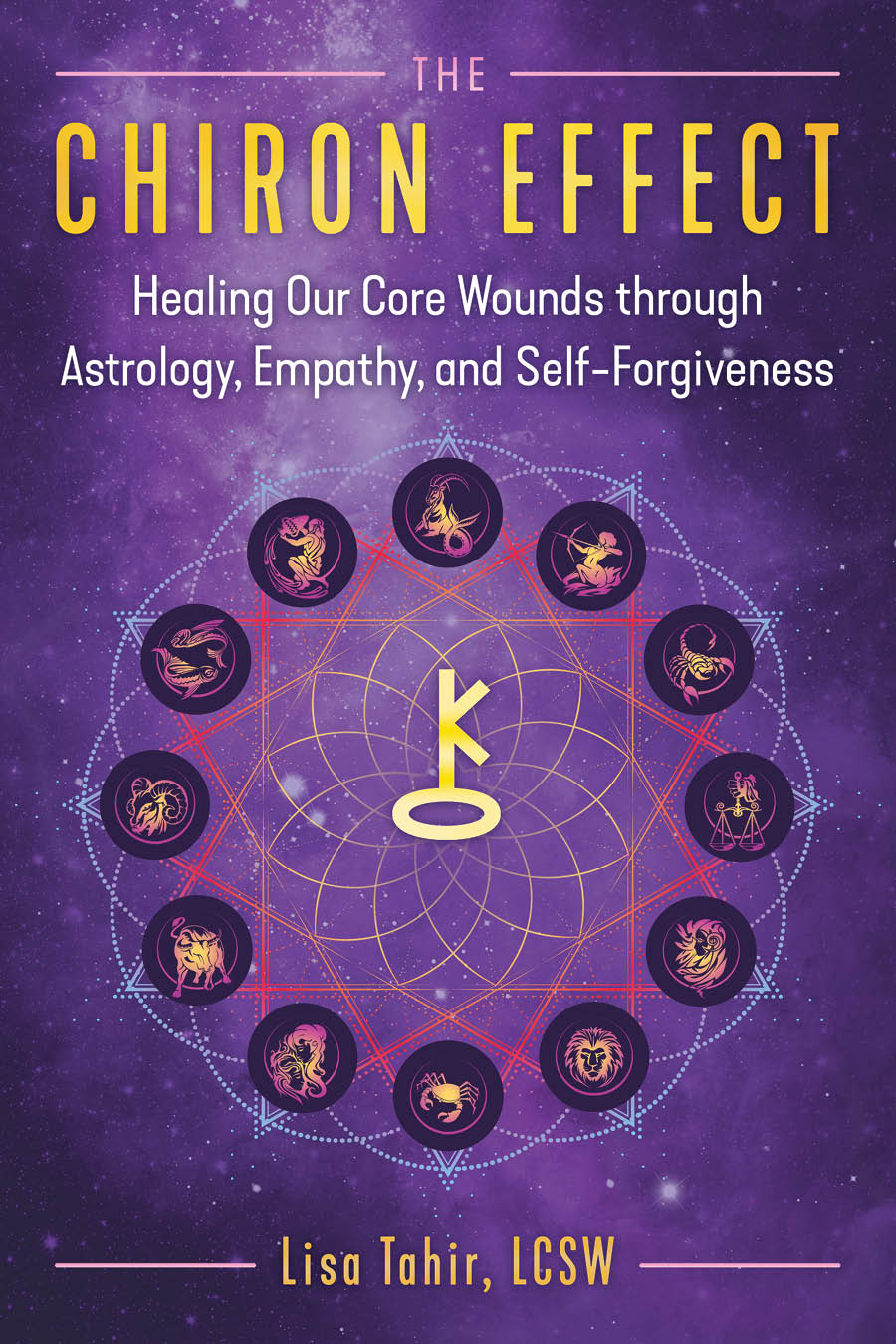
Lisa Tahir’s book, The Chiron Effect: Healing Our Core Wounds through Astrology, Empathy, and Self-Forgiveness, explores twelve areas of vulnerability associated with Chiron’s placement in the birth chart. The book offers a compassionate framework for recognizing repetitive patterns and meeting them with empathy, self-forgiveness, and personal responsibility.
You can order The Chiron Effect through Inner Traditions.
If you are looking for holistic therapy online, Lisa offers personalized sessions by phone, FaceTime, and Zoom. Her integrative work may include traditional psychotherapy alongside meditation, mindset practices, spirituality, energy principles, and intuitive techniques tailored to each client.
Learn more about therapeutic services or contact Lisa to explore whether this approach may be supportive for you.
You do not have to hurry your healing to prove that it is real. One honest question, one compassionate pause, and one supportive choice can begin to shift your rhythm.
Your transformation is allowed to be gradual. Your pace is allowed to be human.