





There are moments when anxiety feels less like a passing thought and more like a constant hum beneath everything you do.
You may wake up already anticipating the day. You may replay a conversation while making coffee, worry about work while spending time with family, or lie awake imagining every possible outcome. Even when nothing is obviously wrong, your body may feel tense, your mind may race, and rest may feel out of reach.
If this is familiar, please know that your anxiety is not a personal failure. It may be your nervous system trying to protect you, even if its alarm feels louder than the situation requires.
A compassionate approach to anxiety begins by honoring both the psychological and spiritual dimensions of your experience. Psychology can help you understand thought patterns, emotional triggers, attachment wounds, and nervous-system responses. Psychoastrology® can offer a symbolic language for exploring the deeper themes that may be activated.
Together, they can support a movement from fear and reactivity toward awareness, self-forgiveness, and meaningful change.
Anxiety Is More Than “Overthinking”
Anxiety often involves the interaction of your thoughts, emotions, body, and environment.
Your mind may predict rejection, failure, illness, conflict, or loss. Your body may respond with a racing heart, shallow breathing, muscle tension, stomach discomfort, restlessness, or difficulty sleeping. You may feel driven to check, fix, avoid, explain, control, or seek reassurance.
These responses are understandable. At some point, they may have helped you cope with uncertainty or stay emotionally safe.
The challenge is that protective patterns can continue long after the original danger has passed. A stressful email can activate an old fear of not being good enough. A partner’s quiet mood can awaken fears of abandonment. A demanding schedule can bring you face-to-face with a belief that your worth depends on how much you accomplish.
Before asking, “How do I make this anxiety disappear?” try asking:
What is my anxiety trying to protect me from, and what does it need from me now?
This question does not mean that anxiety is always correct. It simply creates room for curiosity instead of shame.
The Psychoastrology® Perspective: Anxiety as a Pattern Calling for Care
Psychoastrology® is Lisa Tahir’s integrative approach, bringing psychology and the symbolic language of astrology into conversation.
It is not about blaming the planets for your symptoms or predicting a fixed future. It is also not a replacement for psychotherapy, medical care, or evidence-based treatment. Instead, it can be used as a reflective framework for noticing recurring emotional themes and exploring the places where healing may be needed.
In Lisa’s work, Chiron, the “wounded healer” archetype, can serve as a symbolic map of vulnerability, pain, and healing potential. Everyone has sensitive areas. You may struggle with self-worth, belonging, trust, visibility, boundaries, communication, or receiving support.
When anxiety becomes intense, it can pull you into an old emotional orbit. You may begin to believe:
- “I have to handle everything alone.”
- “If I make one mistake, everything will fall apart.”
- “If someone is upset, it must be my fault.”
- “I need to know exactly what happens next.”
- “I am only valuable when I am useful.”
- “If I let my guard down, I will be hurt.”
A Chiron-informed reflection asks you to notice the deeper story without turning it into an identity.
Your chart is not a sentence. A wound is not a life sentence. A trigger is not a command.
You might ask:
What older fear is being activated, and how can I respond to myself differently today?
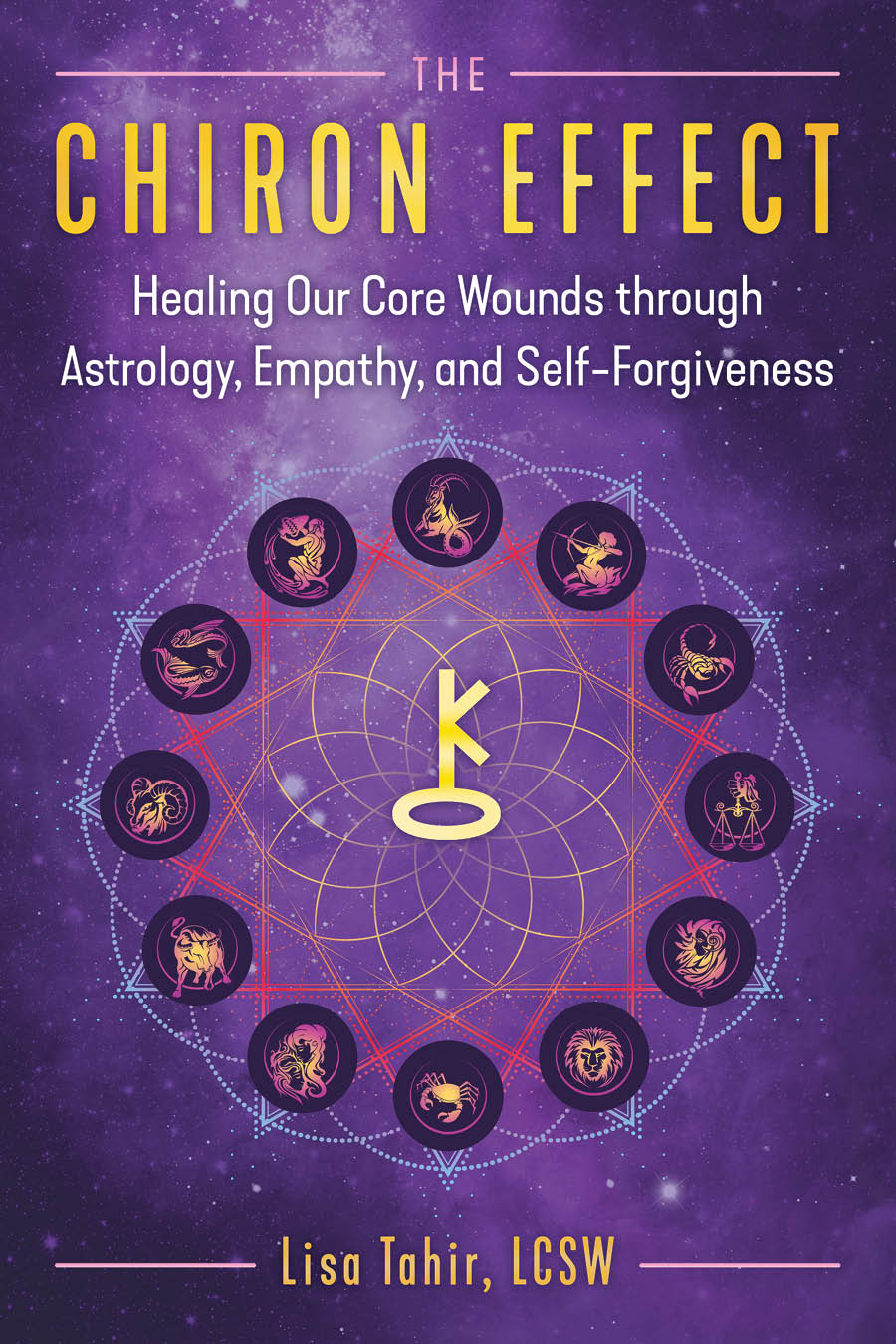
For a deeper exploration of Chiron, core wounds, empathy, and self-forgiveness, you can learn more about Lisa’s book, The Chiron Effect.
A Three-Part Practice for Anxiety That Will Not Quiet
When anxiety is loud, insight alone may not be enough. It can be difficult to think clearly while your body feels threatened. Start with regulation, then move toward reflection and action.
1. Regulate Your Body Before Solving the Problem
Your first goal is not to solve your entire life. It is to help your body feel a little safer in the present moment.
Try this simple practice:
- Place both feet on the floor.
- Relax your jaw and lower your shoulders.
- Inhale gently through your nose.
- Exhale a little more slowly than you inhale.
- Repeat for five breaths.
- Notice one physical sensation that feels neutral or comforting.
You can also place one hand over your chest and one over your abdomen, feeling the movement of your breath without forcing it to change.
If focusing on your breath makes you feel more anxious, choose a sensory grounding practice instead. Name five things you can see, four things you can touch, three sounds you can hear, two things you can smell, and one thing you can taste. Grounding exercises can help redirect your attention from spiraling thoughts toward the immediate environment. The NHS Inform guide to grounding exercises offers additional examples.

Ask yourself:
What does my body need before I ask my mind to figure this out?
The answer may be water, food, movement, quiet, sleep, connection, or a break from your phone. These are not insignificant details. Supporting your physical needs can make emotional regulation more accessible.
2. Name the Emotional Theme
Once your body has settled even slightly, identify what feels most activated.
Are you afraid of being rejected? Are you overwhelmed by responsibility? Are you worried you will disappoint someone? Are you feeling unseen, powerless, or uncertain about your future?
Try writing down:
- What happened?
- What did I feel in my body?
- What story did my mind create?
- What did I want to do immediately?
- What older fear might this resemble?
For example:
My supervisor asked me to revise a project. My stomach tightened, and I immediately thought, “I am failing.” I wanted to work late into the night to prove myself. This may connect to an old wound around worthiness. A kinder response might be, “Feedback is information, not a verdict on my value.”
This practice does not ask you to dismiss the present situation. You may still need to make changes, have a conversation, or meet a deadline. It simply helps you distinguish the current facts from the emotional history attached to them.
3. Choose One Grounded Action
Anxiety often tells you that everything must be handled immediately. Transformation invites you to choose one intentional next step.
That step might be:
- Sending one email rather than reorganizing your entire workload
- Asking for clarification instead of assuming the worst
- Taking a short walk before responding to a difficult message
- Saying no to an obligation that exceeds your capacity
- Scheduling therapy
- Asking a trusted person for support
- Turning off notifications during family or rest time
- Going to bed instead of continuing to overwork
A grounded action is not always the most impressive action. Often, it is the one that aligns with your values instead of your fear.
This is especially important for work/life balance. If your anxiety is connected to over-functioning, perfectionism, or difficulty setting boundaries, calm may not come from doing more. It may come from allowing yourself to pause.
Self-Forgiveness Helps Create New Patterns
Many people become anxious about being anxious. They criticize themselves for needing reassurance, repeating a relationship pattern, struggling to rest, or not being “over” something that happened years ago.
Self-judgment rarely creates lasting change. Compassion creates the safety needed to look honestly at your behavior and make a different choice.
Self-forgiveness does not mean excusing harm or avoiding responsibility. It means acknowledging that you were doing the best you could with the awareness and resources you had at the time: and allowing yourself to grow beyond old survival strategies.
Try completing these sentences:
- I forgive myself for believing I had to __________.
- I was trying to protect myself when I __________.
- The anxious part of me is afraid that __________.
- What I need to hear right now is __________.
- One way I can stop abandoning myself today is __________.

Sometimes healing looks like speaking more kindly to yourself. Sometimes it looks like repairing a relationship. Sometimes it looks like leaving a harmful situation. Sometimes it looks like resting without earning it first.
A Gentle Daily Rhythm for Calm
You do not have to wait until anxiety reaches its peak to practice care.
Consider creating three small pauses during your day:
Morning: Set an intention, such as, “Today I will move at a human pace,” or, “I can be worthy without being perfect.”
Midday: Check in with your body. Notice whether you are holding tension in your jaw, shoulders, chest, or stomach. Take one slow breath and ask what support would help.
Evening: Reflect on one moment when an old pattern appeared. Notice whether you responded with even a little more patience, honesty, or self-respect than you might have in the past.
Small shifts matter. The goal is not to feel calm every moment. The goal is to build a more trusting relationship with yourself when calm is difficult to access.
When Anxiety Needs Professional Support
Breathing, grounding, journaling, and spiritual reflection can be helpful tools, but they may not be enough on their own. If anxiety is persistent, disrupting your sleep or work, affecting your relationships, leading to panic, or contributing to substance use or hopelessness, consider speaking with a qualified mental-health professional.
Therapy can help you explore the roots of anxiety while developing practical strategies for emotional regulation, boundaries, trauma recovery, communication, and self-esteem. Lisa Tahir offers personalized sessions for adolescents, adults, and couples through phone, FaceTime, and Zoom therapy. You can also learn more about Nolatherapy’s services or schedule a session.
Your Anxiety Is Not the Whole Story
When anxiety will not quiet, you do not have to fight yourself into silence.
You can pause. You can notice the pattern. You can care for your body. You can question the old story. You can choose one small action rooted in self-respect.
Psychoastrology® offers one way to reflect on the deeper themes beneath your reactions, while psychology offers tools for understanding and changing the patterns that keep anxiety active. Together, they can become part of a compassionate path toward greater awareness and personal transformation.
As you move through your day, consider this question:
What would it look like to stay connected to myself, even while uncertainty is present?
Let the answer be simple. One breath. One boundary. One honest conversation. One nourishing meal. One moment of rest.
If you feel drawn to exploring the relationship between core wounds, healing, spirituality, and self-forgiveness, gently explore Lisa Tahir’s The Chiron Effect. Your anxiety may be asking for attention: but it does not get to define your future.