





Anxiety can make life feel smaller.
You may find yourself overthinking conversations, anticipating everything that could go wrong, or struggling to relax even when nothing is immediately wrong. Your body may feel tense, your thoughts may race, and your inner world may seem disconnected from the calm, confident person you want to be.
Psychotherapy can help us understand where anxiety comes from and how it affects our thoughts, behaviors, relationships, and bodies. Spirituality can help us explore meaning, intuition, purpose, and the deeper parts of ourselves that long to be understood.
When these perspectives are brought together thoughtfully, healing can become more personal and compassionate. This is the space where Psychoastrology® meets psychology.
What Is Psychoastrology®?
Psychoastrology® is an integrative approach developed by Lisa Tahir, LCSW. It brings together depth psychology, natal astrology, spirituality, and personal responsibility.
Rather than using astrology to predict the future, Psychoastrology® uses the birth chart as a symbolic map for self-reflection. It can help illuminate recurring emotional themes, unconscious patterns, core wounds, and areas of vulnerability.
Psychology helps us ask:
- What happened to me?
- How did I learn to cope?
- What beliefs are shaping my choices today?
- How does anxiety show up in my body and relationships?
Psychoastrology adds another layer of reflection:
- What deeper life theme might this pattern represent?
- What part of me is asking to be witnessed?
- Where am I being invited to grow?
- How can I relate to my sensitivity as wisdom instead of weakness?
This approach is not about blaming the stars for your struggles. It is about using symbolism to create language for experiences that may be difficult to explain. For some people, astrology offers a meaningful way to understand their emotional landscape and begin a process of personal transformation therapy.
Anxiety Is More Than a Problem to Eliminate
When anxiety appears, our first impulse is often to get rid of it as quickly as possible. We may distract ourselves, overwork, isolate, seek constant reassurance, or try to control every detail of our environment.
These strategies can make sense. Anxiety is often the nervous system’s attempt to protect us from danger, rejection, uncertainty, or emotional pain. Even when the original threat is no longer present, the body may continue responding as if it needs to stay alert.
From a psychological perspective, anxiety may be connected to trauma, attachment wounds, chronic stress, perfectionism, grief, identity struggles, or learned beliefs about safety and worthiness.
From a spiritual perspective, anxiety may also signal that something in your life feels out of alignment. You may be living according to other people’s expectations, ignoring your intuition, abandoning your boundaries, or moving away from what feels meaningful.
Neither perspective needs to cancel out the other.
Anxiety can be a symptom that deserves treatment, while also being a messenger that deserves curiosity.
The Nervous System Needs Safety, Not Shame
Insight is powerful, but insight alone does not always calm the body. You can understand why you feel anxious and still experience a racing heart, tight chest, upset stomach, or restless mind.
This is why nervous system regulation is an important part of holistic therapy online and in-person care. Before exploring deeper emotional or spiritual themes, it helps to create a greater sense of safety in the present moment.

Try this simple practice when anxiety begins to rise:
- Notice your surroundings. Name five things you can see, four things you can touch, three things you can hear, two things you can smell, and one thing you can taste.
- Soften your body. Unclench your jaw, lower your shoulders, and let your hands rest somewhere supportive.
- Lengthen your exhale. Breathe in comfortably, then allow your exhale to be slightly slower and longer.
- Orient to the present. Say to yourself, “In this moment, I am here. I can take one next step.”
- Offer compassion. Instead of asking, “What is wrong with me?” try asking, “What is my body trying to protect me from?”
These practices are psychologically grounded, but they can also become spiritual rituals. A breath can be a reminder that you are still connected to yourself. A hand over your heart can become an act of self-forgiveness. A walk outside can help you remember that your life is larger than the anxious thought passing through your mind.
The Chiron Effect: From Wounding to Wisdom
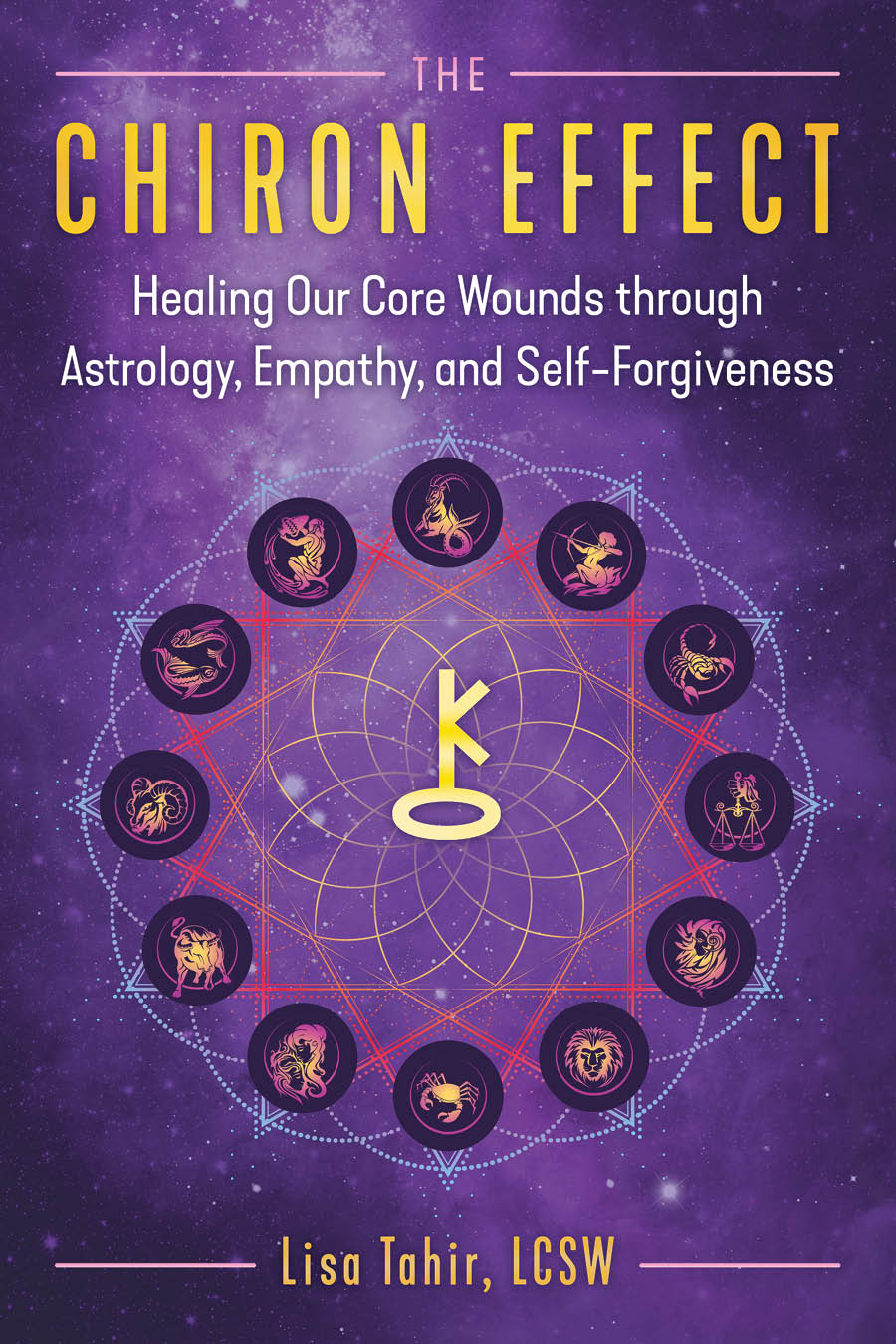
A central part of Lisa Tahir’s work is Chiron, often called the “wounded healer” in astrology. In her book, The Chiron Effect: Healing Our Core Wounds through Astrology, Empathy and Self-Forgiveness, Lisa explores how Chiron’s placement in the birth chart can symbolically point toward recurring areas of vulnerability.
Everyone carries wounds. Some relate to belonging. Others involve communication, self-worth, family, intimacy, achievement, or the right to take up space.
When these wounds remain unconscious, we may continue to orbit around them. We might repeatedly choose unavailable relationships, overwork to prove our value, silence our needs, or expect rejection before anyone has actually rejected us.
Anxiety often grows in this orbit.
The goal is not to use a birth chart to label or diagnose yourself. A chart cannot replace a mental health assessment, psychotherapy, medication, or other evidence-based care. Instead, it can serve as a reflective tool that helps you name a pattern and approach it with less shame.
The healing comes through empathy, self-forgiveness, psychological insight, and changed behavior.
A Chiron-informed reflection might sound like:
“This fear of being rejected has shaped many of my choices. It helped me survive emotionally at one point in my life. But I am learning that I can honor the wound without allowing it to make every decision.”
That is where symbolism becomes practical. You are not simply identifying a pattern. You are learning how to respond to it differently.
A Psychoastrology-Informed Reflection for Anxiety
You can try this journaling practice when you feel emotionally activated. You do not need to know your birth chart for it to be useful.

1. Name the trigger
What happened just before your anxiety increased?
Be specific. Was it an unanswered text, a work deadline, a difficult conversation, financial uncertainty, a memory, or a change in plans?
2. Identify the story
What did your mind immediately tell you?
You may notice thoughts such as:
- “I am going to fail.”
- “They are going to leave.”
- “I am not enough.”
- “If I cannot control this, something terrible will happen.”
- “I should be handling this better.”
3. Listen for the underlying wound
Ask, “What does this situation seem to threaten?”
Is it your sense of safety, belonging, identity, competence, freedom, or worth?
This question moves you beneath the surface symptom and toward the emotional need asking for care.
4. Connect with the soul-level theme
If you know your chart, you might reflect on Chiron, the Moon, Saturn, or other placements as symbolic themes. If you do not, simply ask:
“What might this anxiety be inviting me to learn about myself?”
Possible answers may include learning to trust, set boundaries, receive support, rest, speak honestly, or release the need to earn love.
5. Choose one grounded action
Healing requires more than insight. Choose one small action that supports your well-being today.
You might:
- Send an honest text instead of withdrawing.
- Take a ten-minute walk.
- Ask for clarification rather than assuming the worst.
- Reschedule a commitment so you can rest.
- Practice saying no.
- Make an appointment with a licensed therapist.
- Eat, hydrate, or sleep before making a major decision.
Small choices help create a new orbit.
Mental Health and Astrology: Holding Both with Care
There is room for curiosity and discernment in conversations about mental health and astrology.
Astrology is not a scientifically validated method for diagnosing anxiety disorders or determining the cause of mental health conditions. It should never be used to dismiss symptoms, encourage fear, or replace professional support.
At the same time, spiritual and symbolic practices can help people make meaning of their experiences. They may offer language, reflection, ritual, and a sense of connection. When integrated ethically, they can complement therapy rather than compete with it.
A compassionate approach honors your whole person: your history, nervous system, relationships, body, beliefs, culture, identity, and spiritual framework.
You do not have to choose between being psychologically grounded and spiritually open.
Healing Is a Return to Yourself
Anxiety may tell you that you are broken, behind, unsafe, or alone. Healing gently challenges those messages.
You are not your anxious thoughts. You are not defined by the wound you carry. You are a person whose patterns developed for reasons: and who can learn new ways of relating to yourself and the world.

If you are curious about anxiety and spirituality, Psychoastrology®, or an integrative approach to emotional healing, Lisa Tahir offers personalized psychotherapy by phone, FaceTime, and Zoom. Learn more about therapeutic services at Nolatherapy or explore Zoom therapy options.
You can also begin with Lisa’s book, The Chiron Effect, and listen to her podcast, All Things Therapy, for conversations about emotional health, spirituality, mindset, and personal transformation.
When you are ready, you can schedule a session with Lisa. Your anxiety deserves care( not criticism.) Your soul deserves to be heard.