





Interviews and Publications

Transitions as Transformation: A Psychoastrology® Guide to New Beginnings
There is a particular feeling that arrives at the edge of a season. Summer begins to soften. The light changes. School calendars fill up, new jobs begin, routines shift, and we may find ourselves standing between what was and what comes next.
Transitions can be exciting, but they can also stir anxiety, grief, self-doubt, and uncertainty. Even positive changes, like moving into a new role, starting a relationship, returning to school, or becoming a parent, can challenge our nervous systems. We are not only adapting to new circumstances; we are also releasing an older version of daily life.
Virgo season, which generally runs from August 23 through September 22, offers a meaningful symbolic framework for this process. In astrology, Virgo is associated with discernment, daily rituals, health, service, and practical refinement. Through a Psychoastrology® lens, this season invites us to ask:
What is this transition teaching me about how I want to live, heal, and grow?
Virgo Season and the Psychology of Change
Virgo is an earth sign traditionally connected with Mercury, the planet associated with thought, communication, and mental processing. This makes Virgo season a natural time to notice the stories we are telling ourselves about change.
Are you thinking:
- “I should already have this figured out.”
- “If I make one mistake, everything will fall apart.”
- “I have to manage everything on my own.”
- “This new beginning means I must leave my old self behind.”
- “If I feel anxious, I must be making the wrong decision.”
These thoughts are common during transitions. When familiar structures disappear, the mind often tries to restore safety by analyzing every possible outcome. Some planning can be helpful, but too much analysis can become rumination.
From a mental health perspective, adjustment difficulties may arise when a life change creates more distress than we feel able to manage. You may notice sleep changes, irritability, sadness, physical tension, difficulty concentrating, or a sense of being overwhelmed. Adjustment-related stress can happen after a move, job change, breakup, loss, health concern, academic transition, or any event that alters your sense of stability.
This does not mean you are weak or incapable. It means your mind, body, and spirit are responding to change.
Virgo’s wisdom is not about becoming perfect. It is about becoming more observant, intentional, and compassionate with yourself as you adapt.

Transformation Begins with Honest Observation
A transition often reveals what was already asking for attention.
A new job may show you where you need stronger boundaries. Back-to-school season may reveal anxiety about belonging or performance. A new season of life may bring grief for an identity, relationship, or routine that no longer fits.
Rather than judging these reactions, try observing them with curiosity.
Take five minutes today and complete these sentences:
- What is changing in my life is…
- What I am excited about is…
- What I am grieving or afraid to lose is…
- The part of me that feels most uncertain needs…
- One thing I can control today is…
This kind of reflection helps separate the transition itself from the meaning you may be assigning to it. You might not be able to control a new employer, a changing relationship, or the demands of a new school year. You can, however, choose how you prepare, communicate, rest, ask for support, and care for your body.
That distinction can be deeply grounding.
Create Small Rituals for a New Beginning
When life changes, simple routines can provide a sense of safety. A ritual does not have to be elaborate or connected to a particular religious tradition. It can be any intentional practice that helps you mark where you are and where you are going.
Try creating a Virgo-season transition ritual:
- Clear one small area of your home, desk, or workspace.
- Light a candle or sit near a window.
- Take three slow breaths, making the exhale slightly longer than the inhale.
- Write down one habit, belief, or expectation you are ready to release.
- Write down one quality you want to embody in this next chapter.
- Choose one practical action that supports that quality.
For example, if you want to embody steadiness, your action might be preparing breakfast the night before. If you want to embody self-trust, you might pause before asking five people for advice. If you want to embody connection, you might schedule a weekly call with someone who helps you feel seen.
The goal is not to transform your entire life overnight. The goal is to create a relationship with yourself that supports sustainable change.
Move from Perfectionism to Compassionate Refinement
Virgo energy can be incredibly supportive, but it can also become self-critical when we believe improvement is the same as fixing what is wrong with us.
Personal transformation is not a performance. You do not have to become more productive, more organized, or more spiritually evolved to deserve peace.
A compassionate approach sounds more like:
- “I am learning what my nervous system needs.”
- “I can make adjustments without criticizing myself.”
- “A setback is information, not proof of failure.”
- “I can be in progress and still be whole.”
- “Rest is part of how I move forward.”
When anxiety rises, ask yourself:
Is this thought helping me prepare, or is it asking me to predict the impossible?
If you are preparing, identify one realistic next step. If you are trying to predict every possible outcome, gently return to the present. Ground yourself by naming five things you can see, four things you can feel, three things you can hear, two things you can smell, and one thing you can taste.
Mindfulness does not eliminate uncertainty. It helps you meet uncertainty without abandoning yourself.
Let Your Body Participate in the Transition
Transitions are not only mental experiences. They can affect digestion, sleep, energy, muscle tension, appetite, and the nervous system. Holistic therapy considers these physical signals as part of the larger picture, not as separate from emotional or spiritual well-being.
During a season of change, consider building a simple body-based foundation:
- Keep your sleep and waking times as consistent as possible.
- Eat regular meals and slow down enough to notice when you are full.
- Take a short walk without multitasking.
- Stretch your shoulders, jaw, hips, and hands.
- Spend a few minutes outdoors, noticing the ground beneath your feet.
- Reduce caffeine, alcohol, or other substances if they are intensifying anxiety.
- Take screen-free pauses between work, school, and home responsibilities.

These practices may seem ordinary, but ordinary care is often what helps us move through extraordinary change. A regulated body gives the mind more room to think clearly and the heart more space to process.
A Psychoastrology® Reflection: What Is Being Refined?
Psychoastrology® brings together psychological insight, spiritual symbolism, and personal responsibility. Astrology is not a substitute for mental health care, and it does not determine your future. Instead, it can offer language for reflection and a symbolic map for exploring patterns, needs, and possibilities.
Virgo season may invite you to reflect on:
- How you respond when plans change
- Whether you tend to over-function or rescue others
- How perfectionism affects your relationships
- Whether your routines support or deplete you
- Where you need more structure, and where you need more flexibility
- How your inner critic speaks during moments of uncertainty
- What “being of service” means without abandoning yourself
You might also explore your birth chart as a reflective tool, especially themes connected with Virgo, Mercury, the Sixth House, or Chiron. The intention is not to label yourself, but to deepen self-understanding.
In Lisa Tahir’s work, Chiron represents the “wounded healer”, the place where vulnerability and healing can coexist. A transition may activate an old wound, but it may also reveal a new capacity for empathy, self-forgiveness, and courage.
When Support Can Help
Self-reflection and spiritual practices can be valuable, but you do not have to navigate a major transition alone. Therapy can help you process grief, reduce anxiety, identify patterns, strengthen boundaries, and create practical strategies for moving forward.
If your distress is interfering with sleep, work, school, relationships, or daily functioning, or if you are experiencing hopelessness, panic, substance-related concerns, or thoughts of self-harm, please reach out to a qualified mental health professional. In the United States, you can call or text 988 for the Suicide & Crisis Lifeline. For mental health or substance-use treatment referrals, SAMHSA’s National Helpline is 1-800-662-HELP (4357).
For those interested in personal transformation therapy, integrative care can create space for both psychological and spiritual exploration. Lisa Tahir offers compassionate virtual sessions by phone, FaceTime, and Zoom, making support accessible during changing schedules and new chapters. Learn more about therapeutic services, Zoom therapy, or scheduling an appointment.
Your Next Chapter Does Not Require You to Have All the Answers
A new beginning is rarely a clean break. Often, it is a gradual process of bringing your past wisdom into a different future.
This Virgo season, consider replacing the pressure to reinvent yourself with an invitation to listen more closely. Notice what is working. Notice what is not. Make one adjustment. Rest. Reassess. Try again.
Transformation may look less like a dramatic revelation and more like a series of compassionate choices repeated over time.
If you would like to explore the connection between core wounds, astrology, empathy, and self-forgiveness, Lisa’s book, The Chiron Effect: Healing Our Core Wounds through Astrology, Empathy and Self-Forgiveness, offers Psychoastrology® insights and reflective practices for understanding recurring patterns and moving toward healing. You can also find ordering options through Barnes & Noble, Amazon, or Inner Traditions.
You are allowed to enter this next season slowly. You are allowed to be supported. And you are allowed to discover that the person you are becoming does not need to be perfect: only more fully yourself.

The Inner Compass: A Psychoastrology® Guide to Work-Life Balance and Emotional Well-Being
Virgo season arrives with a practical question: How are your daily habits supporting the life you say you want?
This is a season associated with work, service, health, routines, discernment, and the small choices that shape our days. It can be an empowering time to organize your calendar, simplify your responsibilities, and reconnect with what helps you feel steady.
But Virgo energy has another side. The desire to improve can become perfectionism. Service can become self-abandonment. A productive routine can quietly turn into a life where there is no room to breathe.
This is where your inner compass becomes important.
Your inner compass is the place where your values, emotional awareness, body signals, psychological insight, and spiritual meaning meet. Through the lens of Psychoastrology®, astrology can offer symbolic language for understanding your patterns, while therapy helps you explore those patterns with compassion and create meaningful change.
Astrology does not have to dictate your choices. Instead, it can become a reflective tool, a way to ask better questions about your mental health, relationships, work, and personal transformation.
Work-Life Balance Is More Than Time Management
Many people approach work-life balance as if the goal were to divide every hour equally between work and personal life. In reality, balance is less about perfect symmetry and more about alignment.
You may have a demanding season at work and still feel emotionally grounded because your choices are connected to your values. You may have plenty of free time and still feel depleted if your nervous system is constantly bracing, your boundaries are unclear, or your inner critic is running the show.
Consider these four areas of your life:
- Work and purpose
- Health and emotional well-being
- Relationships and connection
- Rest, pleasure, and play
Give each area a number from one to ten. There is no “correct” score. This is simply information. Your answers may reveal that your schedule is full, but your relationships feel neglected. Or perhaps you are working hard while postponing medical care, creative expression, sleep, or spiritual connection.
The goal is not to judge yourself. The goal is to notice where your life may be asking for care.
If chronic stress is affecting your sleep, mood, body, or relationships, you can also read Nolatherapy’s reflection on how stress affects the body. Awareness is often the first step toward intervention.

Virgo Season and the Sixth House of Daily Life
In astrology, Virgo and the sixth house are often connected with daily routines, work, service, health, and the systems that help us function. These themes can be especially useful when exploring the relationship between mental health and astrology.
Ask yourself:
- What does my typical day teach me about my current priorities?
- Which routines genuinely support me?
- Where am I giving more than I have available to give?
- What tasks could be simplified, delegated, or released?
- Am I serving from love, obligation, fear, or the need to be needed?
Virgo invites us to pay attention to the details, not because every detail must be perfect, but because small patterns become lived experiences.
For example, skipping meals may seem insignificant on one busy day. But repeated over time, it can affect energy, mood, concentration, and anxiety. Checking email late at night may seem like dedication, but it can also train your nervous system to remain “on” long after the workday ends.
A Virgo-inspired approach to self-care is practical. It may look like preparing nourishing food, creating a consistent bedtime routine, organizing your workspace, taking medication as prescribed, or putting a clear endpoint on your workday.
These actions may not feel dramatic, but they can become sacred rituals of self-respect.
The Inner Critic Versus Sacred Discernment
Virgo season can illuminate the difference between healthy discernment and the inner critic.
Discernment says:
“This situation is no longer aligned with my values. I can make a thoughtful adjustment.”
The inner critic says:
“You should have known better. You are behind. You are not doing enough.”
Discernment is clear and compassionate. The inner critic is often urgent, shaming, and absolute. It may use words like always, never, should, or not enough.
When you notice critical thoughts, pause and ask:
- Is this thought helping me respond wisely, or is it increasing fear?
- What evidence supports this belief?
- What evidence does not support it?
- What would I say to someone I love in this same situation?
- What is one realistic, caring action I can take next?
This is a psychological practice often associated with cognitive reframing. You are not pretending that everything is fine. You are creating a more balanced interpretation so that fear does not become the only voice guiding your decisions.
In personal transformation therapy, this work can be especially powerful. Many of us learned to earn safety through achievement, caretaking, pleasing others, or staying constantly productive. Therapy can help uncover the original wound beneath the pattern and develop new ways of responding.
Lisa’s book, The Chiron Effect: Healing Our Core Wounds through Astrology, Empathy, and Self-Forgiveness, explores how Chiron can symbolize areas of vulnerability and healing. Through an integrative lens, understanding a wound is not about labeling yourself. It is about meeting your history with empathy so it no longer has to control your future.
Regulating Your Nervous System Before You Reorganize Your Life
Sometimes we try to solve emotional overwhelm by making more lists. A list can help, but if your nervous system is in a state of alarm, even simple decisions may feel impossible.
Before asking, “How can I become more productive?” try asking, “How can I help my body feel safer right now?”
Try this brief grounding practice:
- Place both feet on the floor.
- Exhale slightly longer than you inhale.
- Notice five things you can see.
- Name three sensations in your body without judging them.
- Relax your jaw and lower your shoulders.
- Say quietly: “I am here. I can take one step at a time.”
This is not a replacement for therapy or medical care. It is a way to create a pause between a trigger and your response.
You might also try a gentle transition ritual between work and home. Change clothes, take a short walk, wash your hands mindfully, play calming music, or sit in silence for five minutes. The ritual tells your mind and body that one part of the day has ended and another is beginning.
For people experiencing anxiety, spirituality can offer meaning, comfort, and connection. Meditation, prayer, journaling, time in nature, or working with symbolic astrology can help you reflect on your inner life. These practices are most supportive when they complement, not replace, evidence-informed mental health care.

Five Virgo-Inspired Shifts for Better Balance
1. Create a compassionate beginning and ending to your workday
Choose a start time and an end time whenever possible. At the end of the day, write down what is complete and what can wait. This reduces the pressure to keep mentally carrying unfinished tasks.
2. Make one boundary visible
A boundary could be turning off notifications, declining an unnecessary commitment, protecting a lunch break, or letting someone know when you are available. A boundary is not a punishment. It is information about how you can participate sustainably.
3. Replace perfection with “good enough for today”
Perfectionism often disguises itself as responsibility. Ask what level of effort is truly required. Not every task deserves your maximum energy.
4. Track patterns without turning yourself into a project
For one week, note your sleep, mood, energy, major stressors, and moments of ease. Look for patterns with curiosity. The purpose is not to optimize every part of yourself. It is to understand what your mind and body may be communicating.
5. Schedule something that has no productive purpose
Rest is not valuable only when it makes you more efficient. Joy, pleasure, play, creativity, and connection are meaningful parts of a whole life. Put them on the calendar if necessary, and let them count.

Let Your Routine Serve Your Soul
A routine is meant to support your life, not become another authority you have to obey.
The sixth-house themes of work and service remind us that care often happens through ordinary actions. Taking a break. Asking for help. Drinking water. Going to therapy. Saying no. Leaving the laptop closed. Repairing a relationship. Returning to your breath.
These choices may appear small from the outside, but they can represent a profound inner shift: moving from self-neglect to self-trust.
That is the heart of Psychoastrology®: using psychological insight, spiritual awareness, and astrological symbolism to understand yourself more deeply and live more intentionally. Your birth chart does not remove your agency. It can help you explore your experiences with language, context, and compassion.
Your inner compass may not always point toward the easiest choice. Sometimes it points toward a necessary conversation, a season of rest, a new boundary, or support from a professional. Sometimes it points toward letting go of the version of yourself who believed that being worthy meant being endlessly useful.

A Gentle Reflection for Virgo Season
Take a quiet moment and complete these sentences:
- My current routines are helping me feel…
- My work is asking too much of me when…
- I feel most connected to myself when…
- One boundary that would support my well-being is…
- One small ritual I can practice with care is…
- The compassionate voice within me wants me to remember…
You do not have to transform your entire life this season. Begin with one honest observation and one kind adjustment.
If you are looking for holistic therapy online, support with anxiety, relationship concerns, self-esteem, trauma, or personal transformation, Lisa Tahir offers virtual sessions by phone, FaceTime, and Zoom. Her integrative approach blends psychotherapy with Psychoastrology®, meditation, energy principles, intuitive techniques, and mindset work, tailored to your needs.
You can learn more about Nolatherapy’s services or schedule a session. Your inner compass is already speaking. Therapy can offer a compassionate space to listen.

The Morning After the Eclipse: A Psychoastrology® Guide to Integrating Emotional Insight
If you woke up feeling tender, clear, emotional, or quietly different, you are not alone.
The morning after the August 28, 2026 Pisces lunar eclipse can carry a particular kind of feeling: as if something has moved through you during the night. Maybe you cried. Maybe you finally told yourself the truth. Maybe you recognized that a relationship, role, habit, or belief no longer fits. Or maybe nothing dramatic happened, but you feel more aware of what your inner life has been trying to say.
In Psychoastrology®, astrology is not used to predict your fate or explain away your experiences. It can be a reflective language, a way to notice patterns, name inner movements, and connect personal transformation with greater self-awareness. Your emotions still deserve psychological care, practical support, and compassion.
The “morning after” is where integration begins.
What this Pisces lunar eclipse may have brought to the surface
This Pisces lunar eclipse marks a culmination in the two-year Virgo–Pisces eclipse cycle that began in 2024. Pisces invites surrender, emotional honesty, spirituality, compassion, and release. Virgo asks us to discern, organize, care for the body, and make meaningful improvements in daily life.
Together, these signs ask an important question:
What am I ready to stop carrying, and what wisdom am I ready to bring into my everyday life?
Pisces can reveal where we have overextended ourselves, blurred our boundaries, escaped into fantasy, or absorbed emotions that were never ours to hold. Virgo can help us sort through what remains. It gives us the practical tools to turn an emotional realization into a new choice.
This may be the culmination of a long chapter, but it does not mean everything needs to be resolved today. A cycle can complete without every question having an immediate answer. Sometimes closure first arrives as a feeling in the body: a deeper breath, a softening, a sense that you are no longer willing to abandon yourself.
The eclipse is also part of a larger sequence, with a final Virgo lunar eclipse expected in February 2027. Think of this moment as an emotional threshold. Something may be complete in your heart, while the practical reorganization continues over time.
For astronomical details about the eclipse itself, you can explore Time and Date’s eclipse information. For reflection, though, your own lived experience matters most.
Mercury in Virgo: Naming what you now know
Mercury’s recent cazimi in Virgo offers supportive energy for putting language around what emerged.
In astrology, a cazimi occurs when Mercury is very close to the Sun, symbolically bringing the planet of thought, communication, and meaning into a place of heightened visibility. In Virgo, this symbolism is especially connected to naming, editing, organizing, and grounding.
After an emotional release, clarity can feel surprisingly ordinary. You may suddenly know:
- “I need a different boundary with this person.”
- “I have been calling exhaustion a lack of motivation.”
- “I want support, not another strategy to do everything alone.”
- “This dream still matters, but the way I have been pursuing it needs to change.”
- “I can love someone and still choose distance.”
That is the Virgo gift: not dismissing the feeling, but helping you understand what the feeling is asking you to do.
You do not need to create a perfect plan. Start with one honest sentence. Naming an experience can reduce its mystery and help your nervous system recognize that you are listening.

A gentle morning-after integration ritual
This ritual can take ten minutes or an hour. There is no correct way to do it. If ritual language does not resonate with you, think of it as a mindful check-in.
1. Create a soft landing
Choose a quiet place. Make tea, sit near a window, or place both feet on the floor. Let your body know that you are not required to rush into productivity.
Take three slow breaths. On each exhale, relax one area of your body, your jaw, shoulders, hands, or belly.
2. Notice before you interpret
Ask yourself:
What am I feeling right now?
Try to name three sensations or emotions without judging them. You might feel peaceful, heavy, restless, hopeful, numb, grateful, or unsure. All of these are information.
You do not have to turn every feeling into a spiritual message. Sometimes tired is tired. Sometimes sadness is grief. Sometimes relief is your body recognizing that a burden has been set down.
3. Write two lists
On one side of the page, write:
What is ready to leave?
This may include:
- A role you have outgrown
- A self-critical story
- A pattern of overgiving
- An unrealistic expectation
- A relationship dynamic that keeps you anxious
- The belief that healing must happen quickly
- The need to explain yourself to everyone
On the other side, write:
What wants to stay?
This may include:
- Your capacity for love
- A creative desire
- A relationship that feels mutual
- A spiritual practice
- Your sense of humor
- Your boundaries
- Your need for rest
- The part of you that still believes life can change
Let both lists be true. Releasing something does not mean your life becomes empty. It creates room for what is more aligned.
4. Choose one grounded action
Complete this sentence:
Because I know this now, I will…
Keep the action small and specific. Send the email. Cancel the commitment. Drink water. Schedule therapy. Take a walk without your phone. Have a conversation when you feel regulated rather than reactive.
Emotional insight becomes transformational when it is gently practiced.
Support your nervous system after a big emotional release
Emotional processing can be tiring. Even when you feel better, your body may need time to settle. This is especially important if you live with anxiety, trauma responses, grief, depression, chronic stress, or significant life changes.
After an intense emotional experience, consider:
- Eating something nourishing and easy to digest
- Drinking water or an electrolyte beverage
- Taking a slow walk or stretching gently
- Limiting excessive scrolling and emotionally charged conversations
- Getting extra sleep if your body asks for it
- Using familiar sensory anchors, such as a soft blanket, calming music, or a comforting scent
- Spending time with someone who helps you feel safe and accepted
- Returning to your normal routines gradually rather than demanding instant transformation
Grounding does not have to be elaborate. Look around and name five things you see, four things you feel, three things you hear, two things you smell, and one thing you appreciate. Place a hand over your heart or your abdomen and remind yourself: I am here. This moment is happening now.
If an eclipse period brings up overwhelming memories, thoughts of self-harm, panic, or an inability to function, please reach out to a licensed mental health professional or crisis support in your area. Astrology can support reflection, but it should never replace appropriate mental health care.

Reframe the story with self-compassion
One of the most tender parts of emotional insight is realizing how long you have been living with a pattern. You may look back and wonder, “Why did I stay?” or “Why didn’t I know this sooner?”
Try offering yourself a different question:
What was this pattern trying to protect me from?
Most patterns began as adaptations. Overworking may have helped you feel secure. People-pleasing may have helped you avoid conflict. Emotional withdrawal may have protected you from disappointment. These strategies can become limiting over time, but that does not mean you were weak or foolish for developing them.
You were responding with the tools and awareness available to you then.
Self-compassion does not mean avoiding responsibility. It means taking responsibility without using shame as your primary motivator. You can say:
- “I understand why I learned this, and I am ready to learn something new.”
- “I can honor what helped me survive without letting it direct my future.”
- “I am allowed to change my mind as I gain clarity.”
- “Healing is not proof that I was broken.”
- “I can move slowly and still be moving forward.”
This is where the meeting point of mental health and astrology can become meaningful. Astrology may help you identify a theme, but psychology helps you build the skills, boundaries, and support to live differently.
Let the next chapter be practical and spacious
The morning after an eclipse is not a test. You do not need to make a dramatic announcement, quit your job, end a relationship, or reinvent your identity because you had a powerful realization.
Let insight breathe.
Notice what remains true after a few days. Check in with your body. Talk with someone you trust. Give yourself time to distinguish intuition from fear, urgency from clarity, and spiritual longing from emotional avoidance.
If you are seeking personal transformation therapy, Lisa Tahir offers a compassionate, integrative approach that brings together psychotherapy, spirituality, mindset work, and Psychoastrology®. Virtual sessions are available through Nolatherapy’s online therapy services, and you can learn more about scheduling a session.
For a deeper exploration of core wounds, empathy, and self-forgiveness, consider Lisa’s book, The Chiron Effect: Healing Our Core Wounds through Astrology, Empathy, and Self-Forgiveness. It may be a supportive companion if you are exploring anxiety and spirituality, recurring patterns, or the places where protection has begun to feel like limitation.
You can also listen to Lisa’s podcast, All Things Therapy, for conversations about emotional health, healing, mindset, spirituality, and human potential.
The eclipse may have opened a door. You are not required to run through it.
Today, you might simply stand at the threshold, take a breath, and choose what you are willing to carry forward: with more tenderness, more discernment, and a little more trust in yourself.

Emotional Decluttering: A Virgo-Season Ritual for Mental Clarity and Self-Growth
Virgo season arrives with an invitation to pause, notice, and make small adjustments that support the life you are actually living.
This time of year can feel like a natural reset. You may suddenly want to organize your desk, clear out your inbox, simplify your routines, or finally address the thoughts that have been circling in the background. Virgo energy is often associated with discernment, practicality, and care. In a healthy expression, it helps us ask: What is useful? What is nourishing? What is ready to be released?
Emotional decluttering is not about becoming perfectly calm or having every part of your life figured out. It is about creating enough space inside yourself to hear what is true, respond to what needs attention, and stop carrying what no longer belongs to your present.
In my work with Psychoastrology®, I see astrology as a reflective language. The planets and signs can offer a symbolic framework for understanding our patterns, seasons, and inner movements. Virgo’s earthy quality can remind us that healing is not only an emotional or spiritual experience. It also lives in the body, our daily choices, our environments, and the ways we care for ourselves.

What emotional clutter can look like
Emotional clutter is the accumulation of unfinished thoughts, unprocessed feelings, outdated expectations, and decisions you have postponed because you did not have the energy to make them.
It may sound like:
- “I should have handled that differently.”
- “What if something goes wrong?”
- “I need to remember everything.”
- “I cannot rest until this is resolved.”
- “I will deal with my feelings when things slow down.”
When too much remains mentally active, the brain has fewer resources available for focus, creativity, problem-solving, and connection. This is one reason cognitive overload can leave you feeling tired even when you have not been physically active. Your mind is continually scanning, remembering, predicting, and trying to protect you from uncertainty.
Sometimes emotional clutter also shows up physically: tight shoulders, shallow breathing, restless sleep, digestive discomfort, irritability, or difficulty settling down. Stress can affect the body in many ways, and you can learn more about that mind-body relationship in this Nolatherapy article on stress and the body.
The goal is not to judge these experiences. They are often signs that something inside you needs attention, not evidence that you are failing.
Begin with regulation, not analysis
Before you try to sort through difficult thoughts, help your nervous system feel a little safer. When the body is in a heightened stress response, deep reflection can quickly become rumination. You may think you are processing, but you are actually repeating the same worry without finding new information.
Start with a simple grounding practice:
- Sit with both feet supported by the floor.
- Notice five things you can see.
- Feel the weight of your body in the chair.
- Inhale gently through your nose.
- Exhale a little longer than you inhale.
- Repeat for five breaths.
You might also place one hand over your chest and one over your abdomen. Let your shoulders soften as much as they comfortably can. If it feels supportive, hum quietly on the exhale or make a long, gentle sigh.
This is not about forcing yourself to relax. It is a way of communicating with your body: I am here. I am listening. We can take this one moment at a time.
Virgo’s earth symbolism can support this practice. You might stand barefoot on the ground, hold a stone, tend to a plant, or take a slow walk while noticing the textures and colors around you. These actions do not erase painful feelings. They help bring you back into the present so that you can meet those feelings with more steadiness.

Try a five-minute emotional inventory
Once you feel somewhat grounded, take out a notebook and write without editing yourself. This is not a performance, and it does not need to become beautiful or profound. Let the page hold what your mind has been trying to hold alone.
Begin with a fast brain dump. Write down:
- The decisions occupying your thoughts
- The conversations you keep replaying
- The feelings you have not named
- The tasks you are avoiding
- The expectations you are trying to meet
- The fears asking for reassurance
- The ideas or desires you have been postponing
Afterward, look at what you wrote with curiosity. You can organize each item into one of four categories:
Attend
What needs a small, caring action soon? This might be scheduling an appointment, having an honest conversation, or giving yourself time to grieve.
Set aside
What matters, but does not need your attention today? Write it on a separate list and choose when you will revisit it. Giving something a container can help your brain stop treating it like an emergency.
Ask for support
What are you trying to carry without enough help? Support may come from a trusted friend, therapist, physician, spiritual community, or practical resource.
Release
What is an old story, obligation, assumption, or mental loop that no longer reflects your current life? You do not have to release it perfectly. You can simply begin by saying, “I am willing to see this differently.”
This kind of sorting is not about becoming detached from your emotions. It is about separating what is happening now from what your mind has been storing, predicting, and repeating.
Create a small sacred ritual
A ritual gives intention to an ordinary action. It can mark a transition and help the body remember that something meaningful has happened.
For a Virgo-season emotional decluttering ritual, gather a few simple items:
- A journal and pen
- A small bowl of soil, salt, or a stone
- A glass of water or cup of tea
- A candle, if safe to use
- Something natural, such as a leaf, flower, or small plant
You do not need special tools or a particular belief system. The ritual works through your attention and meaning-making.
Begin by taking a few slow breaths. Write one sentence describing what you are ready to make space for. Then write one to three things you are willing to loosen your relationship with. These could include mental urgency, an outdated expectation, constant comparison, or the belief that you must solve everything alone.
Fold the paper and place it beneath the stone, beside the bowl, or somewhere meaningful. If you prefer, tear it into small pieces and place them in the soil as a symbol of composting: allowing what has been difficult to become part of your growth rather than something you must keep reliving.
Then drink the water or tea slowly. Write a grounded intention such as:
- “I choose clarity through small, supportive actions.”
- “I can care deeply without carrying everything at once.”
- “I allow my next step to be enough for today.”
- “I listen to my body before my thoughts become overwhelming.”
The moon can be included as a gentle symbol of rhythm. Some days are for beginning, some for resting, some for understanding, and some for releasing. You do not have to be in the same emotional place every day to be making progress.

Make clarity practical
Emotional decluttering becomes more sustainable when it is connected to daily life. Consider choosing one small practice for the next week:
- Keep your phone away for the first 20 minutes of the morning.
- Choose your three most important priorities instead of creating an overwhelming list.
- Take a short walk between work and home to mark the transition.
- Set a five-minute timer for an evening mental offload.
- Clear one small physical space while noticing your emotional response.
- Give yourself a pause before answering a stressful message.
- Schedule something restorative before your calendar fills up.
The purpose is not to create a rigid routine. Structure should support your nervous system, not become another demand to meet.
Virgo’s discernment is especially helpful here. You can ask, Does this practice make my life more livable? Does it help me feel more present? Does it create steadiness, or does it give my inner critic another assignment?
Care and self-criticism can sometimes look similar from the outside. Both may involve planning, organizing, or improving. The difference is how you feel while doing it. Caring action leaves room for humanity. Harsh self-monitoring keeps moving the finish line.
Let clarity unfold gently
You may not receive one dramatic answer during your emotional decluttering ritual. More often, clarity arrives as a quiet knowing: a conversation you realize you need to have, a commitment you no longer want to make, a feeling you finally allow yourself to name, or a next step that feels manageable.
That is enough.
Self-growth is not always about adding more insight. Sometimes it is about reducing the noise so the wisdom already within you can become easier to hear.
If this season brings up emotions that feel too heavy to sort through alone, support is available. I offer personalized virtual therapy sessions by phone, FaceTime, or Zoom, integrating psychology, meditation, mindset work, spirituality, energy principles, and intuitive approaches according to each person’s needs. You can also explore my book, The Chiron Effect: Healing Our Core Wounds through Astrology, Empathy, and Self-Forgiveness, as another resource for reflection and transformation.
Wherever you are in your process, may this Virgo season offer you a little more room to breathe, a little more compassion for your humanity, and the clarity to choose your next loving step.

The Art of the Gentle No: Boundaries, Self-Worth, and a Psychoastrology® View of Sacred Self-Care
Have you ever said “yes” while your whole body was quietly saying “please, no”?
Maybe you agreed to one more favor when you were already exhausted. Took responsibility for someone else’s feelings. Answered a message when you desperately needed rest. Stayed in a conversation long after you felt uncomfortable because you didn’t want to seem rude, difficult, or uncaring.
If this sounds familiar, you are not alone. Many of us learned to associate being good, lovable, or safe with being helpful and accommodating. Over time, saying yes can become automatic, even when it costs us our peace.
But a gentle no is not a rejection of love. It can be an expression of self-respect.
From a psychological perspective, healthy boundaries help us clarify what we are available for, what we need, and what we are no longer willing to carry. From a spiritual perspective, boundaries can become sacred containers: structures that protect our energy so our giving comes from choice rather than fear.
Boundaries Are Not Walls
A boundary is not a punishment, threat, or attempt to control another person. It is a clear statement about your own participation.
A wall says, “No one gets in.”
A healthy boundary says, “This is what I need in order to remain connected to myself and relate to you authentically.”
Boundaries may involve your time, body, emotional energy, privacy, money, availability, or communication. They can sound like:
- “I’m not available to talk about this tonight.”
- “I need more time before I make a decision.”
- “I can help for one hour, but I can’t take over the entire project.”
- “I’m not comfortable with that.”
- “I care about you, and I’m not able to be your only source of support.”
Healthy boundaries are clear, respectful, and flexible when you genuinely choose flexibility. They do not require you to provide a ten-minute explanation for every no.
In fact, over-explaining can sometimes be another way of asking permission to have a need.
The Connection Between Boundaries and Self-Worth
People-pleasing often begins as an attempt to create safety. Perhaps you learned early in life that keeping others happy helped reduce conflict. Maybe approval felt conditional on being quiet, useful, successful, or emotionally available. Or maybe you became the responsible one, the person who anticipated everyone’s needs before anyone had to ask.
These adaptations may have served an important purpose at one time. They helped you belong. They helped you manage uncertainty. They may have helped you survive difficult relationships or environments.
The problem is not that you care about people. The problem is when caring for others requires abandoning yourself.
Over-giving can quietly communicate an untrue message: My needs matter less. My worth depends on what I do. I am lovable when I am useful.
A boundary offers a new message:
My worth is not something I earn through rescuing, fixing, performing, or overextending. I am worthy of care simply because I exist.
This shift can feel uncomfortable. If you have spent years pleasing others, a healthy no may initially feel selfish, dangerous, or even cruel. That does not necessarily mean the boundary is wrong. It may mean you are practicing something new.
As many therapists note in conversations about people-pleasing and relationships, guilt and anxiety commonly arise when we begin prioritizing our own needs. Discomfort is not always a sign of wrongdoing. Sometimes it is the feeling of growth.

A Psychoastrology® Lens: Moon, Saturn, and Chiron
Psychoastrology® offers a symbolic language for exploring the emotional patterns, protective strategies, and deeper needs that shape our lives. Astrology is not a substitute for mental health care or a clinical diagnosis. Rather, it can be a reflective tool, one way to ask meaningful questions about the inner world.
Three archetypes are especially helpful when we are learning the art of the gentle no.
The Moon: The Keeper of Emotional Needs
The Moon represents our emotional life, our instinctive responses, our need for comfort, and the ways we learned to seek safety.
When people-pleasing is active, the Moon may be asking:
- “Will they still love me if I disappoint them?”
- “Am I safe if someone is upset with me?”
- “Do I have permission to need care, too?”
Many of us are more practiced at asking, What does everyone else need? than asking, What is happening inside of me?
Moon-centered self-care begins with emotional listening. Before rushing to solve, soothe, or accommodate, pause and ask:
What am I feeling, and what do I need right now?
The answer may be rest. Reassurance. Space. Nourishment. A limit. A compassionate conversation. Or simply permission to not have everything figured out.
Saturn: The Archetype of Structure and Limits
Saturn is often associated with responsibility, structure, discipline, time, and boundaries. In the healthiest sense, Saturn is not a harsh authority. Saturn is the loving inner adult who helps create a safe container for your life.
When you are over-responsible for everyone else, Saturn’s energy may be turned outward. You become the planner, fixer, caretaker, or emotional manager for the people around you.
Healthy Saturn asks you to bring responsibility home:
What is mine to carry, and what belongs to someone else?
Saturn can help you create practical structures that support your well-being:
- Do not answer important requests immediately.
- Schedule recovery time after emotionally demanding activities.
- Decide what hours you are available for work or communication.
- Make a personal rule that rest is not something you have to earn.
- Follow through when you state a limit.
Boundaries become easier when they are not dependent on how you feel in the moment. A structure can support you when guilt tries to take over.
Chiron: The Wound Behind Over-Giving
In Lisa Tahir’s book, The Chiron Effect: Healing Our Core Wounds through Astrology, Empathy, and Self-Forgiveness, Chiron symbolizes areas of vulnerability and recurring patterns that invite deeper healing.
When viewed through a Psychoastrology® lens, Chiron may help us explore the wound behind compulsive giving. Sometimes the hidden belief sounds like:
- “If I am needed, I cannot be abandoned.”
- “If I take care of everyone, someone will take care of me.”
- “If I never cause problems, I will be loved.”
- “If I am indispensable, I will finally feel worthy.”
Chiron does not ask us to shame these patterns. It invites empathy. The part of you that over-gives may be trying to protect you from rejection, loneliness, conflict, or the pain of feeling unseen.
Healing begins when you can say, gently: I understand why I learned to do this. And I am ready to choose something more supportive now.

A Simple Practice for Saying No
The next time someone asks something of you, try the Moon-Saturn-Chiron pause.
1. Listen to the Moon
Before answering, notice your emotional and physical response.
Do you feel open and willing? Or do you feel dread, tightness, heaviness, irritation, or an urge to disappear?
Your body is not always giving you a complete answer, but it is offering important information.
2. Create Saturnian space
Instead of automatically saying yes, use a pause phrase:
“Let me check my schedule and get back to you.”
Or:
“I need some time to think about that.”
You do not have to make a decision while feeling pressured.
3. Ask the Chiron question
Reflect:
Am I saying yes because I genuinely want to, or because I am afraid of what will happen if I say no?
If fear is driving your decision, a boundary may be an invitation to heal, not a sign that you are uncaring.
4. Offer a clear response
If the answer is no, keep it simple:
“I’m not able to take that on right now.”
“That doesn’t work for me.”
“I care about you, and I need to protect my capacity.”
You may offer an alternative if you truly want to, but you are not required to make your no more comfortable for everyone else.
Reflection for Your Personal Journey
Set aside a few quiet minutes today and journal about these questions:
- Where in my life do I say yes while feeling no?
- What physical sensations tell me I am reaching my limit?
- What do I fear a boundary will cost me?
- Whose feelings have I been taking responsibility for?
- What would change if I believed my needs were sacred, too?
Try choosing one small boundary this week. Decline an invitation. Take a break before responding. Let a message wait. Ask for what you need. Leave a conversation when your energy is depleted.
Small boundaries are not small acts. Each one helps rebuild trust with yourself.
Sacred Self-Care Is a Practice of Coming Home
Self-care is often presented as something we purchase or schedule: a massage, a bath, a quiet morning. Those things can be nourishing, but sacred self-care goes deeper.
It is the ongoing practice of staying in relationship with yourself.
It is noticing when your spirit is tired. Honoring your body’s signals. Letting your needs have a place at the table. Choosing relationships where your boundaries are respected. Allowing your life to have structure, softness, privacy, and room to grow.
A gentle no may disappoint someone. It may change a pattern. It may reveal where a relationship has depended on your over-functioning.
And it may also create space for a more honest yes.
If you are exploring people-pleasing, codependent patterns, anxiety, self-worth, relationship concerns, or old emotional wounds, therapy can offer compassionate support and practical tools. Through personalized therapy services, Lisa Tahir, LCSW, blends psychotherapy with integrative approaches such as meditation, spirituality, mindset work, and Psychoastrology®. Virtual sessions by phone, FaceTime, or Zoom are available.
You do not have to heal this pattern perfectly. You only have to begin listening inward, one honest moment at a time. To explore whether this work may support you, visit the scheduling page or contact Nolatherapy.
Your no can be kind. Your limits can be loving. And your self-care can be sacred.


Letting Go, Gently: What the Pisces Lunar Eclipse Teaches Us About Mental Health and Transformation
There are moments when life seems to ask us to loosen our grip.
Not because what we have cared about was meaningless. Not because we should forget what happened. And not because healing requires us to “move on” before we are ready.
Sometimes letting go is much gentler than that. It can mean releasing the belief that we must keep carrying an old story in the same way. It can mean allowing grief to move through us instead of organizing our entire life around it. It can mean choosing peace over one more exhausting mental replay.
The upcoming Pisces lunar eclipse on August 27–28, 2026 offers a meaningful symbolic moment to reflect on release, closure, intuition, and emotional transformation. Astronomically, this is a deep partial lunar eclipse occurring during a full moon. You can find local visibility and timing details through Timeanddate’s eclipse guide.
Astrology does not replace mental health care, and an eclipse does not cause emotional symptoms. But astrology can offer a language for reflection. Through Psychoastrology®, we can use symbolic themes to support psychological insight, personal responsibility, and a deeper relationship with ourselves.
Pisces reminds us that healing is not always about forcing an answer. Sometimes it begins with creating enough safety to feel what is true: and then allowing what is complete to soften.
Pisces and the wisdom of surrender
Pisces is often associated with compassion, sensitivity, imagination, spirituality, intuition, and the dissolving of old boundaries. It is the final sign of the zodiac, which gives it a natural connection with endings, integration, and the transition from one cycle into another.
That does not mean every ending is dramatic. In fact, many important endings happen quietly:
- You stop explaining yourself to someone committed to misunderstanding you.
- You recognize that rumination is not the same as problem-solving.
- You give yourself permission to grieve a version of life that did not unfold.
- You release the role of being the strong one all the time.
- You notice that a coping strategy that once protected you is now limiting you.
Surrender, in this sense, is not giving up. It is releasing the illusion that more control, more analysis, or more self-criticism will create the safety you are seeking.
The Pisces lunar eclipse invites the question: What am I ready to stop fighting within myself?
Letting go is not the same as forgetting
When people hear the phrase “release the past,” they may worry that they are expected to forgive too quickly, stop caring, or pretend something did not hurt.
That is not the goal.
Psychological healing often involves remembering with greater choice. The event may remain part of your history, but it no longer has to dictate every decision, relationship, or expectation. You can honor what happened without allowing it to become the only explanation for who you are.
Grief is especially important here. We grieve people, relationships, homes, identities, opportunities, health, communities, and imagined futures. Grief is not a problem to solve. It is an experience to accompany.
Try replacing “I should be over this by now” with:
“Something meaningful happened, and my heart is still learning how to live with the change.”
This kind of language does not trap you in pain. It creates compassion, and compassion can help the nervous system feel less threatened.

When rumination disguises itself as healing
Pisces energy can be deeply intuitive, but its sensitivity can also become overwhelming when there are no emotional boundaries. Many of us know what it feels like to become absorbed in a thought:
Why did they say that?
What if I had handled it differently?
Should I reach out again?
What does this mean about me?
Reflection can be helpful when it leads to insight or action. Rumination tends to repeat the same material without creating movement. It often leaves us more anxious, ashamed, or depleted.
A simple way to tell the difference is to ask:
Is this thought helping me understand myself, or is it keeping me emotionally stuck?
If you notice a loop beginning, try this three-step pause:
- Name it: “I am having the thought that I need to figure this out right now.”
- Orient to the present: Look around and name five things you see, four things you feel, and three things you hear.
- Choose one next step: Write down what is within your control today. Let the rest wait.
You may also set a “worry window”: ten or fifteen minutes to journal, reflect, or problem-solve: followed by a grounding activity. This gives your feelings attention without allowing them to take over the entire day.
Boundaries are a form of emotional clarity
Pisces is often described as compassionate and empathic. Compassion is a beautiful quality, but compassion without boundaries can become self-abandonment.
A boundary is not a punishment. It is information about what you can participate in while remaining connected to your values and well-being.
You might need a boundary around:
- How often you discuss a painful subject
- When and how you respond to messages
- The amount of emotional labor you provide
- Contact with someone who repeatedly harms or destabilizes you
- Work responsibilities that leave no room for rest
- Substance use, social media, or other forms of emotional escape
A boundary can sound simple:
- “I’m not available to discuss this tonight.”
- “I need time to think before I answer.”
- “I care about you, and I cannot take responsibility for solving this.”
- “I’m willing to continue this conversation if we can speak respectfully.”
You do not need everyone to agree with your boundary for it to be valid. You only need to recognize that it supports your health and act consistently with that recognition.
Let your body participate in the release
Emotional patterns are not only thoughts. They also live in the body.
Stress can show up as muscle tension, shallow breathing, digestive discomfort, headaches, fatigue, sleep changes, or a persistent feeling of being “on alert.” As Lisa has written about stress and the body, emotional strain can affect multiple systems. This is one reason insight alone may not be enough. The body also needs experiences of safety.
Try this gentle regulation practice:
- Place both feet on the floor.
- Let your shoulders drop by a small amount.
- Inhale naturally.
- Exhale a little longer than you inhale.
- Look around the room and remind yourself: “In this moment, I am here.”
- Repeat for five slow breaths.
You do not have to achieve perfect calm. The goal is to offer your nervous system a different message: I can be present with this feeling without becoming the feeling.
Walking, stretching, humming, taking a warm shower, resting with a weighted blanket, or sitting near water can also help you reconnect with the present. Choose what feels supportive rather than what seems impressive.
A Pisces eclipse reflection for right now
Take a few quiet minutes to write about the following questions:
- What emotional pattern keeps asking for my attention?
- What does this pattern try to protect me from?
- What did this coping strategy help me survive or manage in the past?
- How might it be limiting me now?
- What would it look like to respond to myself with empathy instead of judgment?
- What am I willing to release, and what still needs care?
- What boundary would help me feel more whole?
- What small, practical action would support closure?
If you work with your birth chart, you might also reflect on the house where early Pisces falls and any personal planets or angles near the eclipse degree. This can offer another layer of meaning. But you do not need astrology to justify your feelings or to make a change. Your lived experience is already worthy of attention.

Transformation can be quiet
Transformation is often portrayed as a dramatic reinvention. In reality, it may look like a quieter relationship with yourself.
You pause before reacting.
You notice an old belief without automatically obeying it.
You stop confusing familiarity with safety.
You let yourself receive support.
You make room for joy without believing it will be taken away.
In The Chiron Effect, Lisa Tahir explores how core wounds can contribute to recurring patterns: and how empathy and self-forgiveness can help us shift our relationship to those patterns. Her approach brings psychology, spirituality, and personal responsibility into conversation. The purpose is not to blame ourselves for our wounds. It is to understand them well enough that they no longer have to run our lives from the background.
That is one of the deeper invitations of this Pisces lunar eclipse: not to become someone entirely new, but to return to the parts of yourself that were buried beneath fear, overthinking, obligation, or old protection.
Letting go may happen one honest breath at a time.
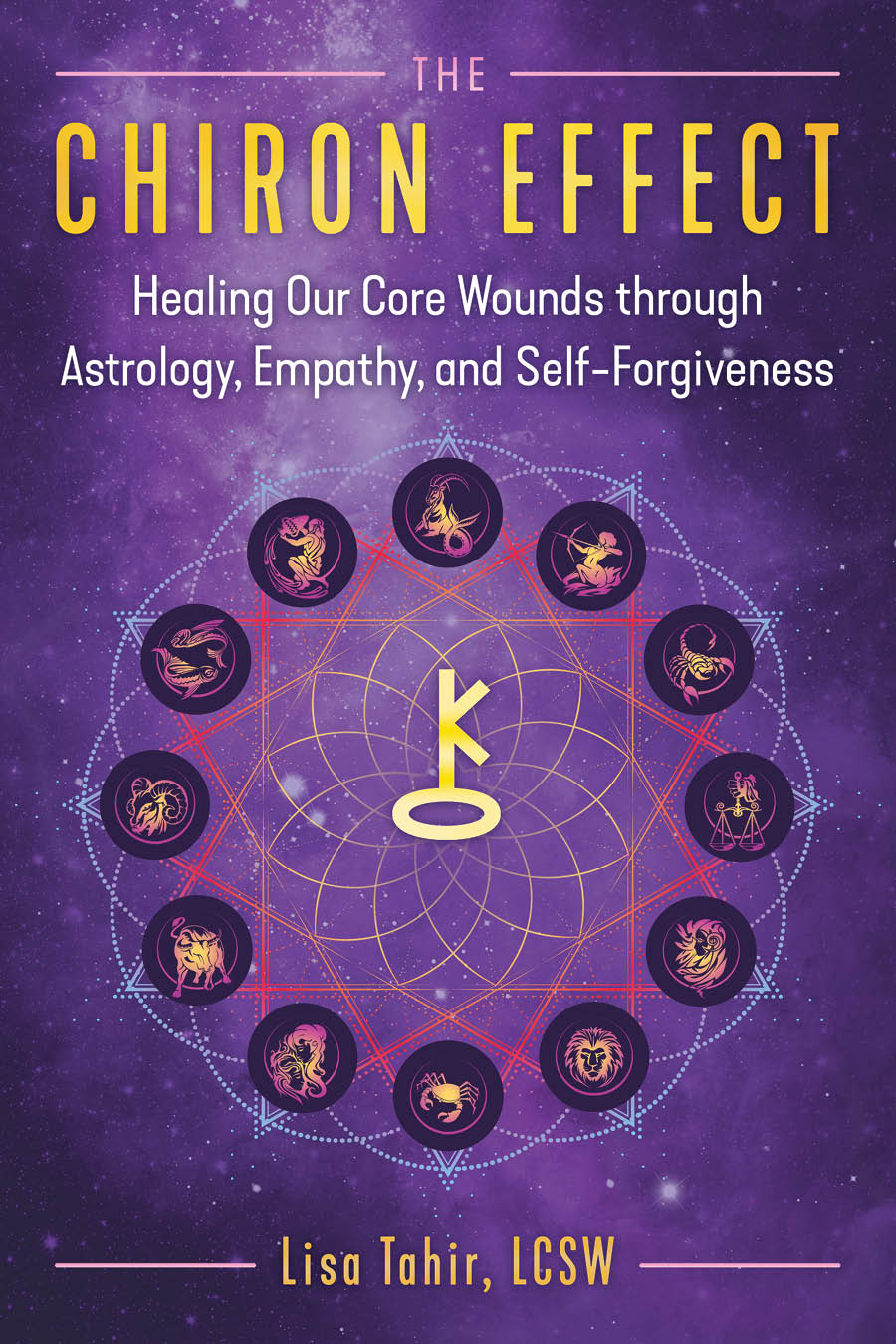
If you would like to explore your emotional patterns through an integrative, psychoastrology-informed approach, learn more about Lisa Tahir’s therapy services, including virtual sessions by phone, FaceTime, or Zoom. You can also explore The Chiron Effect, a book about healing core wounds through astrology, empathy, and self-forgiveness.
You do not have to release everything at once. You are allowed to move gently, stay connected to support, and let healing unfold in its own time.

The Wounded Healer: How Your Chiron Wound Becomes a Source of Strength
There is a place in each of us that feels especially tender.
Maybe it is the fear of being rejected. The belief that you are not enough. A history of abandonment, betrayal, criticism, or exclusion. Perhaps you learned early to stay quiet, overachieve, people-please, or remain hyper-independent so you would not have to feel vulnerable.
In astrology, Chiron helps us explore these sensitive places. Known as the Wounded Healer, Chiron represents an area of life where pain may repeat, but where deep empathy, wisdom, and healing can also emerge.
This does not mean your suffering was necessary, deserved, or “meant to happen.” It also does not mean you have to turn your pain into a lesson for someone else. Your healing belongs to you first.
But with support, self-compassion, and honest reflection, the places that once made you feel different or damaged can become sources of strength. This is where Psychoastrology®, mental health care, and personal transformation can meet.
What Is the Wounded Healer Archetype?
In Greek mythology, Chiron was a centaur known for his intelligence, wisdom, and ability to teach healing arts. Yet Chiron carried a wound he could not fully heal himself. His story reflects a powerful human paradox: Sometimes, the areas where we have struggled most deeply become the places where we develop the greatest sensitivity toward others.
Psychologist Carl Jung later explored the idea of the “wounded healer” in psychotherapy. The concept suggests that healers are not people who have never suffered. Rather, their awareness of their own wounds can help them understand the pain of others with humility and compassion.
Still, there is an important distinction: Your wound does not automatically make you wise. Unprocessed pain can also lead to reactivity, avoidance, shame, or repeating old patterns.
The transformation happens through conscious healing.
That may include therapy, nervous-system regulation, grief work, medication when appropriate, meditation, spiritual practices, supportive relationships, or learning to tell yourself a different story. Astrology can offer a symbolic language for reflection, while mental health treatment provides practical and evidence-informed support.
Chiron, Psychology, and the Patterns We Repeat
Lisa Tahir’s work with Chiron explores how unresolved core wounds can create a kind of emotional “orbit”, a familiar pattern that pulls us toward certain people, situations, beliefs, or behaviors.
For example:
- Someone with a deep belonging wound may repeatedly enter groups where they feel unseen.
- Someone who fears abandonment may cling tightly to relationships or leave first.
- Someone who learned that love must be earned may become exhausted from overgiving.
- Someone who experienced criticism may avoid visibility, even when they have meaningful gifts to share.
- Someone who has felt unsafe may mistake anxiety for intuition or constant vigilance for preparedness.
These patterns are not character flaws. They are often adaptations that once helped you survive emotionally.
The brain and body learn from experience. If a child grows up around unpredictability, conflict, or emotional neglect, their nervous system may become highly alert to signs of danger. If a person has been rejected for their identity, gender expression, spirituality, race, body, or way of loving, they may understandably become cautious about being fully seen.
In therapy, we can honor the original purpose of a coping strategy while also asking whether it still serves your life today.
This is one way to approach mental health and astrology responsibly: Use the chart as a prompt for self-inquiry, not as a diagnosis, prediction, or fixed identity.
Your Wound Is Not Your Whole Story
Psychological research on post-traumatic growth describes positive psychological change that can occur through the struggle with highly challenging life circumstances. Researchers Richard Tedeschi and Lawrence Calhoun identified areas where people may experience growth, including:
- Greater appreciation for life
- Deeper relationships
- A stronger sense of personal strength
- New possibilities and directions
- Spiritual or existential change
Post-traumatic growth is not the same as pretending everything is fine. It is not toxic positivity, and it does not erase trauma symptoms. A person can experience anxiety, grief, anger, or PTSD symptoms while also discovering new meaning or strength.
Growth is also not required. You do not have to become inspirational because you have suffered. Sometimes the bravest form of healing is simply making it through the day, asking for help, setting one boundary, or resting without guilt.
Your story can hold both pain and possibility.

How Self-Compassion Helps Chiron Healing
Self-compassion is one of the bridges between recognizing a wound and transforming your relationship with it.
Self-compassion does not mean letting yourself off the hook or refusing accountability. It means meeting your pain with the same kindness you might offer someone you love. It includes three core movements:
- Mindfulness: Notice what you are feeling without becoming completely consumed by it.
- Self-kindness: Respond to yourself with care instead of harsh criticism.
- Common humanity: Remember that struggle, vulnerability, and imperfection are part of being human.
When a Chiron theme is activated, try replacing “What is wrong with me?” with:
“What happened to me, what did I learn to believe, and what do I need now?”
That question creates space. It separates your identity from your wound and makes room for choice.
Four Ways to Work With Your Chiron Wound Today
1. Name the tender place
You can explore your Chiron sign and house through a birth chart calculator, such as the one linked on Lisa Tahir’s Chiron page. Let the placement serve as a starting point, not a final answer.
Ask yourself:
- Where do I often feel unusually sensitive or “not enough”?
- What situation seems to activate the same emotional response repeatedly?
- What do I fear others will discover about me?
- What did I need at the time that I did not receive?
You do not need to force a memory or revisit trauma alone. If reflection becomes overwhelming, pause and ground yourself.
2. Practice a compassionate interruption
When you notice an old pattern beginning, place one hand over your heart or another comfortable part of your body. Take three slower breaths and say:
“This is a familiar protective response. I am allowed to choose what happens next.”
Then identify one small alternative action. You might wait before sending an anxious text, ask for clarification instead of assuming rejection, take a break from an argument, or speak honestly about a need.
Small interruptions create new pathways.
3. Turn pain into discernment, not duty
Your wound may give you insight into others, but you are not required to rescue everyone who shares your pain.
Empathy without boundaries can become emotional exhaustion. Ask:
- Am I helping because I genuinely have capacity?
- Am I trying to save someone so I can avoid my own feelings?
- Can I care without taking responsibility for another person’s choices?
- What would mutual support look like here?
The Wounded Healer is not the Martyr. Healing includes receiving.

4. Create a new meaning statement
Post-traumatic growth often includes rebuilding meaning after an experience has disrupted your assumptions about yourself or the world.
Try completing these sentences:
- “Because I have lived through __________, I now understand __________.”
- “A strength I developed was __________.”
- “A boundary I am learning to honor is __________.”
- “The part of me I once judged as __________ now also helps me __________.”
- “I do not have to repeat __________ in order to be safe.”
Keep the statement honest. You do not need to call yourself grateful for what hurt you. Meaning can sound like: “I learned that I deserve support.” Or: “I recognize emotional neglect more quickly now.” Or: “I am building a life where my identity is welcomed.”
A Gentle Note for Virgo Season
Virgo season invites thoughtful attention to the details of daily life. Rather than trying to perfect yourself or fix every tender place, consider focusing on one supportive practice.
Drink water. Make the appointment. Put your phone down before bed. Notice the thought that keeps returning. Tell the truth kindly. Choose the next helpful step.
Healing is often less dramatic than we imagine. It can happen through consistent, compassionate care.

When to Seek Support
Astrology can help you reflect, but it is not a substitute for psychotherapy, crisis care, or medical treatment. If you are experiencing persistent anxiety, depression, trauma symptoms, substance use concerns, self-harm thoughts, or difficulty functioning, please connect with a qualified mental health professional or local crisis resource.
Personal transformation therapy can support you in understanding the roots of recurring patterns while developing new ways to relate to yourself and others. Lisa Tahir, LCSW, offers personalized sessions for adolescents and adults using a blend of traditional psychotherapy and integrative approaches, including Psychoastrology®, meditation, energy principles, and intuitive techniques.
Through holistic therapy online, sessions are available by phone, FaceTime, and Zoom, offering flexibility for clients seeking support from home.
Your Wound Can Become a Place of Wisdom
The goal is not to erase your history or become untouched by life. The goal is to become more connected to yourself within it.
Your Chiron wound may point toward a place where you have felt isolated, ashamed, or misunderstood. With compassion, that same place can become a source of discernment, empathy, creativity, and strength. Not because the pain was good: but because you are capable of meeting your experience with awareness and choosing what comes next.
You are more than what happened to you.
If you would like to explore Chiron more deeply, read Lisa Tahir’s book, The Chiron Effect: Healing Our Core Wounds through Astrology, Empathy, and Self-Forgiveness. To work with Lisa directly, learn more about her therapeutic services or Zoom therapy sessions. You can also listen to the All Things Therapy podcast for conversations about emotional health, spirituality, mindset, healing, and personal transformation.

The Sacred Art of Harvesting: What Virgo Season Teaches Us About Mental Health and Transformation
Virgo season arrives with an invitation that is both practical and deeply spiritual: pause long enough to notice what has grown.
The garden of your life may not look exactly as you imagined. Some seeds may still be underground. Some plants may have needed more support than expected. Others may have surprised you with their resilience. But here you are, standing in the middle of your own becoming, and there is more to harvest than you may realize.
Today, August 23, 2026, the Sun has just entered Virgo. We are in the wake of the Virgo New Moon on August 22, with a waxing Moon in Capricorn helping us give structure to what we are building. Together, these energies offer a grounded moment for mental health reflection, sustainable self-care, and personal transformation.
In Psychoastrology®, the sky is not a sentence or a prediction of what must happen. It can be a symbolic language for understanding your inner world. Virgo helps us pay attention to the small, meaningful details of daily life. Capricorn reminds us that healing often becomes real through steady choices made over time.
This is the sacred art of harvesting: recognizing the growth your healing work has already produced and tending what will continue to nourish you.
Harvesting Is More Than Achieving
We often think of a harvest as a reward for productivity. We plant, work, produce, and gather. But emotional and spiritual growth does not always follow such a straightforward timeline.
Sometimes your harvest is an argument you no longer escalate.
Sometimes it is recognizing anxiety in your body before it takes over your entire day.
Sometimes it is making a therapy appointment, asking for help, leaving a harmful dynamic, or allowing yourself to rest without having to justify it.
Mental health growth can be quiet. It may not look dramatic from the outside. You may simply notice that you recover more quickly, speak to yourself more gently, or choose a response that honors your values instead of repeating an old survival pattern.
Virgo season encourages us to observe these changes with care. Rather than asking, “What have I accomplished?” consider asking:
- What have I learned about my needs?
- What patterns have become more visible?
- What support systems are helping me feel more grounded?
- What choices have made my life more emotionally sustainable?
- Where am I responding differently than I once did?
These questions shift the focus from performance to awareness. They help you see healing as an ongoing relationship with yourself.

Tend Your Inner Garden With Self-Compassion
A garden cannot be forced to grow by criticism. It needs water, sunlight, nutrients, time, and attention. Your nervous system is not so different.
When you are anxious, overwhelmed, grieving, or moving through trauma recovery, harshness rarely creates lasting change. Self-compassion offers a more sustainable form of motivation. It allows you to acknowledge what is difficult without making your pain evidence that something is wrong with you.
This is especially important for people who are accustomed to caring for everyone else. You may know how to notice another person’s needs immediately, yet struggle to recognize your own until you are exhausted. You may offer patience to friends, partners, children, clients, or colleagues while expecting yourself to move through life without needing anything.
Virgo’s service-oriented energy can become a beautiful expression of care when it includes you. Your wellbeing is not an interruption to your responsibilities. It is part of the ecosystem that makes genuine connection and service possible.
Try this compassionate check-in:
“What would help me feel supported in the next ten minutes?”
Not forever. Not for the rest of your life. Just the next ten minutes.
The answer may be water, food, a boundary, a pause from your phone, a breath, a short walk, or a message to someone safe. Small acts of care are not insignificant. They are how trust with yourself is rebuilt.
Let Your Routines Become Containers for Healing
A routine does not have to be rigid to be supportive. In fact, the most sustainable routines are flexible enough to meet you where you are.
The waxing Moon in Capricorn offers a helpful perspective: create structures that hold your healing without turning it into another demand. A routine can become a container for nervous-system regulation, emotional clarity, and spiritual connection.
Consider choosing one small practice in each of these areas:
Body
Ask what your body has been communicating. Are you carrying tension in your jaw, shoulders, chest, or stomach? Have you been skipping meals, sleeping inconsistently, or using constant stimulation to avoid stillness?
You might practice a two-minute body scan each morning or evening. Notice sensations without needing to fix them. If you feel anxious, try naming five things you see, four things you feel, three things you hear, two things you smell, and one thing you taste.
Mind
Create a gentle limit around the information entering your nervous system. You might delay checking the news, set a social media boundary, or write down worries before bed so your mind does not have to keep carrying them.
Journaling can help transform mental noise into something you can observe. Try completing this sentence:
“The thought asking for my attention today is…”
Then add:
“The compassionate response I want to practice is…”
Spirit
Spirituality can be found in ordinary rituals: making tea, sitting outside, praying, meditating, listening to music, or placing your feet on the floor and remembering that you are here.
If anxiety and spirituality are part of your personal journey, let spiritual practice support, not bypass, your emotional reality. You do not have to transcend your feelings to be connected to something meaningful. Presence can include fear, uncertainty, anger, and hope.
Relationships
Choose one relationship habit that supports emotional health. This might be answering messages when you have capacity instead of immediately, asking directly for what you need, or taking space before responding to conflict.
A healthy boundary is not a punishment. It is information about what allows connection to remain mutual and respectful.

Serve Without Depleting Yourself
Many people learned early that being useful was a way to earn belonging. Helping others can be meaningful, but service becomes depleting when it requires self-abandonment.
Virgo season asks us to refine our relationship with giving. Not by withdrawing from care, but by becoming more honest about capacity.
Before saying yes, pause and ask:
- Do I genuinely have the energy for this?
- Am I offering from love, fear, guilt, or obligation?
- What will this commitment require from me?
- Is there room for rest afterward?
- What would a sustainable yes look like?
- Is this mine to carry?
You are allowed to care deeply and still have limits. You are allowed to love someone and not be available at every moment. You are allowed to contribute without becoming responsible for another person’s healing.
The harvest metaphor is useful here: a wise caretaker does not give away every seed, every fruit, and every nutrient in the soil. Some nourishment must remain in the garden so it can continue to grow.
Honor the Seeds You Have Already Planted
The Virgo New Moon offers a symbolic reset, but a reset does not mean your previous efforts disappeared. You do not have to start over simply because your life is changing.
Look for evidence of the seeds you have already planted:
- A healthier coping skill
- A new awareness of your triggers
- A friendship that feels reciprocal
- A growing ability to apologize and repair
- A clearer sense of what you will no longer tolerate
- A commitment to therapy or support
- A willingness to rest
- A more compassionate inner voice
- A spiritual practice that brings you back to yourself
Write down three things you are harvesting from your healing journey. They do not need to be large. In fact, the smaller they are, the more likely you may have overlooked them.
Then ask:
“What needs continued tending: not because I am failing, but because it matters to me?”
This question brings tenderness to the work. Growth is not a test you pass. It is a living process.

A Virgo Season Harvest Practice
Set aside ten quiet minutes this week. Place a hand on your heart or your abdomen and take several slow breaths. Then write under these four headings:
What I am harvesting:
What growth, insight, support, or healing is becoming visible?
What is nourishing me:
Which people, practices, environments, and beliefs help me feel more like myself?
What needs tending:
Where would a little more attention, structure, rest, or compassion help?
What I can release:
What expectation, role, obligation, or old story no longer belongs in this season?
Choose one small action from your answers. Make it specific and kind. Schedule a therapy session. Put rest on your calendar. Take a walk without your phone. Tell someone the truth. Clean one small corner of your home. Eat something nourishing. Go to bed earlier. Let one unanswered message wait.
A small act repeated with care can change the emotional climate of your life.
Psychoastrology as a Tool for Meaningful Change
The intersection of mental health and astrology can offer language for experiences that are sometimes difficult to name. Psychoastrology invites us to explore patterns, wounds, strengths, and possibilities while keeping personal responsibility and psychological insight at the center.
In Lisa Tahir’s book, The Chiron Effect: Healing Our Core Wounds through Astrology, Empathy, and Self-Forgiveness, Chiron is explored as an archetype of vulnerability and healing. The work connects astrology with psychology, spirituality, empathy, and self-forgiveness: not to define you by your wounds, but to help you understand the patterns that may be asking for compassion.
If you are exploring personal transformation therapy, Lisa’s therapeutic services integrate traditional psychotherapy with spiritual and intuitive approaches tailored to each person. Virtual sessions by phone, FaceTime, or Zoom are available, making holistic therapy online accessible from wherever you are located.
You can also listen to Lisa’s All Things Therapy podcast for conversations about emotional health, healing, mindset, spirituality, and human potential.
This Virgo season, may you pause to gather the evidence of your becoming. May you care for yourself as thoughtfully as you care for others. May your routines support your life rather than consume it. And may you remember that the healing you have planted is already producing something meaningful: even if it is still unfolding beneath the surface.
Explore The Chiron Effect, schedule a session, or contact Lisa Tahir to learn more about compassionate, integrative support for your next season of growth.

Virgo Season Is Here: A Psychoastrology® Guide to Healing, Routine, and Real Self-Growth
Virgo season begins today, August 22, and continues through approximately September 22, 2026. As the Sun moves from expressive Leo into practical Virgo, we may feel invited to slow down, look more closely at our lives, and ask a simple but powerful question:
What is truly supporting my well-being, and what is quietly draining it?
Virgo energy is often associated with routines, health, discernment, service, organization, and attention to detail. Through the lens of Psychoastrology®, these themes can become more than personality descriptions or horoscope predictions. They can serve as reflective tools for understanding our emotional patterns, daily choices, and personal transformation.
Virgo season is not about becoming perfect. It is about becoming more present, intentional, and compassionate with the life you are already living.
Virgo energy and the psychology of healing
Astrology can offer symbolic language for experiences we may already be having internally. Virgo’s earth-sign quality points us toward the body, the present moment, and the practical details that shape emotional health.
Sometimes healing is not one dramatic breakthrough. Sometimes it looks like:
- Getting enough sleep more consistently
- Creating a morning routine that feels supportive instead of rushed
- Saying no before resentment builds
- Eating, moving, and resting in ways that honor your body
- Noticing when self-improvement has turned into self-criticism
- Asking for help rather than trying to manage everything alone
This is where mental health and astrology can thoughtfully intersect. Astrology does not diagnose anxiety, trauma, depression, or any other mental health condition. It can, however, offer a meaningful framework for reflection and self-awareness.
Virgo season reminds us that our emotional lives are influenced by ordinary patterns. The way we begin the day, speak to ourselves, use our time, and respond to stress can either reinforce old cycles or gently create new ones.
Routine is not punishment, it is support
For some people, the word “routine” brings comfort. For others, it sounds rigid or overwhelming. If you have experienced burnout, trauma, anxiety, ADHD, depression, or a demanding season of life, strict schedules may not feel regulating. They may feel like another standard you can fail to meet.
A healing routine should create more support, not more pressure.
Try building a minimum viable routine, or the smallest version of a habit that still helps you feel connected to yourself. For example:
- Drink a glass of water before checking your phone
- Take three slow breaths before beginning work
- Step outside for five minutes
- Write down one priority instead of a long task list
- Tidy one small surface before bed
- Spend ten minutes stretching, walking, or resting
The goal is consistency with flexibility. Missing a day does not erase your progress. You are not starting over; you are practicing returning.

Discernment: the Virgo gift we all need
Virgo is often linked with discernment, the ability to notice what is useful, accurate, healthy, and aligned. This quality can be especially helpful when anxiety makes every thought feel urgent.
Anxiety often asks, “What if something goes wrong?” Discernment helps us ask, “What do I actually know, and what can I do from here?”
Try this simple three-part journal practice:
1. Facts I know
Write only what is observable and verifiable.
For example: “My supervisor asked to meet with me tomorrow.”
2. Stories I am telling myself
Name the interpretation your mind has created.
For example: “I am certain I am going to lose my job.”
3. Actions available to me
Identify one grounded next step.
For example: “I can prepare my questions and get a good night’s sleep.”
This practice does not invalidate intuition or spirituality. Instead, it helps you distinguish intuition from fear, and wisdom from mental spiraling. That distinction can be particularly meaningful for people exploring anxiety and spirituality together.
You can honor your inner knowing while also checking the facts, noticing your nervous system, and seeking professional support when needed.
Healing perfectionism with self-compassion
Virgo’s desire to improve can be a beautiful force. It can help us refine our work, care for others, and bring devotion to everyday life. But when Virgo energy becomes unbalanced, it may show up as perfectionism, overthinking, comparison, or the belief that we must earn rest.
Perfectionism often sounds like:
- “I should be further along by now.”
- “If I cannot do it perfectly, there is no point.”
- “Everyone else is handling life better than I am.”
- “I can relax after everything is finished.”
The problem is that everything is rarely finished.
A compassionate alternative is to practice good-enough completion. Choose one low-stakes task and complete it at 80 percent rather than endlessly refining it. Notice what happens in your body. Do you feel tension, guilt, relief, or fear? What does your inner critic predict will happen, and what actually happens?
You can also replace “I failed” with:
- “I learned something useful.”
- “This needs adjustment, not punishment.”
- “I am allowed to be a person in process.”
- “My worth is not measured by my productivity.”
Self-compassion is not a way of avoiding responsibility. It gives you the emotional safety to take responsibility without collapsing into shame.
Work-life balance begins with boundaries
Virgo is traditionally connected with service and contribution. Many caring, capable people identify strongly with this energy. They are the ones who remember the details, solve problems, anticipate needs, and keep everything moving.
But service becomes harmful when it requires self-abandonment.
This Virgo season, consider where you may be over-functioning. Are you doing work that belongs to someone else? Are you saying yes because you fear disappointing people? Are you available at all hours? Are you measuring your value by how needed you are?
A few boundary experiments may help:
- Create a clear end-of-work ritual, even if it is simply closing your laptop and taking a short walk
- Decide when you will and will not respond to messages
- Practice saying, “Let me check my capacity before I commit”
- Schedule rest with the same respect you give appointments
- Ask, “Is this mine to carry?” before taking on another problem
Boundaries are not rejection. They are information about what allows a relationship, workplace, or family system to remain healthy.

A Virgo-season healing ritual
You do not need an elaborate ritual to mark this seasonal transition. Virgo energy favors simplicity and intention.
Set aside 15 minutes and gather a journal, a cup of tea, or another object that helps you feel grounded. Then reflect on these questions:
- What part of my life is asking for more structure?
- What part of my life is asking for more softness?
- Where am I confusing control with safety?
- What habit helps me feel more like myself?
- What is one expectation I am ready to release?
- What would self-respect look like in my schedule this week?
Choose one practical action from your answers. Keep it small enough to begin today.
You might organize your workspace, schedule a therapy appointment, take a restorative walk, or tell someone you trust how you are really feeling. Spiritual insight becomes transformational when it is paired with personal responsibility and compassionate action.

Psychoastrology® and your deeper healing journey
Virgo season can help us notice our patterns, but noticing is only the beginning. Many of us repeat familiar emotional and relational cycles because those patterns once helped us survive, belong, or feel safe.
In Lisa Tahir’s book, The Chiron Effect: Healing Our Core Wounds through Astrology, Empathy and Self-Forgiveness, Chiron is explored as an archetype of wounding and healing. The book invites readers to consider how unconscious patterns may influence their choices: and how empathy, self-forgiveness, and responsibility can help shift those patterns.
This is the heart of Psychoastrology®: using astrology as a symbolic diagnostic tool while drawing on psychology, spirituality, and practical steps for change. Your chart does not have to define you. It can become a map for asking better questions about your needs, vulnerabilities, gifts, and growth.
If you would like additional conversations about emotional health, mindset, spirituality, and transformation, explore Lisa’s All Things Therapy podcast.
You do not have to heal perfectly
Virgo season may inspire you to clean up your calendar, clarify your priorities, and create healthier habits. Let it also remind you that healing is not a performance.
You are not required to have the perfect routine, the perfect mindset, or the perfect understanding of your past. Real self-growth is often quiet. It happens when you pause before reacting, speak to yourself with greater kindness, choose a boundary, or begin again after a difficult day.
If you are looking for personalized support, Lisa offers virtual therapy through phone, FaceTime, and Zoom. Integrative care can include traditional psychotherapy alongside meditation, mindset work, spirituality, energy principles, and Psychoastrology® when appropriate for your goals. Learn more about online therapy options or schedule a session.
This Virgo season, may you refine your life without rejecting yourself. May your routines become acts of care, your discernment become a source of peace, and your growth feel less like fixing what is wrong and more like remembering what has always been worthy within you.

When Your Chart Meets Your Therapy: How Psychoastrology® Supports Personal Transformation
Have you ever noticed the same emotional pattern returning in different forms?
Perhaps you keep choosing relationships where you feel unseen. Maybe anxiety shows up whenever you are asked to take a risk. You might overwork to prove your worth, avoid speaking up, or find yourself apologizing for having needs. Even when you are self-aware and committed to growth, certain patterns can feel remarkably persistent.
Traditional psychotherapy offers powerful tools for understanding thoughts, emotions, relationships, trauma, and behavior. But some people also long for a spiritual framework that helps them make meaning of their experiences. This is where Psychoastrology® can offer another lens.
Developed by Lisa Tahir, LCSW, Psychoastrology® brings psychology and natal astrology into conversation. It does not use astrology to predict your future or define your identity. Instead, your birth chart can serve as a symbolic map for exploring emotional themes, unconscious patterns, vulnerabilities, and potential sources of wisdom.
When your chart meets your therapy, the goal is not to blame the stars for your struggles. The goal is to understand yourself with greater compassion: and to recognize where you have the power to choose differently.
What Is Psychoastrology®?
Psychoastrology® is an integrative approach that sits at the intersection of mental health and astrology. It combines psychological insight with the symbolic language of the natal chart to help illuminate patterns that may be difficult to name through conversation alone.
Psychology can help us explore:
- How early experiences shaped our beliefs
- Why certain situations trigger strong emotional responses
- How attachment patterns influence relationships
- Which behaviors protect us but may no longer serve us
- How thoughts, emotions, and habits can be changed
Astrology, in this model, can offer a reflective framework for asking meaningful questions:
- Where do I feel most vulnerable?
- What part of myself do I struggle to accept?
- Where do I seek approval or control?
- What lessons seem to repeat in my life?
- How might my pain also point toward my strengths?
The chart is not a diagnosis, and it does not replace clinical assessment or evidence-based care. Rather, it can provide language and imagery for the inner work already happening in therapy.
At Nolatherapy, this kind of holistic therapy online may include traditional psychotherapy alongside meditation, mindset work, spirituality, energy principles, and intuitive techniques: always tailored to the individual.

The Chiron Effect: Understanding Core Wounds
A central part of Psychoastrology® is Chiron, often called the “wounded healer.” In astrology, Chiron can symbolize an area of life where we carry a deep sensitivity or recurring wound.
This wound may involve feeling rejected, unheard, unsafe, inadequate, disconnected, or unworthy. It can influence how we protect ourselves and how we interpret the world around us.
For example, someone may notice:
- A fear of taking up space or asserting themselves
- Anxiety about financial or emotional security
- A belief that they must be perfect to be loved
- A tendency to overgive while neglecting their own needs
- Difficulty trusting others with their authentic feelings
- A recurring sense of being different or misunderstood
These patterns are not proof that something is wrong with you. Often, they began as understandable adaptations to experiences that felt overwhelming, confusing, or painful.
A child who learned that their needs were inconvenient may become an adult who rarely asks for help. A person who was criticized for expressing emotion may become highly self-controlled. Someone who experienced inconsistency may attempt to manage every possible outcome.
The Chiron Effect, as described by Lisa Tahir, refers to the “orbit” we can develop around our wounding. We may unconsciously repeat familiar emotional patterns because they feel known: even when they are painful.
The healing process begins when we can observe that orbit without judging ourselves for being in it.
Lisa’s book, The Chiron Effect: Healing Our Core Wounds through Astrology, Empathy, and Self-Forgiveness, explores twelve areas of core wounding connected with Chiron’s sign and house placement. The book offers reflections, affirmations, and practical steps intended to support deeper self-understanding and healing.
How Psychoastrology Supports Personal Transformation Therapy
Personal transformation therapy is not about becoming an entirely different person. It is about becoming more conscious of who you are, what shaped you, and what you want to carry forward.
Psychoastrology® can support that process in several ways.
1. It gives you language for recurring patterns
Sometimes a person knows what they are doing but cannot explain why they keep doing it. They may understand that they are people-pleasing, overworking, withdrawing, or self-sabotaging, yet still feel unable to stop.
A chart-based conversation can offer a symbolic starting point. When a pattern has language, it becomes easier to observe. When it becomes observable, it becomes more changeable.
This does not mean the chart causes the pattern. It gives you a way to reflect on the pattern and connect it with your personal history, beliefs, and choices.
2. It can reduce shame
Shame says, “This is who I am. I am the problem.”
Compassion says, “Something happened, I developed a way to cope, and I can learn a new way to respond.”
A spiritual perspective may help you see your wounds as part of your human experience rather than evidence of personal failure. Therapy then helps you process the emotions, challenge limiting beliefs, build skills, and create healthier behaviors.
This combination can be especially meaningful for people exploring anxiety and spirituality. Anxiety may still require clinical support, regulation skills, medication, or specialized treatment. But spiritual reflection can also help someone ask, “What is this anxiety trying to protect?” or “What belief about safety, belonging, or control needs my attention?”
3. It connects insight to responsibility
Your chart may describe tendencies, but it does not determine your destiny.
This distinction is essential. Psychoastrology® is not about fatalism. It is not “I cannot change because this is in my chart.” Instead, it invites personal responsibility:
- I may have a tendency to overfunction, but I can practice receiving support.
- I may fear rejection, but I can communicate instead of disappearing.
- I may feel unworthy, but I can take one action that honors my value.
- I may have learned to avoid conflict, but I can develop respectful boundary-setting skills.
Awareness opens the door. Choice creates transformation.
A Simple Psychoastrology-Inspired Reflection Practice
You do not need to know every detail of your birth chart to begin reflecting on your emotional patterns. Try this brief practice in a journal.
Step 1: Name the repeating theme
Complete this sentence:
“The situation I keep experiencing in different forms is…”
Be specific. You might write, “I keep feeling responsible for everyone’s emotions,” or “I keep shrinking when I am invited to lead.”
Step 2: Identify the protective behavior
Ask:
“What do I do when I feel this wound being activated?”
Do you withdraw, explain, fix, criticize yourself, become controlling, overwork, or seek reassurance?
Remember that protective behaviors often developed for a reason. Meet them with curiosity rather than contempt.
Step 3: Listen for the underlying belief
Complete this sentence:
“If I do not protect myself this way, I am afraid that…”
This may reveal a belief such as:
- I will be abandoned.
- I will be exposed as inadequate.
- I will lose control.
- I will disappoint someone.
- I will not belong.
Step 4: Practice empathy and self-forgiveness
Place a hand over your heart and say:
“I understand why I learned to protect myself this way. I am allowed to learn something new.”
Self-forgiveness does not mean avoiding accountability. It means releasing the belief that punishment is required for growth. You can take responsibility for your actions while also understanding the pain beneath them.
Step 5: Choose one grounded action
Transformation becomes real through behavior. Choose one small action that supports your healing:
- Say no without offering a lengthy explanation.
- Take a real lunch break.
- Ask for clarification instead of assuming rejection.
- Share an honest feeling with a trusted person.
- Spend ten minutes resting without earning it first.
- Replace one self-critical thought with a compassionate truth.

Supporting Work/Life Balance Through a Spiritual Lens
Work/life balance is often discussed as a scheduling problem, but it can also be an identity issue.
If your sense of worth is tied to productivity, no calendar system will fully resolve the exhaustion. You may continue adding tasks because achievement temporarily quiets the fear that you are not enough.
A Psychoastrology®-informed therapy process might explore where this belief began, how it affects your body and relationships, and what it would mean to develop an identity beyond performance. You can also read more about the connection between stress and the body in this Nolatherapy resource.
Try asking yourself:
- Who am I when I am not producing?
- What would rest make possible in my life?
- Which responsibilities are truly mine?
- What am I afraid might happen if I slow down?
- Can I allow my life to have seasons of effort and seasons of restoration?
Spirituality can remind us that we are human beings, not human accomplishments. Therapy can help us turn that reminder into sustainable daily choices.
A Compassionate Invitation to Begin
You do not have to choose between psychology and spirituality. You are allowed to seek an approach that honors your emotional health, your lived experiences, your identity, your intuition, and your desire for meaning.
Psychoastrology® is one pathway for exploring that integration. Your chart may help you notice a theme, but your healing unfolds through empathy, self-forgiveness, honest reflection, supportive relationships, and intentional action.
If you are curious about your Chiron placement and the core wounds you may be ready to explore, begin with Lisa Tahir’s book:
Explore The Chiron Effect by Lisa Tahir
The book is designed to help you identify recurring patterns and consider how compassion and responsibility can shift your relationship with them. It can be a meaningful companion for personal reflection or a starting point for deeper therapeutic work.
If you would like individualized support, schedule a session with Lisa to explore your goals through an integrative therapy process. Sessions are available by phone, FaceTime, or Zoom, making support more accessible wherever you are.
Your chart may be a map. Your history may explain the terrain. But you are still the one learning how to walk toward a more authentic, peaceful, and empowered life.